.svg&w=384&q=75 "Naijagoal logo")

Shooting Stars Begin NPFL Campaign with 2–1 Victory Over Inter Lagos
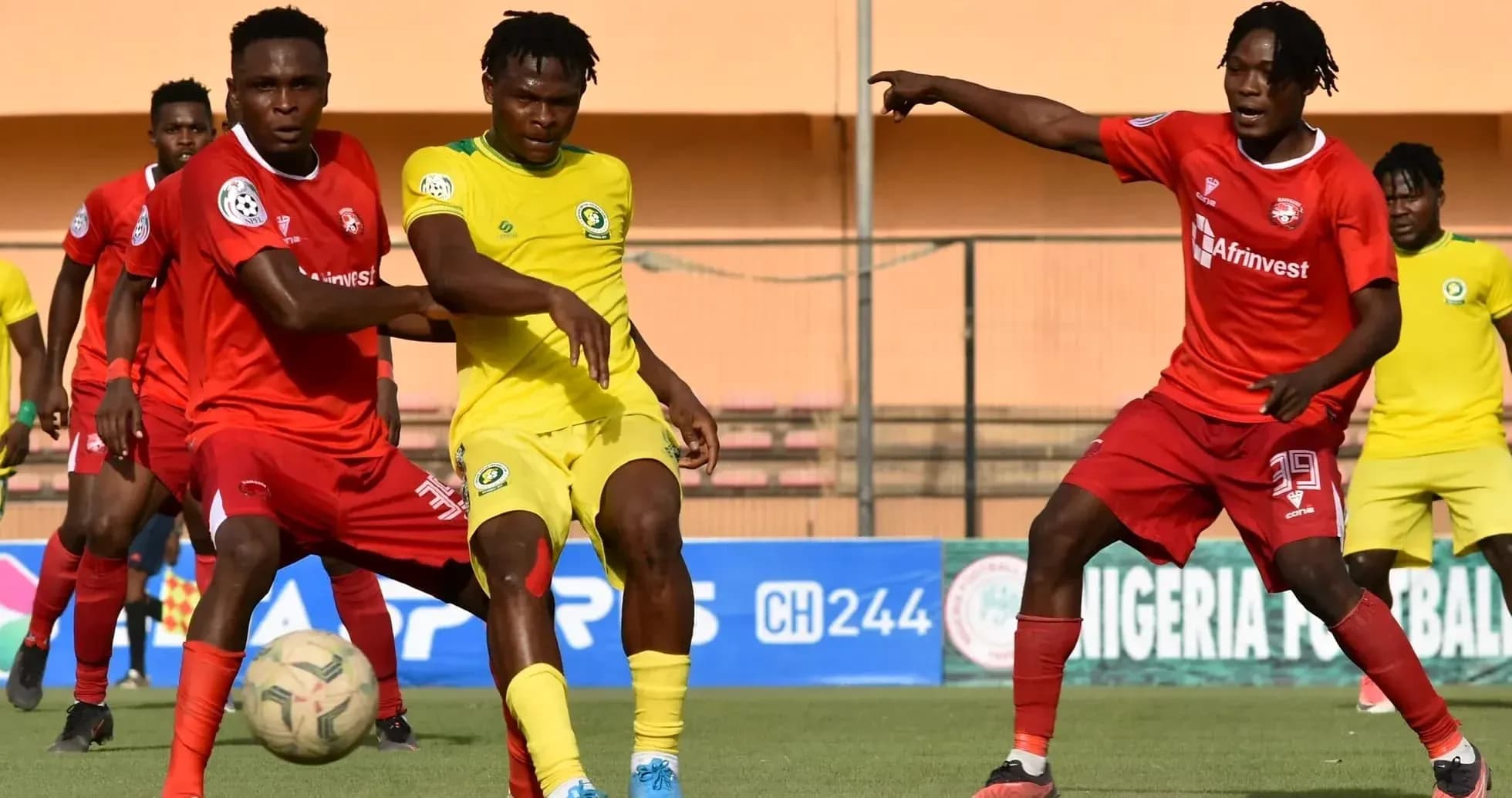
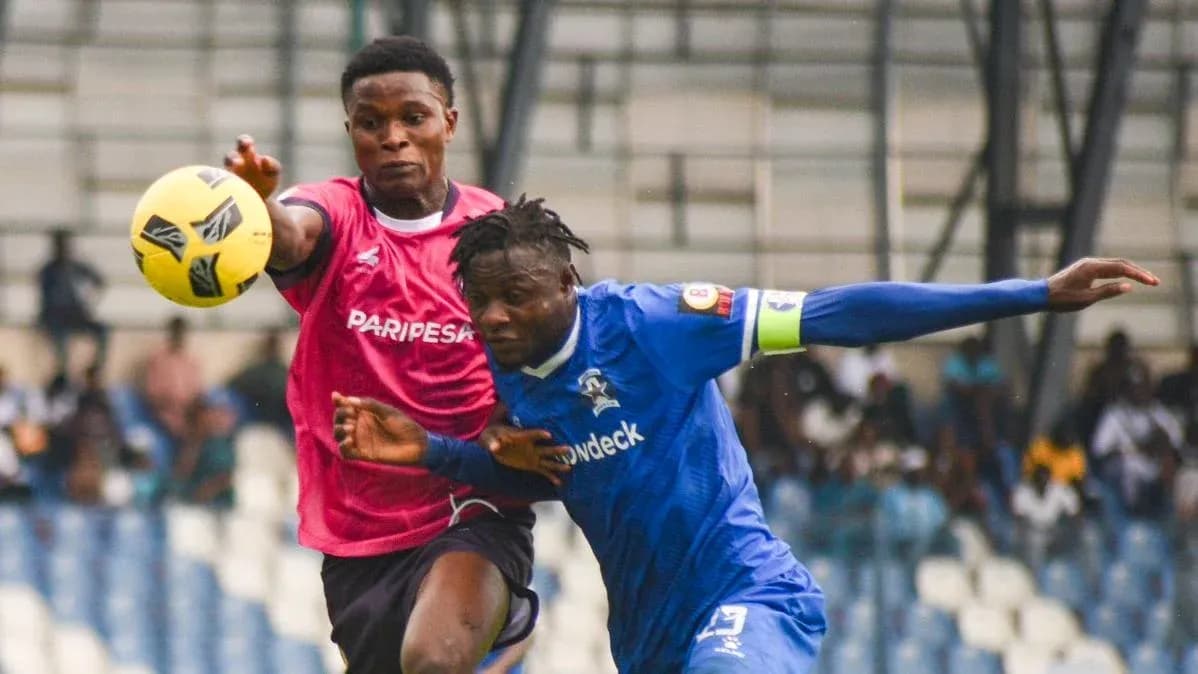
On a warm afternoon at Lekan Salami Stadium in Ibadan, Shooting Stars opened their 2027 NPFL campaign with a 2–1 win over Inter Lagos, a result that already sketches the early tactical identities of both sides. After 1 match in total, Shooting Stars sit top of the table in 1st place with 3 points and a goal difference of +1 (2 goals scored, 1 conceded), while Inter Lagos find themselves in 20th, still pointless and with a goal difference of -1 (1 scored, 2 conceded).
I. The Big Picture – Early-season DNA
This was a meeting of opposites in terms of emotional momentum. Shooting Stars entered the season with ambition and immediately translated that into a home statement: in total this campaign they have played 1 match, won 1, drawn 0, lost 0, scoring 2 and conceding 1. At home, that same single outing defines their record: 1 home match, 1 home win, 2 home goals for, 1 home goal against. The averages underline a front-foot approach at Lekan Salami Stadium: 2.0 goals scored at home on average, 1.0 conceded.
Inter Lagos, by contrast, begin life in this campaign on the back foot. On their travels they have played 1 away match, lost it, scored 1, and conceded 2, for an away average of 1.0 goal scored and 2.0 conceded. Overall, their total record mirrors that: 1 match in total, 0 wins, 0 draws, 1 loss, 1 goal scored, 2 against.
The 2–1 scoreline at half-time and full-time tells its own story: Shooting Stars were sharp early, establishing a lead before the interval and then managing the rhythm rather than chasing the game. Inter Lagos showed enough attacking punch to score once away, but their defensive structure never quite caught up with the pace and aggression of the hosts.
II. Tactical Voids and Discipline
With no explicit injury or suspension list provided, the tactical voids are inferred more from structure than absentees. Both teams lined up without recorded formations, but the personnel choices hint at their intended balance.
For Shooting Stars, the spine built around M. Lawal, O. Akala, and S. Ibrahim suggests a vertical route from back to front. Lawal, wearing 16, anchors from deep, while Akala (6) and O. Olaloke (15) supply legs and coverage in midfield. Ahead of them, the creative and transitional burden falls on the likes of A. Taheer (18), L. Emmanuel (14), and A. Dalhatu (8), with S. Ibrahim (27) providing the cutting edge.
The disciplinary pattern for Shooting Stars this season is already telling: their only recorded yellow card came in the 16–30 minute window, which accounts for 100.00% of their cautions so far. That suggests an early-game intensity, perhaps even overexuberance, as they look to impose themselves physically. Crucially, they have no red cards in any time band, indicating aggression kept just within the boundaries of control.
Inter Lagos show a more scattered disciplinary profile. Their yellow cards are split between 16–30 minutes (50.00% of their cautions) and the 91–105 minute window (the other 50.00%). Early in games they are forced into reactive fouls as they adjust to tempo and opposition pressure; late on, the cards point to desperation—either chasing an equaliser or resisting waves of late attacks. Like Shooting Stars, they have no red cards recorded, but the late caution hints at emotional strain as matches wear on.
One notable tactical blemish for Shooting Stars is from the penalty spot. In total this campaign they have been awarded 1 penalty, failed to score it, and missed 1, for a 0% conversion rate and 100.00% of penalties missed. For a side aspiring to stay near the top, that is a psychological and tactical issue: opponents may feel more comfortable conceding marginal fouls in the box, and the designated taker will be under immediate pressure next time.
Inter Lagos, by contrast, have not yet taken a penalty this season—0 in total, 0 scored, 0 missed—so that particular pressure point remains untested.
III. Key Matchups – Hunter vs Shield, Engine Room
Even without detailed positional data, the roles within both squads emerge through shirt numbers and balance.
For Shooting Stars, the “hunter” collective is formed by A. Dalhatu (8), S. Ibrahim (27), and the wide threats of J. Amusat (29) and L. Emmanuel (14). They are supported by the passing lanes of A. Taheer (18) and the screening work of O. Akala (6). The back line, with I. Yusuf (3), D. Ojietefian (4), and G. Adelowo (23), provides the “shield” in front of Lawal.
This attacking unit has already shown it can produce 2 goals at home in a single outing. Against an Inter Lagos defence that has conceded 2 goals on their travels, the clash is clear: Shooting Stars’ home attacking average of 2.0 goals per match versus Inter Lagos’ away concession rate of 2.0 goals per match. For now, that battle is tilted firmly towards the hosts.
Inter Lagos’ “hunter” group is led by K. Iyede (9) and supported by A. Quyum (10), N. Uchenna (11), and M. Ezekiel (15). They managed to find the net once at Lekan Salami Stadium, indicating that they can create chances even under pressure. Their problem lies behind them: the “shield” of C. Bonaventure (21), T. Oshomo (4), J. Arowolo (17), and A. Aliyu (18) could not keep Shooting Stars from scoring twice.
In midfield, the “engine room” duel is fascinating. Shooting Stars rely on Akala and Olaloke to win second balls and compress space, with Taheer knitting play. Inter Lagos counter with D. Adigun (20) and the technical craft of Quyum and Uchenna. In this opening chapter, Shooting Stars’ engine room won on points: they controlled enough of the central corridor to create more and concede less.
IV. Statistical Prognosis – Where the Trends Point
With only 1 match played in total for each team, the sample is thin, but the early patterns are distinct.
Shooting Stars’ overall averages—2.0 goals scored, 1.0 conceded—paint them as a proactive side, especially at home. They have yet to keep a clean sheet and have not failed to score in any match, which suggests open, watchable games in their near future. Their biggest home result so far is the 2–1 win, and their longest winning streak stands at 1, but the manner of that win aligns with their numbers: assertive at home, slightly vulnerable at the back, but with enough firepower to outscore opponents.
Inter Lagos’ numbers point to fragility. In total they score 1.0 goal per match but concede 2.0. On their travels, the same pattern holds: 1.0 for, 2.0 against, no clean sheets, but also no matches in which they have failed to score. This combination suggests that their matches could trend toward high-event contests, with defensive adjustments urgently needed if they are to climb from 20th.
From a purely statistical lens, if Shooting Stars maintain their home scoring rate and Inter Lagos continue to concede at their current away rate, future meetings of similar profile will likely tilt towards the Ibadan side. The missed penalty for Shooting Stars is a tactical red flag, but not yet a structural flaw; the more pressing structural issue belongs to Inter Lagos, whose defensive unit has not yet demonstrated the solidity required to protect narrow margins.
Following this result, Shooting Stars look like early contenders to remain in the upper reaches of the NPFL, particularly at Lekan Salami Stadium, where their attacking rhythm already feels at home. Inter Lagos, meanwhile, have shown enough offensive spark to avoid being written off, but unless their “shield” tightens and their disciplinary spikes in early and late phases are smoothed out, they risk spending much of the season fighting from the bottom.