.svg&w=384&q=75 "Naijagoal logo")

Scotland Prepares for World Cup Opener Against Haiti After New Zealand Warning
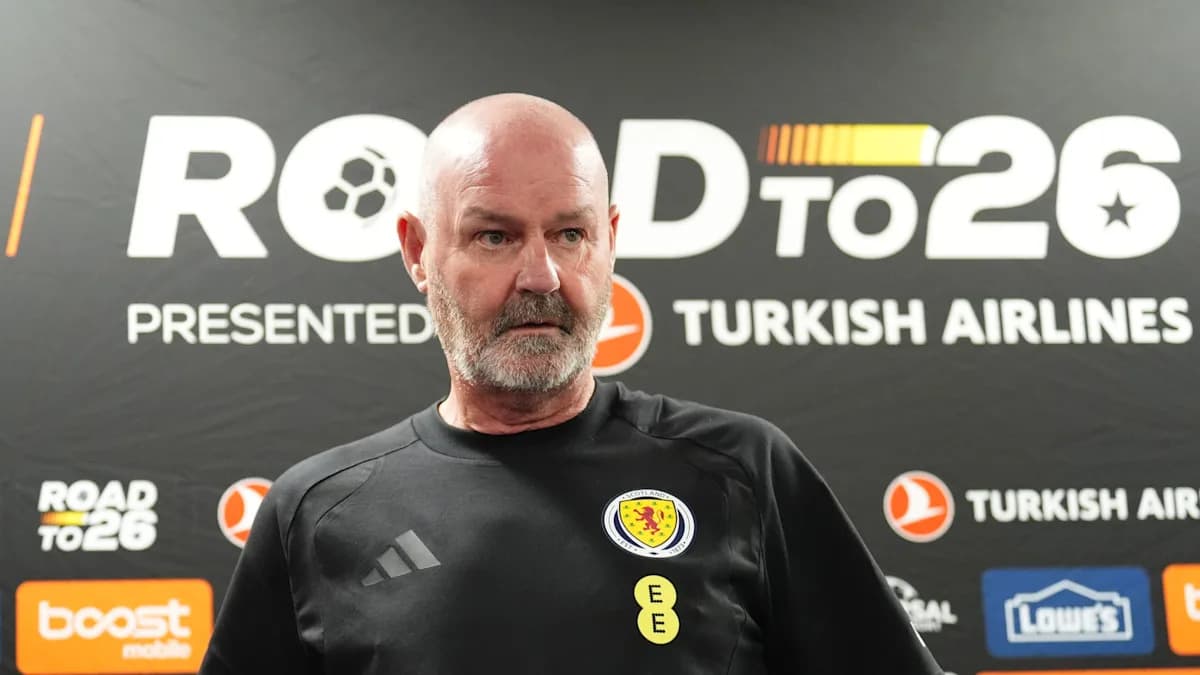
Steve Clarke did not need Haiti’s demolition of New Zealand to sit up and take notice. His warning light had been flashing for a while.
As Scotland settled into New Jersey ahead of their final warm‑up against Bolivia on Saturday, talk around the camp was already drifting towards Foxborough and a World Cup opener that suddenly looks far more dangerous than the rankings suggest.
Haiti are officially the minnows of Scotland’s group, sitting 81st in the world and coached by Frenchman Sebastien Migne. On paper, they are the game Scotland must win, the fixture ringed in red in a section that also contains AFCON champions Morocco and tournament giants Brazil.
Then came Fort Lauderdale. A 4-0 thrashing of New Zealand at Chase Stadium earlier in the week turned a few heads and rewrote a few assumptions. Just not Clarke’s.
At Sports Illustrated Stadium, the Scotland manager was blunt about what he had seen.
“They were really good the other night,” he said, before turning his fire on the lazy habit he believes still stalks the British game. “We’ve got a terrible habit, not just in Scotland, but in the UK in general, of looking at these nations and thinking they’re not very good, or (looking at) whatever their ranking in the world.
“But they play in a different section of the world, so maybe in their section, they’re really good.”
The New Zealand performance only underlined his point. Haiti did not just edge the contest; they dominated it.
“And if you watched them play the other night against New Zealand, they were much better than New Zealand,” Clarke said. “Big, strong physical, but not only big, strong physical… also technical.
“They have good players who play in good leagues.”
“I was never under any illusion, it was going be a tough game, and it’s probably nice that some people get to see how they played the other night, because it’s going be a difficult game for us.”
Scotland’s return to the World Cup stage for the first time since 1998 carries its own emotional weight. The long wait, the scars of near-misses, the familiar national obsession with breaking through to the knockout rounds for the first time. All of it funnels into a group where every point will be precious and every miscalculation potentially fatal.
That is why Clarke refuses to treat Bolivia as a gentle run‑out or Haiti as a soft landing. The mood music around the squad is clear: this is work, not a lap of honour.
That resolve has already been tested. The 4-1 win over Curacao last weekend came at a cost, with Billy Gilmour suffering a knee injury that has ruled him out of the tournament. The loss of a player of his poise and passing range would tempt many coaches to ease off, to dial down the intensity in the final friendly and pray the medical report stays clean.
Clarke has no interest in that.
“You want me to wrap them in cotton wool and not train? You need to work,” he said, revealing that while a few players are carrying niggles, nothing is considered serious.
“Injuries are part and parcel of football. When it happens, especially when it happens in the circumstances that happen to Billy, it’s really disappointing.
“Everybody’s got to take a deep breath and move forward again.”
There was no hint of tactical secrecy in his approach either, no suggestion that Scotland will coast through Bolivia to stay fresh for Haiti.
“Selection is straightforward. We have to do what we have to do to prepare for the Haiti game.
“So players need minutes. I need to see one or two players’ position on the pitch.
“And then we’ve got a week to prepare for the first game, so it’s all about preparation.
“There’s no trying to protect players or whatever.”
The message is stark. Scotland will go full tilt into this final rehearsal, trusting that sharpness and cohesion matter more than superstition and bubble wrap.
Haiti, once dismissed as the group’s outsiders, have already shown they can punish anyone who underestimates them. Clarke saw it coming. Now the question is whether his players can turn that early awareness into the kind of ruthless, grown‑up World Cup performance Scotland have waited almost three decades to deliver.