.svg&w=384&q=75 "Naijagoal logo")

Saudi Arabia's Gulf Cup 27 Challenge: Overcoming Distractions
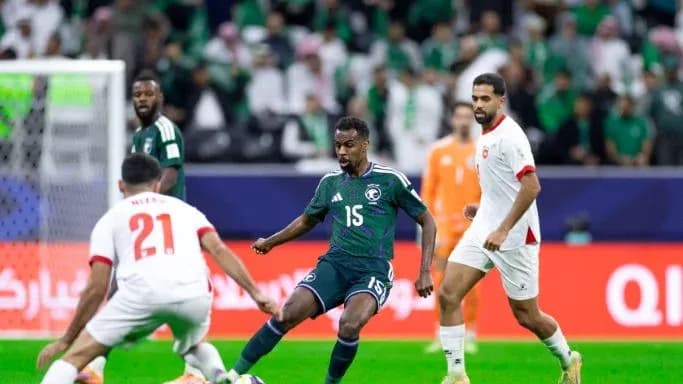
Saudi Arabia walk into Gulf Cup 27 with a ball at their feet and a storm at their backs.
The suspension of Al-Juwair is not just a name missing from the team sheet. For Georgios Donis, it rips out one of the few midfielders capable of dictating tempo, stitching the lines together and stepping into the build-up with authority. He was the metronome, the link, the extra thinker in possession.
Mukhtar Ali’s call-up fills the vacancy on paper, not in function. He is a different profile, a different rhythm. That forces Donis to redraw some of the arrows in his tactical plan, to redistribute responsibilities that had become second nature with Al-Juwair on the pitch. The system doesn’t collapse, but it does need rebalancing.
The real danger, though, lies beyond the white lines.
Players read, listen and scroll. They see the headlines, the interviews, the social media arguments about their excluded teammate. When a disciplinary issue becomes a daily talking point, it starts to nibble away at concentration. In a short tournament, where there is barely time to recover between games, any distraction grows twice as large.
So the job description for Donis and his staff has expanded. It’s no longer just about fitness levels and tactical cohesion. They now have to protect the camp. A successful preparation period depends on a stable environment, one where every player wakes up knowing his priority is training and the next match, not the latest comment on television or the newest post online.
Saudi Arabia arrive at Gulf Cup 27 needing more than a trophy chase. They need a reset. Recent performances have dented their image, and this tournament offers a chance to rebuild confidence and correct the trajectory. That mission becomes harder when the conversation shifts from how to improve the national team to who mishandled the Al-Juwair case and who leaked what to whom.
The noise keeps growing. Each new statement stretches the story further.
Hazazi has already criticised how the situation has been dealt with, calling it “a distraction” for the national team. Al-Mefreg, on the other hand, has insisted that regulations must apply to everyone, warning that stepping back from them risks chaos inside the camp. Between those two positions, the team is squeezed into a debate that has taken up far more space than the actual football, and the tournament has not even kicked off.
This is how a limited disciplinary issue can mutate into a genuine crisis.
Shut it down internally, have everyone accept the decision and move on, and the episode shrinks into a footnote: a pre-tournament incident, nothing more. Let it drag on, and it becomes a constant reference point, a shadow over every team talk. The scale of the problem will not be decided only by what has happened so far, but by how it is handled in the coming hours.
The fixture list shows no mercy. Saudi Arabia open against Kuwait on 23 September, meet Oman on 26 September, then close the group against Iraq on 29 September. Three games in six days. No room for long meetings about off-field drama. No time to replay interviews or dissect comments.
Those matches will come at them quickly. They will also expose something deeper than tactics: the squad’s capacity to live with pressure.
A strong start against Kuwait could drown out much of the noise. Win, and the narrative tilts back towards the pitch. Slip early, though, and every unresolved question will roar back. The Al-Juwair saga would no longer be a separate file; it would be folded into a broader inquest about mentality, leadership and the team’s ability to withstand strain.
The most convincing response will not be delivered behind microphones. It will be written in performances.
No one can seriously claim that Saudi Arabia have already “lost” Gulf Cup 27 because of this crisis. The tournament is still ahead of them. The path to the knockout rounds remains open, the chance to turn the page still very real.
But they cannot allow the issue to grow larger by the day while publicly insisting they are “fighting for the title.” That contradiction would eat away at belief from the inside.
If the players manage to separate what happened from what awaits, the storm may pass with minimal damage. If they don’t, if the controversy keeps echoing inside the dressing room and beyond it, Saudi Arabia risk stepping onto the pitch in Kuwait already exhausted — not by opponents, but by a mental battle they never needed to fight.