.svg&w=384&q=75 "Naijagoal logo")

Samu Costa: The Unsung Hero for Al-Nassr
Samu Costa has never been the headline act. At Real Mallorca, he has been the player you notice only when he isn’t there: the one plugging gaps, killing counters, and quietly dragging a team away from the relegation trapdoor. Now, with Al-Nassr closing in on a €9 million deal, one Spanish coach believes those same unseen qualities could become the backbone of Ange Postecoglou’s new project.
A Specialist in Survival
David Martinez, who has watched Costa closely in La Liga, didn’t dress it up. Mallorca, he reminded, are a club “always fighting to avoid relegation to the second division.” That context matters. You don’t survive in that environment without players who understand suffering, who live the game tactically rather than theatrically.
Costa, Martinez stressed, is exactly that type.
He talked about strength and balance first, not flair. The 23-year-old midfielder, he said, brings defensive solidity and a sharp tactical brain, the kind of player who reads matches “very well” and positions himself accordingly. He prefers to operate in his own half, shielding the back line, rather than roaming high up the pitch in search of glory.
This is not the polished No. 10. This is the metronome in the shadows.
Not a Showman, but a Decision-Maker
Martinez did not pretend Costa is a natural artist on the ball. “He is not technically gifted,” he admitted. That line will raise eyebrows in a league increasingly filled with high-profile imports and highlight-reel moments.
Yet the coach immediately underlined what makes Costa valuable: decisions. Constant, correct, unflashy decisions.
He makes “a lot of good decisions during matches,” Martinez said, and that reliability is what coaches crave when they want control. Costa knows when to hold his position, when to press, when to recycle possession instead of forcing a risky pass. It is the sort of intelligence that rarely trends on social media but wins the trust of managers.
The Rhythm Keeper
If Al-Nassr are building a side around attacking talent, someone has to keep the tempo steady. Martinez believes Costa is that rhythm keeper.
“He always maintains the rhythm of matches,” the Spaniard explained, a trait he believes will “help the forwards a great deal.” For a team stocked with finishers and flair, a player who can dictate the pace, slow it down when needed and speed it up when space appears, becomes essential.
In Martinez’s eyes, that ability to control rhythm makes Costa’s role “essential in achieving balance in the team’s defence.” It is not just about tackles and interceptions; it is about shaping the entire flow of the game so that the forwards can attack from a secure platform rather than chaos.
Postecoglou’s Puzzle Piece
The arrival of Ange Postecoglou signals a clear stylistic shift. The Australian coach is synonymous with aggressive, front-foot football, built on short passing, quick circulation, and domination of the opponent’s half.
“With Postecoglou, Al-Nassr will play attacking football,” Martinez said. They will “try to dominate matches through short passes and moving the ball forward to play in the opponent’s half.”
Where does a deep-lying, defensively minded midfielder fit into that? Right at the heart of it.
Costa, Martinez pointed out, can operate in central midfield but also slide into different roles depending on his partner. He can drop between the two centre-backs to help build from the back, offering an extra passing lane and allowing full-backs to push higher. That positional flexibility gives Postecoglou more ways to structure his build-up without sacrificing defensive cover.
He is, in essence, a tactical tool: a player who can be moved a few metres on the board to change the entire picture.
The Ronaldo Factor
Any new signing at Al-Nassr inevitably gets viewed through one lens: Cristiano Ronaldo. How will he fit with the captain? Will he help or hinder the star?
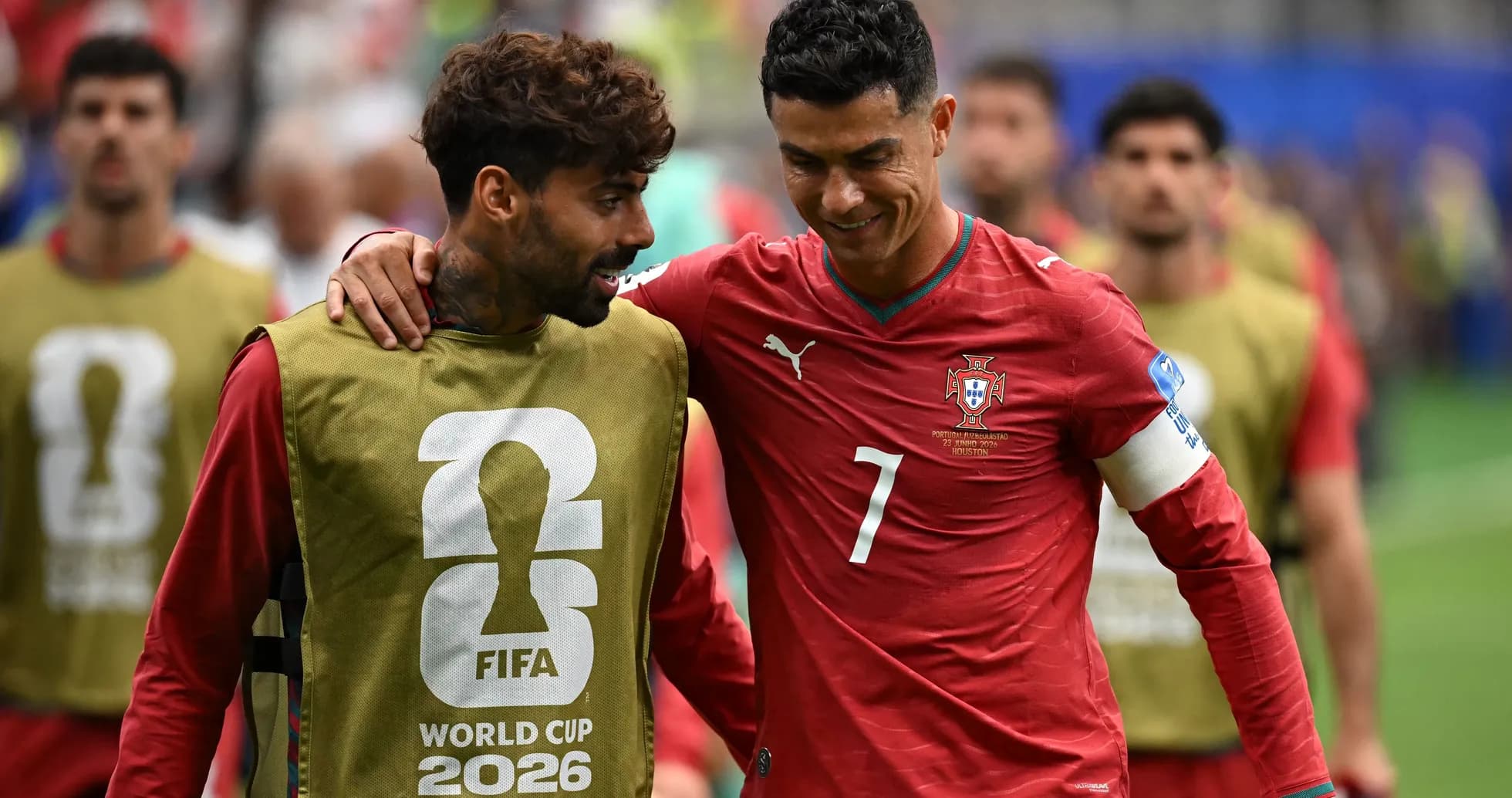
For Martinez, the connection between Costa and Ronaldo is a clear advantage. A shared nationality, a shared footballing education, and at least a basic understanding of each other’s game shorten the adaptation period.
“From my point of view, a coach always wants players who know each other,” he said, highlighting how that familiarity “will be beneficial for the club.” Less time spent on introductions, more time spent on structure.
Martinez went further, expressing certainty that Ronaldo “will welcome him greatly” and that this relationship will serve Al-Nassr well. A stable spine behind the captain, a compatriot who understands the demands and expectations around him, can only help.
Built for Balance, Not Headlines
In an era obsessed with dribbles, nutmegs, and viral clips, Costa represents something different: a midfielder defined by balance, not bravado.
Martinez kept circling back to that word. Balance in defence. Balance in rhythm. Balance in positioning. “Samu Costa can create balance,” he concluded, framing the move as a structural signing rather than a marketing one.
If the deal is completed, Al-Nassr will not be unveiling a showman. They will be adding the kind of player who makes showmen possible — the one who cleans up behind them, knits the lines together, and lets the stars shine without fear.
In Postecoglou’s high-risk, high-tempo system, that kind of quiet authority in midfield can be the difference between a team that dazzles and a team that actually wins.