.svg&w=384&q=75 "Naijagoal logo")

Ruben Amorim's Journey: From Manchester United to AC Milan
Ruben Amorim does not duck the question. He leans into it.
“I made a lot of mistakes,” he admits, looking back on a Manchester United spell that ended with the worst league numbers of any manager in the club’s history. No excuses, no attempt to reframe. Just a blunt assessment from a coach who has been burned at the very top and is now trying to turn that scar tissue into something useful.
From Old Trafford failure to Milan’s new project
Amorim’s time at United never truly caught fire. The tension with the board grew steadily, then snapped in January. His public swipe at the club’s decision-makers after a trip to Elland Road – telling others to focus on their jobs – felt like a point of no return. The sacking followed soon after.
The numbers were brutal. A Premier League win rate of 32 per cent. An average of 1.53 goals conceded per game. Only 15 per cent clean sheets. For a club built on control and authority, those figures cut deep. For Amorim, they now form part of his coaching education.
He did not stay unemployed for long. AC Milan moved quickly last month, convinced that the same ideas that failed to take hold at Old Trafford could be the foundation of something powerful at San Siro.
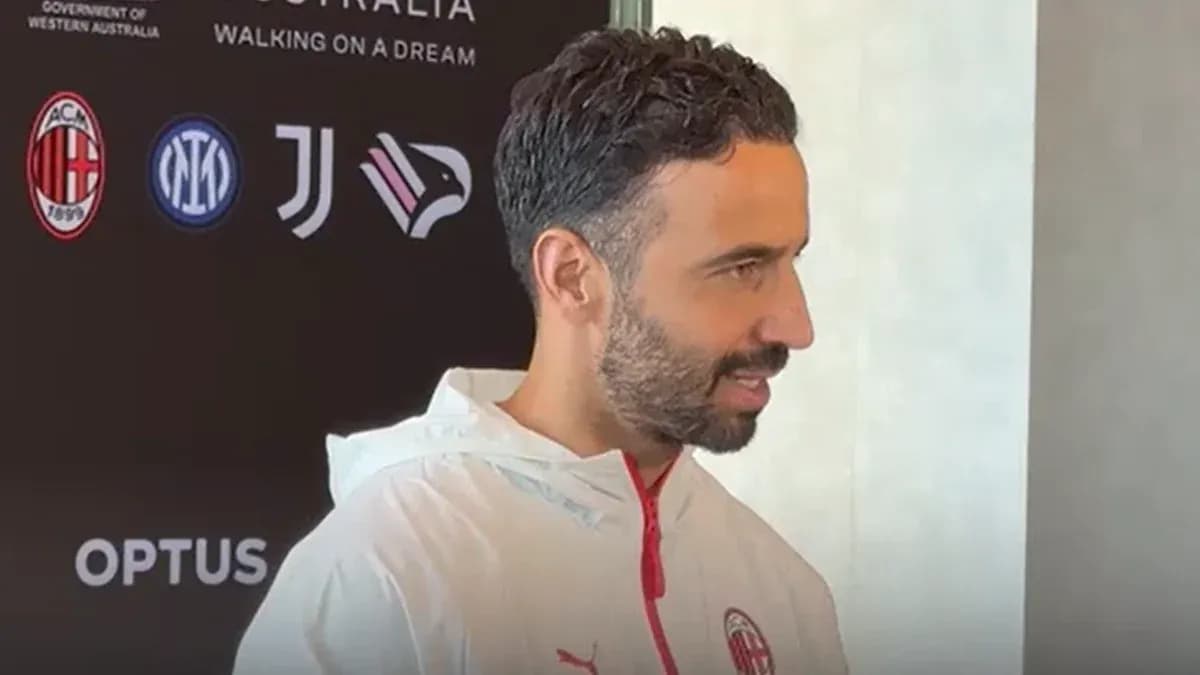
“They appointed me because they felt I was the right guy for the way I want to play,” he told Sky Italia on Milan’s pre-season tour in Australia. The club, he explained, did not just buy into his philosophy. They listened to his reflections on United. They listened to a coach who had seen a superclub from the inside, succeeded elsewhere, and then fallen hard.
“They understood that I was prepared for this job, not just because of my past success, but also because of my failures. I think it helped a lot in those meetings,” he said.
Owning the mistakes
Asked directly what went wrong at United, Amorim did not try to dissect every tactical tweak or boardroom disagreement. He went straight to the core.
“The first thing is that it doesn’t matter anymore. That is the feeling,” he said. There is a history, he added, then something happens, the context changes, and the only choice is to move on to the next challenge.
But he did not hide behind that line of closure.
“I learned a lot. It would be hard to point to one thing, but the important thing that I clearly know is that I made a lot of mistakes. When you do this kind of reflection, and you understand that it was not just their fault, but also my fault, I think you can be a better coach and a better man.”
That last part is the key. At United, Amorim arrived as a rising star. He leaves that chapter as a coach who has felt the full weight of expectation and failed to carry it. Milan are betting that this version of Amorim – more hardened, more self-aware – is the one ready to lead a rebuild.
A boyhood fan in the dugout
If Old Trafford always felt like a difficult fit, Milan feels different. Personal, even.
“I was really honoured to be the manager of Man United at the time, but now I’m at Milan,” he said. He has already spoken with club figures such as Daniele Massaro and Franco Baresi, exchanging messages and tapping into the club’s history and identity.
“That is the most important thing. To understand what kind of club I am and what the history of the club is. For me, it was easier this time, because I’ve been a Milan fan since I was a boy.”
This is not a coach arriving cold to a new environment. He knows the colours, the legends, the expectations. He knows what San Siro demands.
“I understand the culture of the club and their history. But that is the past. Our goal is to be the new future. They chose me for a reason, and one of the reasons is that I like to look at teams that are struggling.
“I know it’s tough, but we want to rebuild something. We have many things in a good place. The staff is in a good place; the organisation is fantastic. If this is my final destination, I’ll be pleased because it’s a dream to coach this club.”
United’s costly divorce, Milan’s calculated gamble
United’s decision to sack Amorim was not cheap. The club faced a compensation bill of £15.9 million to cover his departure and that of his staff – Carlos Fernandes, Adelio Candido, Emanuel Ferro and Jorge Vital. The hit was softened once Milan came in and took over, trimming the financial damage, but the episode still underlined how expensive managerial missteps can be at this level.
For Milan, that same situation presented an opportunity. A coach with a clear game model, bruised but wiser from a turbulent spell in England, available and hungry. They listened not only to his plans for how Milan should play, but also to what he had learned from failing to bend United to his ideas.
Amorim now stands at a familiar crossroads for modern elite managers: one giant club behind him, another in front of him, reputation somewhere in between. He has chosen to own the failures, not bury them. Milan have chosen to trust that honesty.
If he gets this right, those “lot of mistakes” at Manchester United may end up looking less like a stain on his record and more like the turning point that shaped the coach who finally delivers on the promise.