.svg&w=384&q=75 "Naijagoal logo")

Roy Keane Critiques English Arrogance After World Cup Loss
Roy Keane has never had much time for English self-pity. He saw enough of it as a player; he has even less patience for it as a pundit.
So when England’s latest World Cup dream died in Atlanta, beaten 2-1 by Argentina in a semi-final they briefly led, Keane’s response was not to join the inquest into Thomas Tuchel or question the players’ character. He went for the fans and the media instead.
For him, the reaction said more about England than it did about Argentina.
Keane Takes Aim At The Fallout
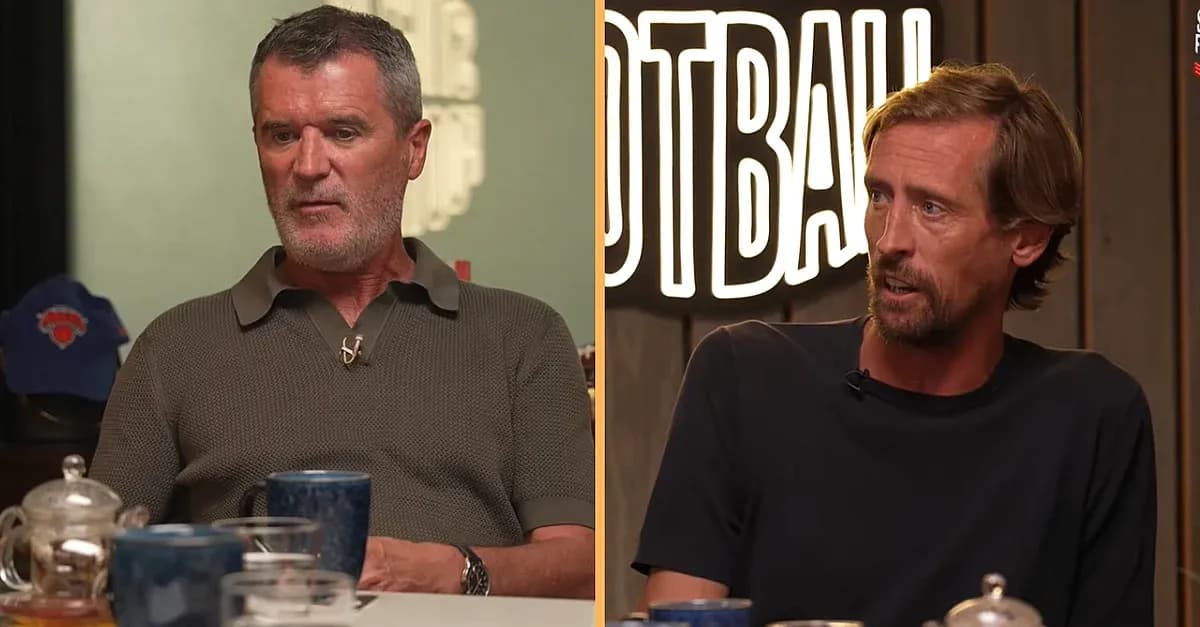
On the latest episode of Stick To Football, Keane sat alongside Gary Neville, Ian Wright and Peter Crouch as they picked through the wreckage of England’s defeat. The conversation quickly turned from tactics and selection to something deeper: expectation, entitlement, and how England see themselves on the world stage.
Crouch, who was working at the tournament, admitted he was stunned by the fury that followed the loss. He referenced a tweet he had posted after the game – one that has since been deleted – which tried to strike a balanced tone.
“Gutted we are out,” Crouch wrote, “but watching Argentina was an experience, Messi's a genius and a hard bastard as well like the rest of them. I'm proud of our lads and what they've achieved at the World Cup, some real heroes emerged and it was a pleasure to have been here for it.”
Hardly incendiary. A nod to Lionel Messi’s brilliance, respect for Argentina’s edge, and pride in England’s efforts.
The replies were brutal.
Crouch was hammered for not being angry enough, for praising the opposition, for daring to be proud after a defeat. That, Keane argued, was the problem in a nutshell.
‘Why Are They Thinking They Should Be Winning It?’
Keane didn’t dress it up.
“I think this is the bit of arrogance with English fans comes into it and pundits or whatever,” he said, homing in on the idea that a semi-final exit is automatically a disgrace. “Because, what, they got beaten in a semi-final?”
Then came the context he believes English football keeps ignoring.
“The World Cup is going on for nearly 100 years and England have won it once. There's been 23 World Cups so why are they thinking they should be winning it? They're competing, they came up short, that's what happens in sport unfortunately.”
It was classic Keane: blunt, statistical, and cutting. One title in almost a century, yet a default assumption that anything short of lifting the trophy is failure.
A Semi-Final, Not A Collapse
The defeat itself will sting for a long time. Anthony Gordon’s first-half strike had England dreaming, only for late goals from Enzo Fernández and Lautaro Martínez to turn the night on its head and send Lionel Scaloni’s side into a second consecutive World Cup final.
For England, it was another chapter in a familiar story: promise, progress, and then the door slammed shut just when the country started to believe.
This time, the spotlight has fixed on Tuchel. Hired as the “proven winner” to push an already-talented squad over the line, he now finds himself at the centre of a storm. Team selection, game management, substitutions – every decision is being dissected.
In Keane’s eyes, that fury ignores the margins at this level. England were not humiliated. They were edged out by the reigning champions, a side built on nous, resilience and the genius of Messi. That, he argued, is not a “gigantic failure” – it’s elite sport.
Expectation Versus Reality
England went to this World Cup with a squad many believed was capable of winning it. On paper, that belief was not misplaced. The talent is there, the depth is there, and in recent tournaments England have consistently gone deep.
Keane’s point is not that ambition is wrong, but that entitlement is. There is a difference between expecting to compete and assuming you should win.
His challenge cuts to the heart of the national debate: is England a superpower underachieving, or a strong contender operating in an era of ruthless, evenly matched heavyweights?
The anger at Crouch’s tweet, the demands for Tuchel’s head, the insistence that a semi-final is nowhere near good enough – Keane sees all of it as evidence that English football still hasn’t quite worked out the answer.
And until it does, how will it judge what progress really looks like?