.svg&w=384&q=75 "Naijagoal logo")

Ronaldinho's Audacious Return to Ravenna
On a blazing afternoon in Ravenna, where tourists usually come hunting mosaics and Dante rather than a No 10, the city’s gaze has shifted from basilicas to a far more unlikely shrine. People scan the streets and café terraces for a man who once shared a World Cup final stage with Madonna and Ronaldo.
Ronaldinho. In Ravenna. As a player.
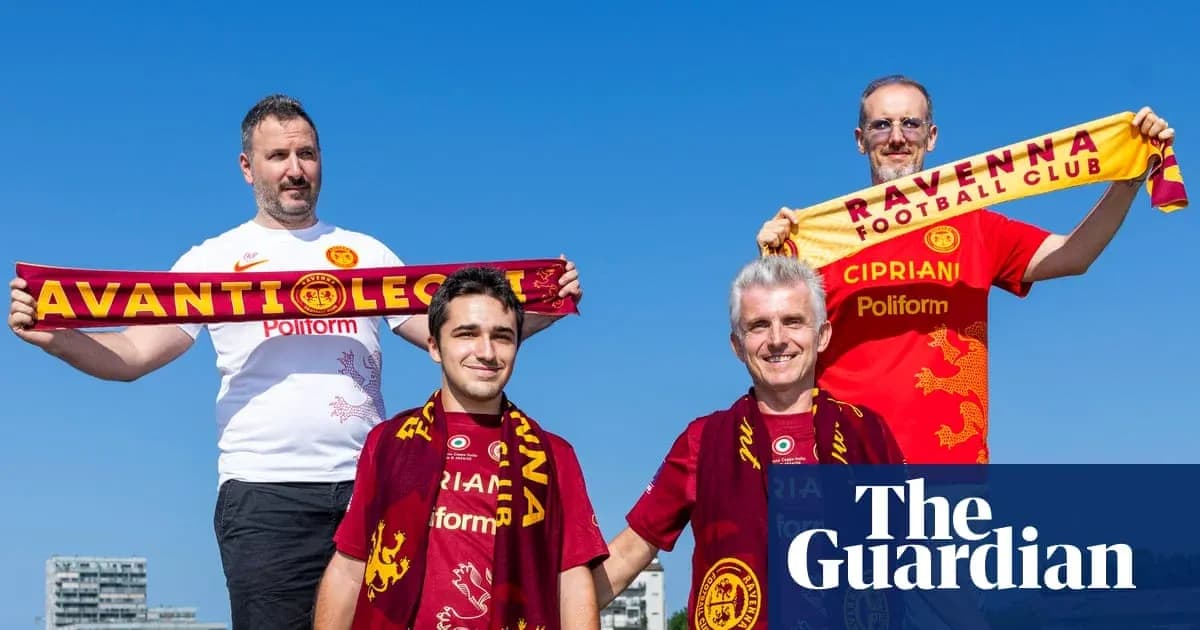
At a bar in the historic centre, four Ravenna fans leaf through La Gazzetta dello Sport, their scepticism as dry as the heat. They joke that they still haven’t seen him, that it all feels like a stunt. Yet the mask slips when the conversation turns to the idea of the 2005 Ballon d’Or winner, the 2002 world champion, in their yellow and red. The irony can’t quite hide the hope.
Cipriani’s impossible project
This is not just a transfer story. It is the product of a grand, almost audacious vision from Ignazio Cipriani, the man who has dragged Ravenna out of Serie D and into the national conversation.
Cipriani, heir to the Venetian hospitality empire behind Harry’s Bar and grandson of industrialist and sailor Raul Gardini, took over the club in 2024 when it was marooned in Italy’s fourth tier. Within a year he had a Serie D Cup in the cabinet and promotion to Serie C secured.
He did not stop to catch his breath.
“Serie A is the goal I declared from day one because I intend to reach it,” he says. No hedging, no safety net. He talks about working with his back against the wall, about removing excuses before they can be uttered. The language is not of survival, but of siege and ambition. The horizon, he insists, is the Champions League.
That would sound fanciful in most provincial Italian cities. In Ravenna, it now comes attached to the name Ronaldinho.
The call to R10
The move was so outlandish that when the first headlines appeared, many assumed it was satire. Ronaldinho, 46, back in professional football, in Serie C, in a city better known for Byzantine gold than golden boots.
But the deal is real enough for Cipriani.
He explains how Lorenzo Tonetti and Ariedo Braida – men steeped in AC Milan’s history and in Ronaldinho’s European prime – brokered the contact. What began as a dream when he bought the club turned into meetings, then into a friendship. Ideas followed: about growth, visibility, identity.
And then the question everyone wanted answered. Would Ronaldinho actually play?
Cipriani does not flinch. Ronaldinho, he says, will wear the Ravenna shirt as a player. He even allows himself a flourish: perhaps the Brazilian will score the last goal of his career here.
The market reacts instantly. A dedicated website launches a special-edition shirt stamped with the “R10” logo, Ronaldinho’s global trademark. It sells out within hours. The collision is startling: a small, battered club from Emilia-Romagna suddenly plugged into the circuitry of global football branding.
Fabio, a lifelong fan, can only laugh at the absurdity. Three years ago, he says, he would have sent anyone to a psychiatric ward for even suggesting this. Now, he scrolls through his phone and sees “Ronaldinho to Ravenna” splashed across international headlines. For him, it is “an extraordinary operation” – part madness, part genius.
A club with scars, not pedigree
Ravenna are no sleeping giant. They are a club with scars. Bankrupt in 2001. Bankrupt again in 2012. Seven modest seasons in Serie B stand as their high-water mark.
This is a city that has long cheered volleyball more loudly than football, a place where the game has lived on small budgets and short trips to nearby rivals.
Into that modest reality walks one of the sport’s most recognisable icons.
“Ronaldinho is a unique icon,” Cipriani says. He talks about how the Brazilian’s style made his generation fall in love with the game, and how now he wants that same magnetism to pull a new generation – in Ravenna, in Italy, and far beyond – towards this club.
The idea is not just to borrow a famous face. It is to build a bridge between eras: from the joy and improvisation of Ronaldinho’s peak to a digital, globalised fanbase that might adopt Ravenna as their own.
Stadium dreams and Hotel Cipriani
Ambition on the pitch is being matched by ambition in concrete and steel. The club is working with the municipality on renovating the Stadio Bruno Benelli, aiming to push capacity beyond 6,300.
But Cipriani’s plans stretch further. His ultimate dream is a new, multi-purpose venue open every day of the week, a modern arena that blends football with retail, concerts and hospitality. In that vision sits an integrated Hotel Cipriani, a direct link between his family’s luxury brand and the city’s growing international tourism.
For Ravenna’s mayor, Alessandro Barattoni, Ronaldinho’s arrival drops neatly into a wider strategy. The city has been looking beyond its traditional beach tourism and commercial port identity, trying to speak more directly to the English-speaking world. Recent years have brought a visit from the British royal family and the opening of the Lord Byron Museum.
Now comes a different kind of royalty.
“Ronaldinho brings a whole new level of global fame,” Barattoni says. When the news broke, his phone lit up with messages from former schoolmates. He knows that for many younger fans, Ronaldinho is a YouTube highlight reel rather than a weekly memory, but the fascination, he insists, is still there.
He even jokes that, diary permitting, he would happily guide the Brazilian through Ravenna’s cultural treasures himself.
Between global brand and curva doubts
Barattoni is careful, though, to draw a line. The city’s partnership with the club, he stresses, is about internationalisation – about using Ronaldinho’s profile, built over years as a global ambassador, to project Ravenna’s image and showcase its initiatives.
He also points out that the club’s work with younger fans began long before the Brazilian’s name appeared on a press release. The stands are younger now, noisier, more engaged. A new sense of community is taking shape.
Not everyone is swept away by the marketing wave. In the Curva Mero, the beating heart of the hardcore support, there is caution. Fabio admits that some factions are wary. Modern football, he says, often pushes values that jar with traditional supporters: rising ticket prices, shrinking access for families on tighter budgets. Big visibility campaigns and commercial coups can easily be viewed with suspicion.
Cipriani knows he is walking a tightrope.
“Without roots, no global project makes sense,” he says. Ravenna, for him, is not a logo to be invented but a history to be extended. Tradition, he argues, is not a brake on ambition but its base. Strip a club of its people and it is worth nothing.
Giovanni, another fan who has been coming to the stadium since his school days, feels something stirring again. At 50, he talks about rediscovering the excitement of his youth. If it takes a local entrepreneur and a global icon to make Ravenna dream of Serie A, he says, so be it – as long as the people in the stands are never forgotten.
The Ronaldinho effect
The numbers are already shifting. Riding the “Ronaldinho Effect”, Ravenna have launched their season-ticket campaign with a target of 2,800. Prices are up by around 12% on average, with differences across the stands, another sign of the delicate balance between growth and accessibility.
On the pitch, the club is quietly assembling a squad designed not just to survive in Serie C, but to win it. Off it, the city is counting down to 20 August, when Ronaldinho is expected to appear at a three-day summer festival in nearby Marina di Ravenna, choreographed in the unmistakable Cipriani style.
For now, the heat in Ravenna is not just from the sun. It comes from a city that has spent decades on the margins, suddenly thrust into the global spotlight by a smile, a name and a number: R10.
The question is no longer whether Ronaldinho will really turn up. It is how far this unlikely alliance between a fallen genius and a reborn club can push a team that once feared oblivion, and now dares to talk about the Champions League.