.svg&w=384&q=75 "Naijagoal logo")
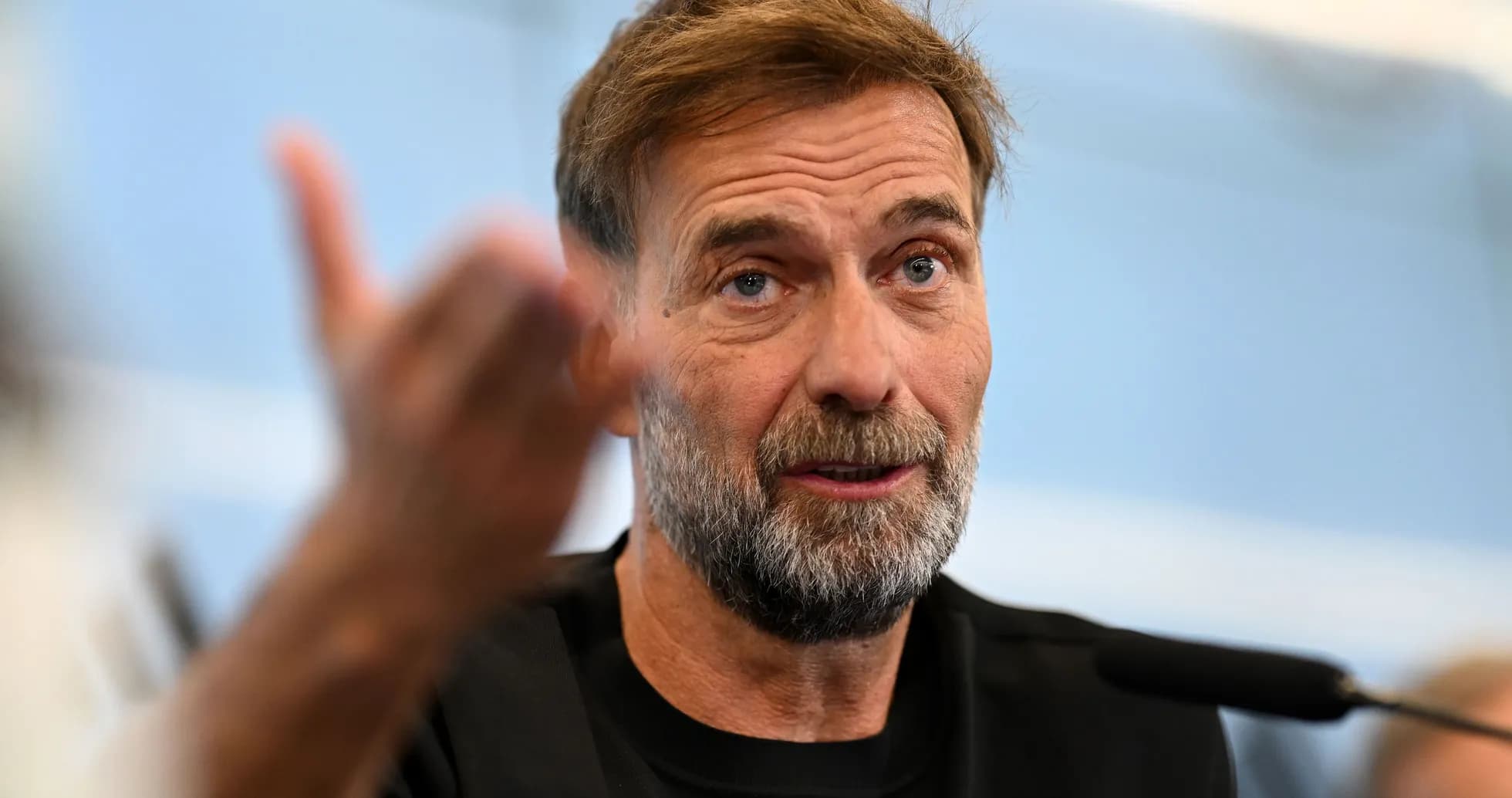

Roger Schmidt Takes Over as Head of Global Soccer at Red Bull
Red Bull has turned to a familiar face to shape its football future. On Friday, the group confirmed that Roger Schmidt will replace Jürgen Klopp as Head of Global Soccer, stepping into one of the most influential strategic roles in the modern club network game.
Schmidt will start on 1 October and has signed a long-term deal, a clear signal that Red Bull sees this as a long-range project, not a stopgap.
“Roger Schmidt back in the Red Bull family” – the phrase almost writes itself inside the organisation.
CEO Oliver Mintzlaff didn’t bother hiding the enthusiasm. He highlighted Schmidt’s “many years of experience,” his “outstanding football expertise” and, crucially, his “clear understanding of our philosophy” as the reasons he will now steer the sporting direction of Red Bull’s global portfolio. The group believes it is backing a proven architect of talent, a coach who, in Mintzlaff’s words, has built “an outstanding reputation for developing young talents and successfully promoting them at the highest level”.
A return to the Red Bull universe
For Schmidt, 59, this is not a leap into the unknown. It is a return to a football ecosystem he helped define.
Between 2012 and 2014, he turned RB Salzburg into a high-intensity machine. His second season brought the Austrian league and cup double, a dominant campaign that pushed his name firmly onto the radar of the major European leagues. The reward came swiftly: a move to the Bundesliga with Bayer Leverkusen in the summer of 2014.
At Leverkusen, Schmidt’s pressing-heavy, aggressive style left a clear imprint on the club and the league. His teams played on the front foot, often on the edge, and he carved out a reputation as one of the most distinctive tactical voices in German football.
The journey then took him across Europe. He led PSV Eindhoven from 2020 to 2022, then Benfica from 2022 to 2024, adding two more high-pressure benches to a CV already packed with demanding environments. Each stop reinforced the same image: a coach unafraid of bold ideas and big stages.
Most recently, Schmidt swapped the touchline for the boardroom. Since October 2025, he has been working in Japan’s J.League as Global Sports Director, a role he was contracted to hold until 2027. Red Bull’s offer has cut that stay short and pulled him back into a structure that knows exactly what it wants from him.
Filling Klopp’s sizeable shoes
The position Schmidt takes over had been vacated by one of the biggest names in the sport. Jürgen Klopp, who had been Head of Global Soccer at Red Bull since the start of 2025, is now the Germany head coach, succeeding Julian Nagelsmann after a disappointing World Cup campaign forced a change at the DFB.
On paper, Klopp’s contract with Red Bull ran until the end of 2029. Yet the national association escaped without paying compensation, a notable twist in an era when buyouts and legal wrangling often dominate such moves. Red Bull, it seems, chose a clean break and a swift succession plan.
Klopp’s new deal with Germany stretches through to the 2030 World Cup, locking him into a long-term rebuild on the international stage. Red Bull, in turn, hands the keys of its global football blueprint to a man whose methods it already trusts.
From touchline innovator to global strategist
Schmidt’s path to this point has been anything but overnight. Before Salzburg, Leverkusen and the European giants, he cut his teeth at Preußen Münster and SC Paderborn, climbing steadily through the German system. Those early years forged the coach, but they also shaped the planner now tasked with aligning clubs across continents.
Now, the job changes again. Less about the next 90 minutes, more about the next five years.
“I am very much looking forward to this new challenge and am proud to once again be part of the Red Bull family in future,” Schmidt said as the appointment was confirmed. He described Red Bull’s international club portfolio as “unique, ambitious and shaped by a clear philosophy of developing young talents while also being successful at the highest level”. That mix, he stressed, is exactly what draws him back: “It is precisely this combination that makes this role particularly appealing to me.”
The mandate is clear. Red Bull wants its clubs synchronised, its talent pipeline sharpened, its philosophy unmistakable from Salzburg to any future outpost. Schmidt knows the script, helped write an earlier chapter, and now returns to direct the whole production.
The question now is simple: how far can this renewed partnership push the Red Bull empire in the next decade of global football?