.svg&w=384&q=75 "Naijagoal logo")

Rodrigo De Paul Defends Argentina's Spirit After World Cup Defeat
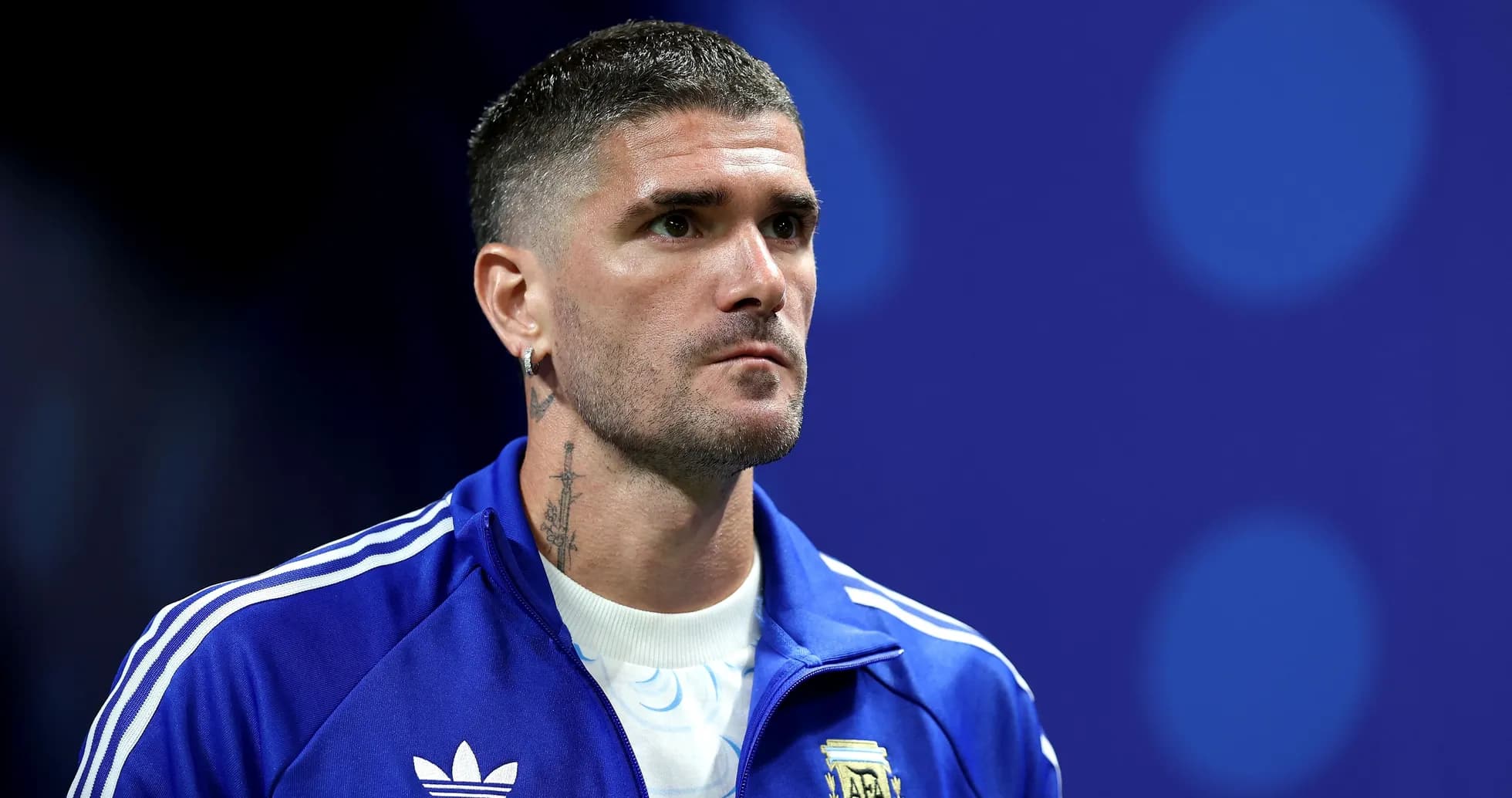
Rodrigo De Paul has never been one to duck a fight. Not on the pitch, and certainly not off it.
Days after Argentina’s World Cup dream died in extra time against Spain at MetLife Stadium, the midfielder has stepped forward as the loudest voice in defence of a team that fell agonisingly short of back-to-back titles – and has since been dragged into a storm over its behaviour.
A champion’s fall, and the backlash that followed
Lionel Scaloni’s side were 30 minutes from history. No nation has successfully defended the World Cup in 64 years, and Argentina had clawed their way to the final, then battled into extra time before losing 1-0 to Spain.
The defeat hurt. The reaction stung even more.
Instead of a post-mortem focused solely on tactics, fatigue or fine margins, Argentina have found themselves accused of gamesmanship, of crossing the disciplinary line in the biggest match of all. Their conduct in the final has been picked apart, framed by critics as the dark side of a fiercely competitive group.
De Paul has had enough of it.
De Paul hits back: “Our smiles bother them”
Taking to Instagram, the midfielder delivered a pointed, emotional message aimed squarely at those who, in his eyes, had been waiting for Argentina to fall.
He admitted the wound of missing out on another World Cup will not heal quickly. The deepest pain, he wrote, comes from failing to bring the trophy home again to a fanbase that had dared to dream of a repeat.
“The biggest pain is that we couldn't bring the World Cup to our country again, because if there is anyone who deserved to live that feeling again, it was you,” De Paul wrote, addressing Argentina’s supporters.
As the hours passed after the final, though, he said a different realisation began to steady him – that the bond between this squad and the people back home runs beyond medals and parades.
“As the hours go by, they're dropping us that the identification they have with this group goes beyond the trophy and that's something I want to grab on to be able to transition into this moment,” he continued.
Then came the sharper edge.
De Paul accused rival fans of spending the tournament waiting for Argentina’s collapse, of building “baseless conspiracy theories” around their run just to ease the frustration of not living the same emotions.
“Today, I look at how many people were waiting for this fall, spreading baseless conspiracy theories throughout the World Cup just to soothe their own pain at not being able to experience what we Argentines were living through – because our smiles bother them, because our ways get under their skin.”
No diplomacy. No softening of the message. De Paul drew a clear line: Argentina against the rest, a champion’s mentality intact even in defeat.
Identity over silverware
Strip away the noise around referees, time-wasting, confrontations and touchline theatrics, and De Paul’s post is about something more fundamental – how this Argentina sees itself.
For him, the connection between team and nation is not conditional on lifting the trophy. It is rooted in the way this group competes, celebrates, and suffers together. The very traits that irritate opponents are, in his view, the ones that make Argentines feel represented.
He knows the chance to defend the World Cup has gone. History belongs to Spain this time. But in choosing this moment to speak, and to speak so forcefully, De Paul has made one thing clear: Argentina may have lost a final, yet they have no intention of apologising for who they are.
The next World Cup cycle will start without the glow of a reigning champion’s crown. It will start, instead, with a scar – and a squad that seems determined to wear it as armour.