.svg&w=384&q=75 "Naijagoal logo")

Rodri's World Cup Impact: A Transfer Battle Between Barcelona and Real Madrid
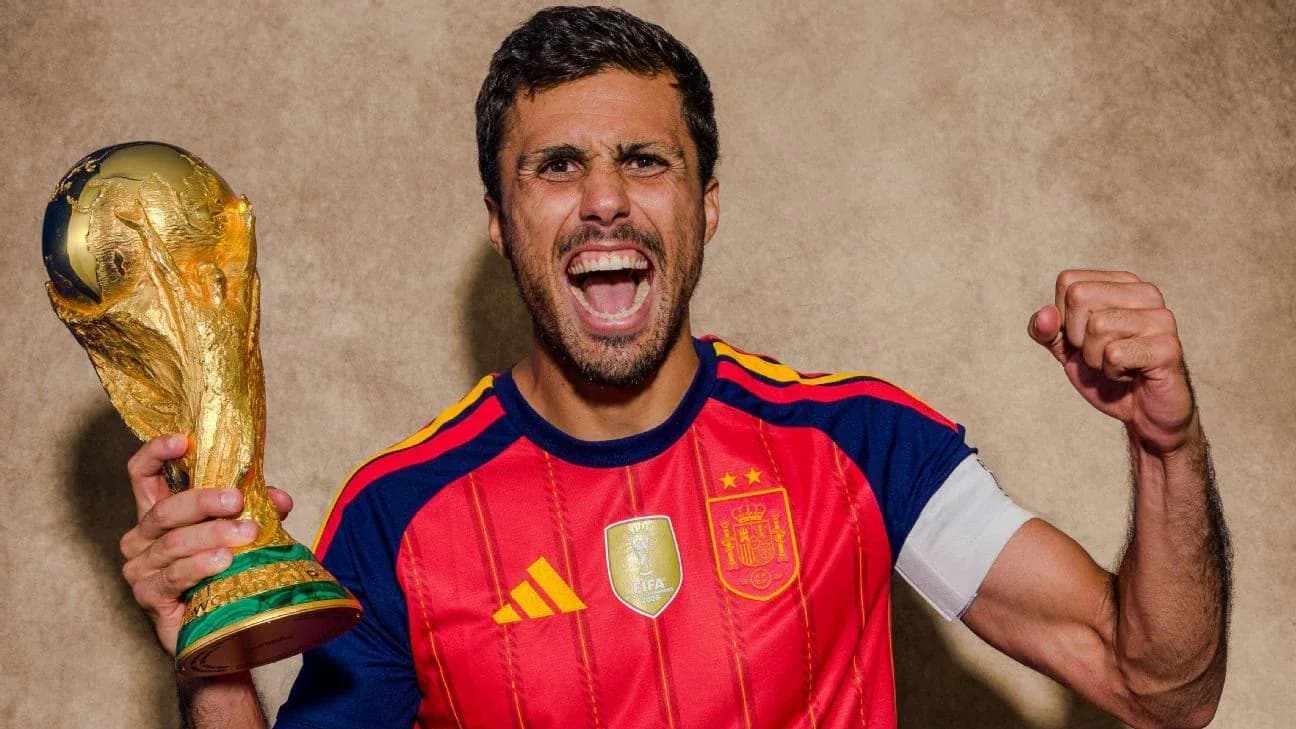
Rodri’s World Cup coronation has done more than gild an already glittering career. It has detonated the summer’s most delicate transfer battle.
The Manchester City midfielder, fresh from dragging Spain past Lionel Messi’s Argentina to lift the FIFA World Cup and taking the Golden Ball home as the tournament’s outstanding player, suddenly finds his future being pulled hard by two old forces: Barcelona and Real Madrid. City, for now, stand in the middle and wait.
This is the game behind the games. And Rodri is the prize.
Barcelona: From long-term dream to live opportunity
At Barcelona, Rodri has always been more than a name on a list. He has been the prototype.
Ever since Sergio Busquets walked away in 2023 to join Messi at Inter Miami CF and then retired, the club has searched for a true heir at the base of midfield. Rodri, schooled in Spain and refined in Manchester, looked like the perfect fit. But that was theory, not planning. Barça did not start this summer expecting to sign him.
Then the market moved.
An injury to Frenkie de Jong forced the Spanish champions into the hunt for a new midfielder. At the same time, the message from Rodri’s camp shifted: a deal, once seen as improbable, now looked possible. As that realisation sank in, Hansi Flick and sporting director Deco did not hide their excitement. This was not just another signing. This was a chance to anchor a new era.
The pressure finally told last week. Barcelona learned that Rodri, with one year left on his City contract and a burning desire to return home at some point, would now prioritise them over Real Madrid. That alone marked a dramatic twist. For years, the assumption inside Spanish football circles was simple: if Rodri came back, he would come back in white.
Instead, the World Cup changed the chemistry. Rodri had just won the biggest trophy of all alongside eight Barcelona players. He liked Flick’s football. He listened closely to the Catalan voices who had passed through City over the past decade and spoke glowingly of life at Barça. Gradually, his compass swung towards Montjuïc and, beyond that, the rebuilt Camp Nou.
Club sources say a loose agreement over personal terms is already in place. The hard part now is City.
Barcelona’s first offer has been rejected, but negotiations are active and ongoing. The final package, insiders suggest, could climb to around €70 million. Inside the club, confidence is growing that a deal will be struck.
If it happens, Flick inherits a midfield overflowing with talent and intrigue: Pedri, Gavi, Marc Bernal, Fermín López, Dani Olmo – and then Rodri, the metronome and shield. The signing has even been placed ahead of a new centre-back on the priority list, though defensive reinforcements are not entirely off the table.
That raises an obvious question: what becomes of De Jong when he returns from injury? No one at Barcelona has a clear answer yet. What they do believe, strongly, is that adding Rodri gives them the platform to turn domestic dominance – back-to-back LaLiga titles – into something more. They have not lifted the Champions League since 2015. Flick has been hired to change that. Rodri, they think, could be the piece that finally pushes them over the edge in Europe.
For now, Barça wait for City to blink.
Real Madrid: From cool distance to losing the race
Across the capital, the mood is very different.
Real Madrid’s relationship with the idea of signing Rodri has been a long, winding road that suddenly hit a dead end. For months, people inside the Bernabéu insisted he was not on the agenda this summer. On paper, that stance looked almost perverse: the world’s best holding midfielder, Madrid-born, one year left on his contract, and a ready-made solution to several tactical puzzles.
Still, president Florentino Pérez had doubts. Sources point to concerns about Rodri’s recent injury record. José Mourinho, back in charge, also preferred a different profile in midfield. Madrid had already chosen to renew Aurélien Tchouaméni, a clear show of faith in their internal option. Rodri did not even make the shortlist.
Then came the World Cup.
Rodri dominated the tournament, erased questions over his fitness and form, and dragged Spain to the title. Inside Madrid, opinions shifted. Director general José Ángel Sánchez and chief scout Juni Calafat, key architects of recent rebuilds, became open to the move. By late July, some figures at the club felt quietly optimistic. Rodri wanted to return to Spain. City, though, had their own conditions: they wanted another midfielder in before letting him go, and there was no agreement on a fee.
Madrid kept their nerve. They were busy with other matters, talking to Yan Diomande, working on Vinícius Júnior’s contract renewal. The feeling was that time was on their side. Rodri’s desire to come home would eventually pull him towards the Bernabéu.
Then Wednesday night arrived.
News broke internally: Barcelona were not only in the race, they were serious. Some voices inside Madrid described it as a straight 50-50 between the two clubs. Rodri, they were told, was open to both options.
Within 24 hours, the picture darkened. By Thursday, senior figures at Madrid believed they were out. The message from Rodri’s camp, as relayed to some sources, was blunt: the player felt the club’s earlier doubts – especially Mourinho’s reluctance – had never completely vanished. Flick, on the other hand, had picked up the phone and laid out his vision directly.
Madrid were ready to make one last push. They still are. But privately, there is an acceptance that the decisive moment may have passed. Rodri’s mind appears set, and his entourage are disappointed that Madrid, with all their power and resources, did not move more decisively when the door first opened.
Unless there is another sudden twist, Rodri is no longer viewed as a realistic option at the Bernabéu. That leaves the European champions at a crossroads: chase an alternative or double down on what they have. Some reports suggest Mourinho sees Bernardo Silva as a possible central midfielder, lining up alongside Tchouaméni or Federico Valverde.
Madrid have built a squad for the next decade. The question now is whether they can afford to let a Madrid-born World Cup-winning pivot join their greatest rivals.
Manchester City: Public calm, private calculations
At Manchester City, the message from the podium and the message in the boardroom are not quite the same.
Manager Enzo Maresca has been clear in public: Rodri is central to his plans, and City want him to stay and sign a new contract. That is true. It is also incomplete.
Inside the club, executives have long known that Rodri would one day want to go back to Spain. It was one of the reasons they moved for Kalvin Phillips in 2022, an attempt to build a succession plan that never took hold. Rodri’s age, his recent injuries and, crucially, his contract situation all weigh heavily on current thinking. In 12 months, he can walk away from the Etihad for nothing.
City have built a reputation on one firm principle: they do not chain players to the club. If a footballer wants to leave and the right offer arrives, they talk. They did it with stars before. They will do it again.
For Rodri, that threshold appears clear. If Barcelona or Real Madrid come in with more than €70 million, City are expected to sit down at the table. They will not sanction a cut-price exit, and they will not allow sentiment to override the need for a coherent squad plan.
The problem is replacing him.
Tijjani Reijnders and Nico González both face uncertain futures, which could leave City’s midfield in flux at precisely the wrong time. Elliot Anderson has already arrived from Nottingham Forest, and negotiations continue with Lille over Ayyoub Bouaddi, Morocco’s breakout World Cup star. Those are interesting moves, but they are not yet a full answer to the Rodri question.
Maresca is already stepping into a daunting role, following a decade of Pep Guardiola. Losing the man who scored the winner in the 2022-23 Champions League final, the anchor of four Premier League titles and a Ballon d’Or winner the following year, would turn a difficult transition into a major reconstruction.
For now, City remain outwardly relaxed. No acceptable bid has landed. They can afford to wait, and they are already running checks on potential replacements if the dam finally breaks. Inside the Etihad, though, there is a growing sense that the end is coming. Rodri has climbed every mountain in Manchester. Spain is calling.
The next move belongs to Barcelona and, if they can somehow revive it, Real Madrid. How much is the best holding midfielder in the world worth when he can leave for free in a year? And which giant will decide that the price of not signing him is even higher?