.svg&w=384&q=75 "Naijagoal logo")
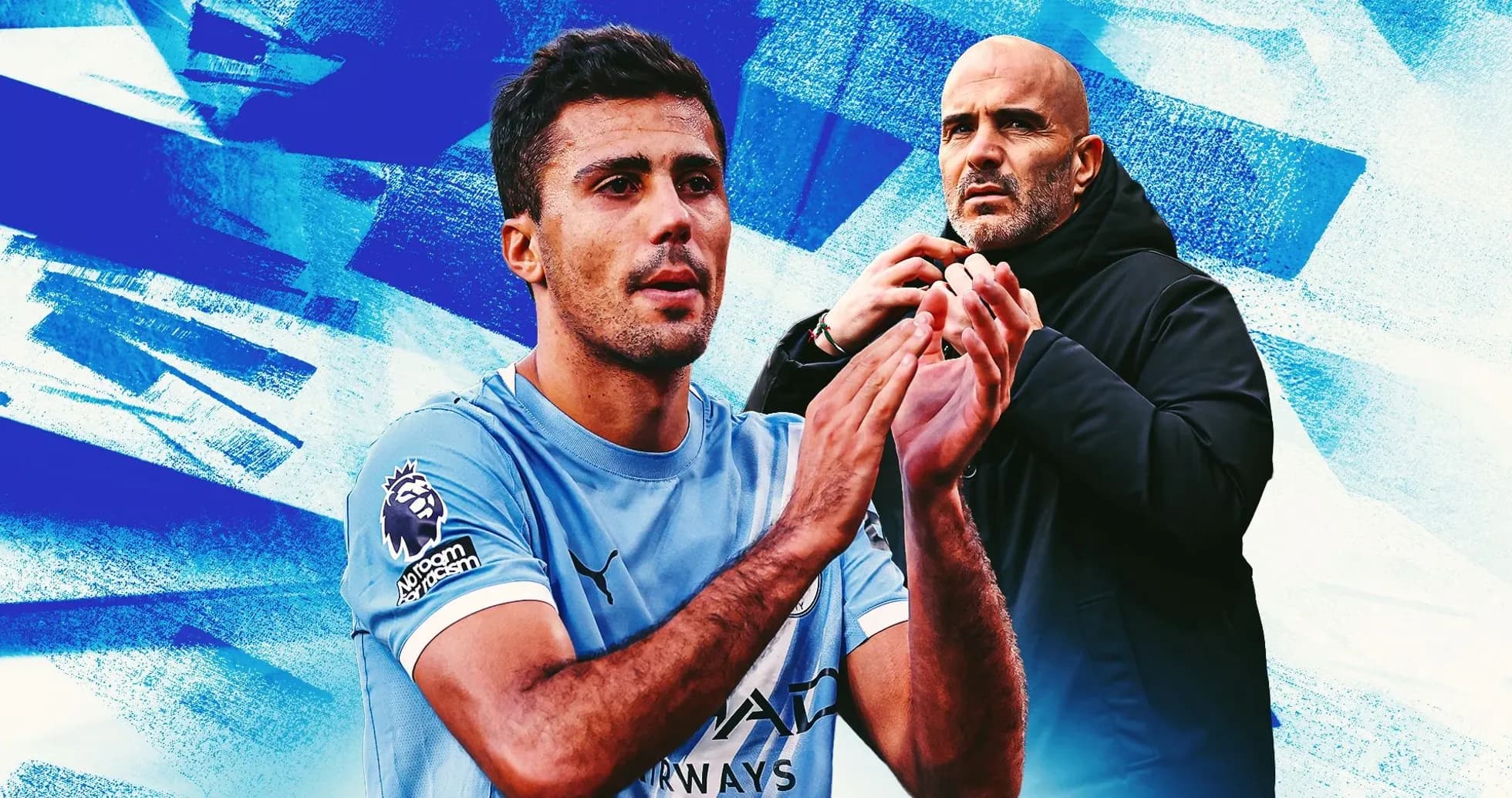

Rodri's Impact on Manchester City and Future Uncertainty
Rodri’s ruined year began with a twist of the knee and a shudder across Manchester.
An ACL rupture in September 2024, a month before he walked onto the Paris stage to lift the Ballon d'Or, ripped through the rhythm of a career that had been a metronome of reliability. The injury was bad enough; the aftershocks were worse. A string of niggles, constant attempts to ease him back, a stop-start existence for a player who had previously missed only seven games for City.
For a club built on control, losing their controller has proved costly.
The void Rodri leaves behind
City will point to many reasons for their failure to reclaim the league title since the 2023-24 season. But privately, they know one towers above most: life without Rodri at full tilt. Before his knee gave way, they dominated. Since then, they’ve looked mortal.
And yet, on the biggest stage of all this summer, he reminded everyone exactly who he is.
At the World Cup in North America, Rodri was the heartbeat of Spain’s triumph. From the base of Luis de la Fuente’s midfield, he dictated tempo, killed counterattacks, and smothered danger before it could grow. He looked like the player Pep Guardiola had promised would re-emerge.
“In the World Cup, he will be the best Rodri, and next season he will be the best Rodri,” Guardiola had said back in October. The prophecy landed. Spain lifted the trophy, and their midfield general looked untouchable.
For City, that dominance only sharpened an uncomfortable truth: Rodri is irreplaceable. And he knows it.
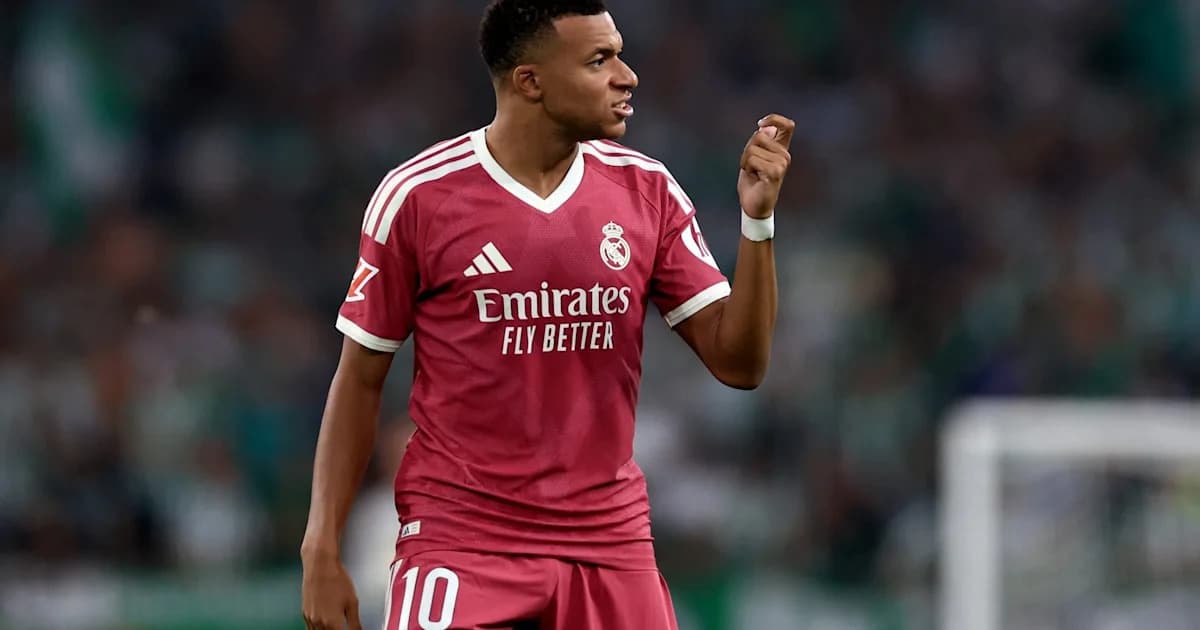
With Guardiola gone and just a year left on his contract, the prospect of the Ballon d'Or winner sensing the end of his Manchester cycle is very real. If he decides the next chapter lies in Madrid, City’s most stable pillar of the Guardiola era could walk away just as the club enters its most fragile transition in over a decade.
Maresca’s calm – and his problem
Into this turbulence steps Enzo Maresca, Guardiola’s former first-team coach, fresh from a mixed spell at Chelsea and now tasked with inheriting a dynasty rather than simply managing a team.
He understands why the world is circling his midfield lynchpin.
“First of all I have to say, that around big players there are always speculations so I am not worried about that,” he said at his first press conference back at the City Football Academy. “I think it is normal, also because they won the World Cup, because he is one of the best players.
“I think every manager wants to have Rodri because he is a top player. But now, surgery on Monday [on his back]. He needs a holiday, he needs to rest and recover and then he will be back with us.”
Maresca speaks with composure, but the reality in front of him is stark. Rodri is not just a holding midfielder. He is the hinge on which City’s entire structure swings. In Maresca’s fluid system, he would drift between roles, step into the back line, launch attacks from deep, and anchor a dressing room suddenly stripped of some of its loudest voices.
Bernardo Silva, last season’s captain, has gone to Madrid. John Stones has joined Inter. Guardiola, the architect of it all, has walked away. Remove Rodri as well and the spine that defined an era disappears almost overnight.
A midfield in pieces
Look past Rodri and the new £116 million signing Elliot Anderson, and the picture in midfield turns worrying.
Nico Gonzalez, brought in partly to cover Rodri during his ACL layoff, has been one of the misfires of City’s January 2025 splurge. He never truly convinced Guardiola, spent most of the second half of last season watching from the bench, and now sits on the list of potential departures.
Tijjani Reijnders told a different story at first. The £46m signing from AC Milan started brightly last summer, then faded. His influence shrank after the turn of the year, his role reduced to cameos and rotation duty. The hope inside the club is that a full season of adaptation will allow him to step up, but hope is not a plan when you are contemplating life without Rodri.
Then there are Mateo Kovacic, Rico Lewis and Kalvin Phillips, all reportedly deemed surplus to requirements. Take Rodri out of that group and what remains is not a midfield, but a rebuild.
For Maresca, the equation is brutal: lose Rodri, and the transfer window becomes an emergency operation rather than a careful refresh.
Anderson, the heir apparent?
Amid the anxiety, Anderson represents something different: opportunity.
The 23-year-old arrives from Nottingham Forest as one of the Premier League’s most complete young midfielders, and a central piece of Thomas Tuchel’s England. Combative, intelligent, and comfortable as a deep-lying playmaker, he looks every inch a modern No.6.
The numbers back up the eye test. Last season in the Premier League, Anderson won possession more times than any other player (306) and came out on top in the most duels (297). Despite the creative presence of Morgan Gibbs-White at Forest, Anderson still led the team in chances created, carving out 54 opportunities, nine of them classified as big chances.
On the World Cup stage, he went stride for stride with Rodri. Both finished with a joint-high 18 tackles in the tournament.
He can do it all. And if Rodri does head to Madrid, Anderson will not just see a gap; he will see a throne.
Bouaddi and the next wave
City may not leave him alone in that role for long. Inside the club, there is serious interest in accelerating the arrival of Ayyoub Bouaddi, the 18-year-old Lille midfielder who exploded onto the scene as one of Morocco’s breakout stars at the World Cup.
The original idea was simple: sign him, then loan him straight back to France. Rodri’s situation could change that. If the Spaniard leaves, the timeline may be torn up. Bouaddi could be dropped straight into Maresca’s hands rather than left to develop elsewhere.
Even then, asking a teenager and a 23-year-old to replace a Ballon d'Or-winning World Cup captain is a monumental gamble for a club that has spent a decade minimising risk.
Life after Pep
This is the backdrop to Maresca’s first season: a club emerging from the Guardiola era, trying desperately to avoid the chaos that engulfed Manchester United after Sir Alex Ferguson and Arsenal after Arsene Wenger.
The Italian is acutely aware of the history he is walking into.
“I want to say it is a privilege because the reason why the club decided to go for me, that is a privilege,” he said when asked about following Guardiola. “I have said many times, I consider Pep the best coach in the world in the last 20-25 years. It is a challenge.
“Also the history of the manager with many years in the same club, they struggle a bit. Sir Alex, Arsene. But it is also a challenge to do the right things.”
He leans heavily on the one thing City still have in their favour: stability above the dugout.
“Whatever happens, time will be key,” he said. “I know the organisation quite well and the people inside the club from years ago. I just said before that when a club has three managers in almost 20 years, it shows how serious they are. The structure understands to give time for everything.
The organisation is the main thing. This club and organisation has had three managers in 17 years. That is not normal and has not happened often. I am confident that we can continue to do a great job and continue to do the job that has been done in the last 14, 15 years since Roberto Mancini was here.”
The boardroom believes in continuity. The squad, though, is being ripped up and reassembled in real time.
The stakes of one decision
Next season at the Etihad will be a test of nerve as much as talent. Maresca is stepping into the biggest challenge of his managerial career, trying to preserve a culture while reshaping a team.
Keeping Rodri would not solve everything. But it would give City a fixed point in a shifting landscape, a leader on the pitch while new voices settle in the dressing room and a new manager finds his own authority.
Letting him go, especially to Real Madrid, would do more than weaken the starting XI. It would hand their greatest European rival the very player who has defined City’s control for half a decade, and rip another layer from the foundation Guardiola built.
The transition is coming either way. The only question now is whether Maresca faces it with the best version of Rodri at the heart of his midfield, or has to start his reign by surviving the loss of the one player City never truly planned to replace.