.svg&w=384&q=75 "Naijagoal logo")

Rodri's Journey: From Injury to World Cup Glory
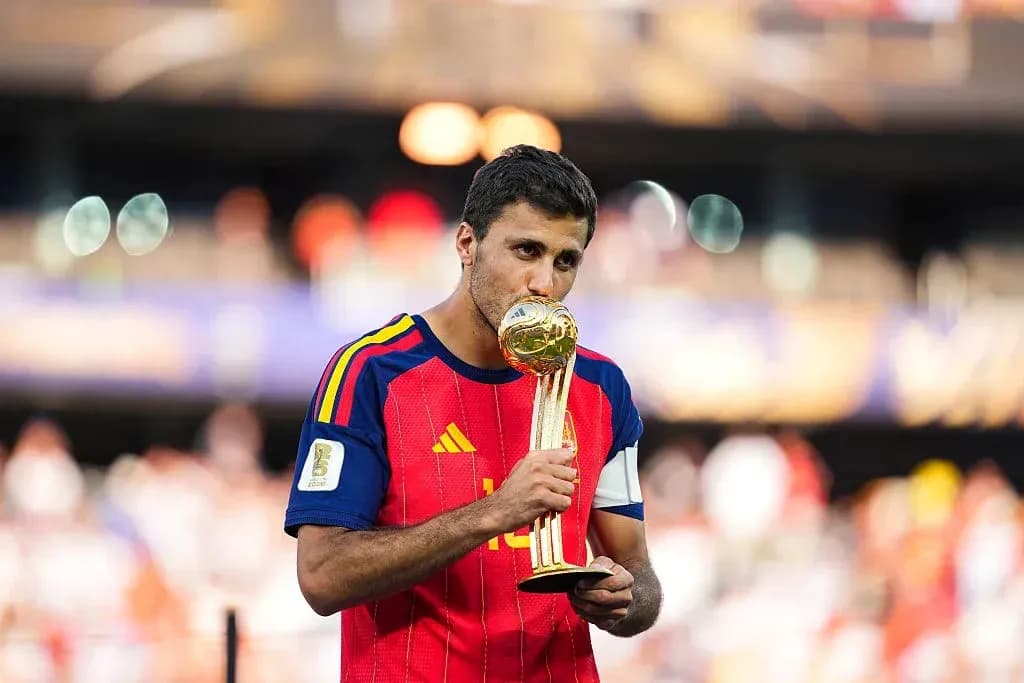
In the chaos of Spain’s World Cup triumph, with confetti in the air and Argentina finally subdued after extra time, Rodri stood at the centre of it all – Golden Ball in his hands, medal around his neck, and a story that runs far deeper than 120 minutes of football.
Spain had just edged Argentina 1-0 in extra time to reclaim the greatest prize in the game. Rodri, the tournament’s outstanding player, had dictated another final on the grandest stage. But as he tried to process it all, his mind went somewhere very different: back to September 2024, and a knee that refused to cooperate.
The midfielder’s season had been ripped apart by a serious knee injury. What followed was not a clean, linear recovery but a grind of setbacks and frustration, the kind that breaks plenty of careers long before it makes them.
So when the final whistle went and the cameras closed in, the emotion was raw.
"We're a bit shocked right now, even myself," he admitted to Fox Sports after the win. "I cannot express with words. I think now we're like in a cloud but, for me, it's been a very tough time."
This was not a standard victory lap. It sounded more like a manifesto.
Rodri spoke less about the goal that settled the final and more about the journey that almost kept him from playing in it. He wanted the story to travel, especially to those watching with dreams still forming.
"I just want the new generations to see my example as an opportunity. When you go down, you can rise again. This is my philosophy for my entire life."
That line could have come from a speech in a dressing room or a quiet moment in a rehab gym. It came instead on the night he lifted the World Cup.
The message was simple, but it carried the weight of months spent in treatment rooms, of doubts swallowed and days when progress barely moved.
"Of course, sometimes things go well, things go wrong, but always the positiveness."
On the pitch, his leadership had been just as direct. Before facing Argentina, he gathered his teammates and stripped the occasion of its mystique. No hiding, no fear, no deference.
"I said to the lads before the game, 'we have to go for the game.' We need to face them, we have to look to their eyes. We want this game."
Spain did exactly that. They pressed, they passed, they suffered, and in extra time they finally broke through. The pressure told, and the World Cup followed.
For Rodri, though, the trophy felt like a consequence of something deeper than tactics or form. It felt like a reward for refusing to stay down.
"And then life gives you the World Cup or not, but we were brave and I was brave in that moment I was down, so I want to thank all the people that helped me."
"But I want to thank myself, to be honest, in those moments."
It was a rare, striking admission from a modern footballer on the biggest night of his career: gratitude not just to the medical staff, coaches, and family, but to his own resilience. No false modesty, no rehearsed line. Just a player who had walked through a dark spell and come out with the game’s biggest individual honour and its biggest team prize.
For the next generation watching, the image will linger: Rodri, Golden Ball winner, World Cup winner, speaking as much about the fall as the rise.