.svg&w=384&q=75 "Naijagoal logo")
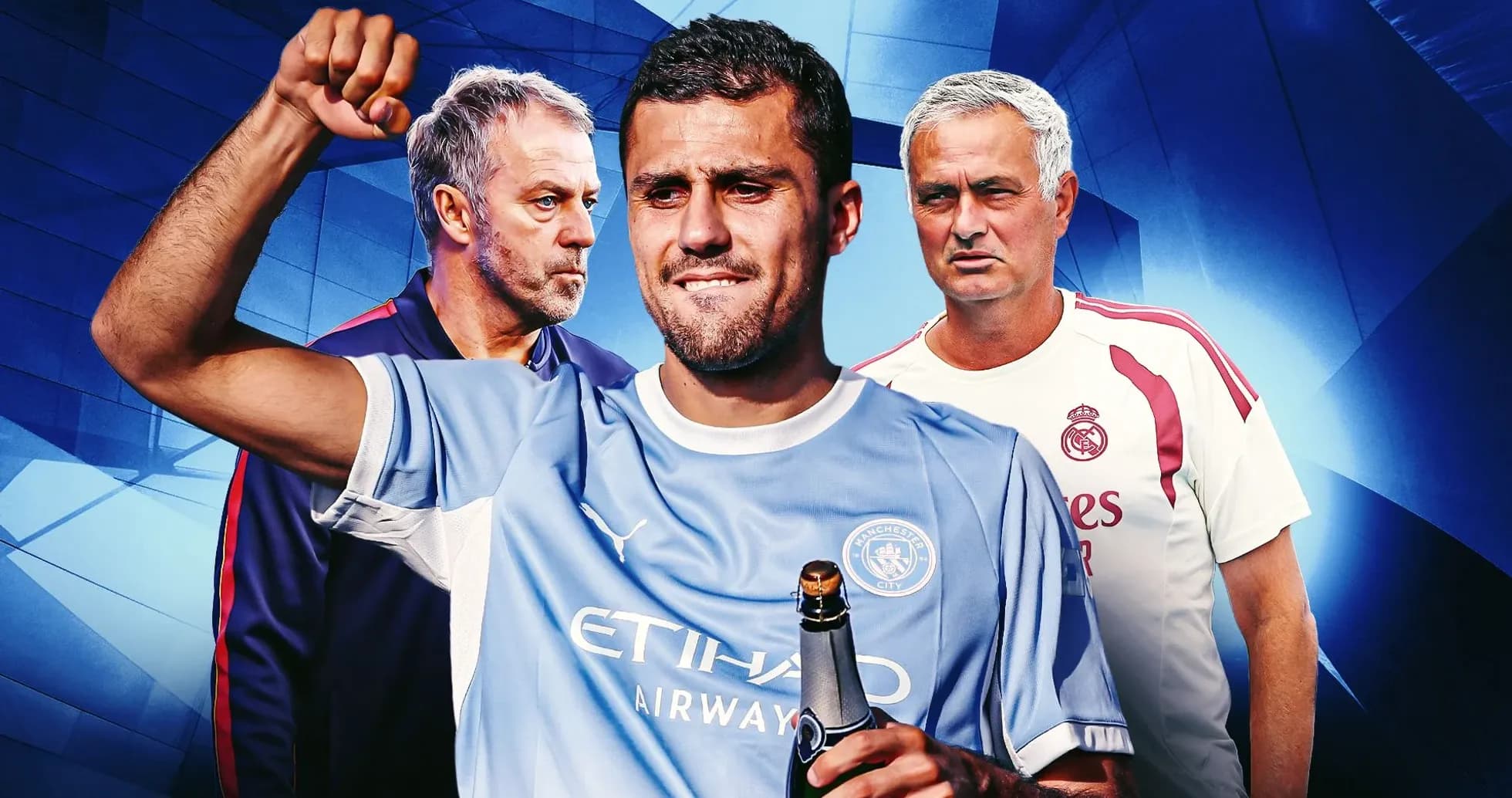

Rodri Chooses Barcelona Over Real Madrid: A Transfer That Redraws the Map
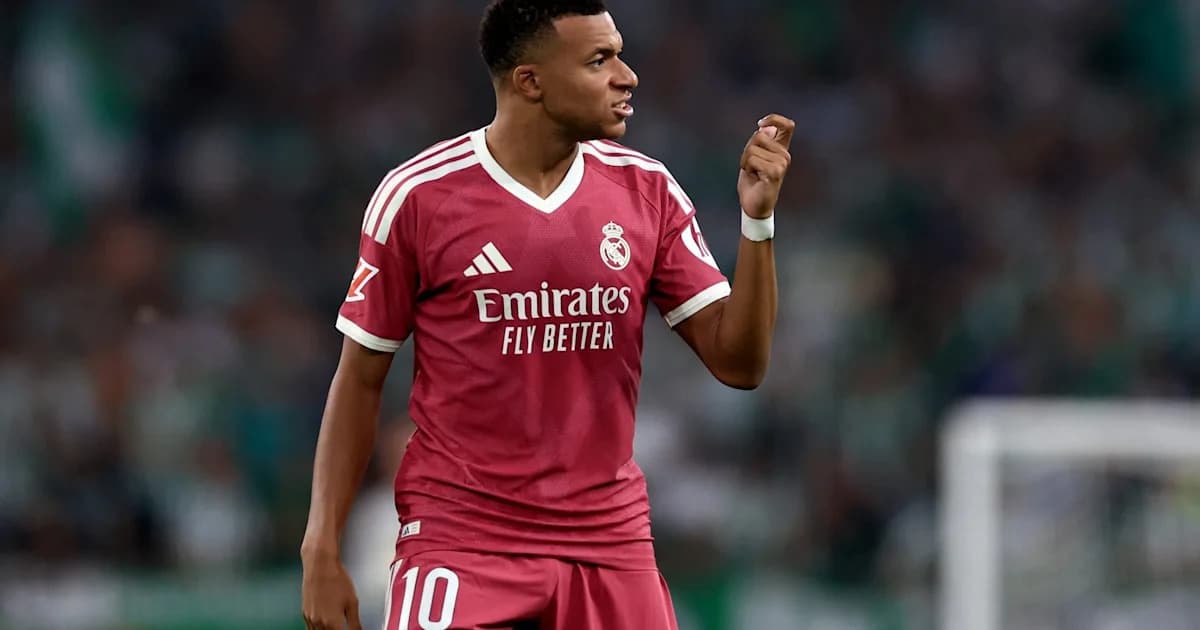
There are transfer battles, and then there are moments that redraw the map. Rodri choosing Barcelona over Real Madrid belongs firmly in the second category.
When the best defensive midfielder on the planet hits the market for a cut-price fee, the elite usually clear a path. Manchester City, boxed in by the calendar with their 2024 Ballon d'Or winner entering the final 12 months of his deal, are said to be ready to listen at around £60 million. For a player of his influence and pedigree, that is not a negotiation. It is an invitation.
Both sides of the Clasico divide saw it coming and pounced. Only one has landed the punch.
Guardiola gone, clock ticking
Rodri has not exactly hidden his restlessness. At 30, with medals stacked and reputation secure, he sees a window: two, maybe three more years at the absolute peak, provided his body holds and his brain continues to dictate games as ruthlessly as ever.
The timing at City could hardly be more symbolic. Pep Guardiola’s departure has ripped away the central pillar of the Etihad project. For key lieutenants like John Stones and Bernardo Silva, this summer already felt like a natural point of reflection. For Rodri, the sense is even stronger. The architect of City’s dominance now has little left to prove in Manchester.
Spain, and La Liga, have been calling. Loudly.
Madrid blink, Barcelona strike
Real Madrid believed they were in pole position. Their long-standing interest in Rodri reignited with a vengeance after his commanding World Cup, where he not only lifted the trophy with Spain but walked away with the Golden Ball as the tournament’s outstanding player. It looked like a classic Madrid move: identify the best, pay the price, plug him straight into a title-winning machine.
Then Barcelona walked through the door.
While Madrid stumbled over numbers and personal terms, Barcelona moved with rare clarity. Talks with the player came first. Contact with City followed. The Catalans, driven by both opportunity and necessity, suddenly had momentum.
Necessity matters here. Frenkie de Jong’s serious knee injury — a torn medial collateral ligament on World Cup duty, with a four-month lay-off and the spectre of surgery hanging over him — left a gaping hole in Barca’s midfield structure. A club that had already needed another brain in the middle of the pitch now faced a full-blown strategic problem.
Rodri, unexpectedly available and stylistically perfect, became the answer.
A natural heir in Catalan colours
The fit is obvious. Hansi Flick wants a ball-playing, possession-dominant side built on control and calm under pressure. Rodri has been doing that for years. He is, in many ways, the modernised echo of Sergio Busquets: tall, press-resistant, ruthless in his positioning, able to suffocate games from the base of midfield without ever appearing rushed.
Reports in The Athletic outlined why Camp Nou appealed so strongly. The footballing idea matches his instincts. The dressing room already contains several of his Spain team-mates. The project offers both continuity and a new challenge. It is not hard to see the attraction.
Any lingering doubt vanished when his agent, Pablo Barquero, spoke publicly. On Cadena SER, Barquero revealed that Rodri had personally informed Real Madrid of his choice.
“Out of respect for Madrid, as they have been class, Rodri informed them that his decision is to join Barca,” he said.
With that, the storm truly broke.
Chaos in the capital
Spain’s media ecosystem did the rest. Within hours, competing narratives and leaks were flying.
One version had Madrid and City close to an agreement, only for Madrid to try to shave down the fee at the last minute, stalling the deal and opening the door to Barcelona. Another line claimed Rodri simply grew tired of waiting for Madrid to act decisively and pivoted to Barca, with suggestions that Los Blancos were only prepared to go as high as £34m.
There were even more incendiary claims. Some insisted Rodri never really wanted Madrid at all, and had used their interest to smoke out a formal bid from Barcelona. Others reported that he had identical financial offers from the capital and Catalonia. The most sensational suggestion of all painted a picture of City and Barca quietly working in tandem, using the Catalan club’s interest to drag Madrid into a higher bid.
Inside the Bernabeu, the fallout has reportedly been brutal. José Mourinho, already a combustible presence in any transfer room, is said to have been furious at missing out from a position of strength. A heated phone call to chief scout Juni Calafat was widely reported, with Calafat allegedly telling his coach he would now have to rely on his existing midfield options.
For a club that has built its modern identity on never losing the big transfer tug-of-war, this is a rare and very public bruise.
A miss with consequences
This is not just about ego, though the sting there is obvious. It is about what Rodri would have meant to Real Madrid on the pitch.
He could have been the piece that shifts a title race. In a squad already stacked with talent, he would have represented a clear upgrade on Aurelien Tchouameni and Eduardo Camavinga in the pure holding role, allowing both to operate higher or in more specialised positions. His arrival might have been the difference between Madrid reclaiming La Liga or finishing second to Barcelona yet again.
Rodri himself had left the door wide open. During the March international break, he spoke openly about returning to Spain and the lure of the capital.
“Would I like to play in Spain again, in La Liga, in Madrid? I would like to return, yes, obviously,” he said. On the prospect of joining Real specifically, he added: “You can't turn down one of the world's best clubs.”
Madrid, somehow, have managed to turn themselves down.
Barcelona’s gain, and the balance of power
Barcelona now stand to benefit from that hesitation in a way that cuts deep in Madrid. Even if City rejected the first offer, the expectation remains that a fee in the region of £60m will eventually be enough. For a 30-year-old Ballon d'Or winner, at the height of his powers, that is astonishing value.
On the pitch, the implications are enormous. A midfield featuring Rodri at the base, with Pedri, De Jong and Gavi rotating around him when fully fit, has the potential to dominate La Liga for years. He is not just a shield; he is a conductor, a player who can orchestrate title runs from deep, as he has done repeatedly for City and, most recently, at the World Cup.
His arrival tilts the scales. Barcelona, already chasing a third straight league crown, suddenly look far better equipped to manage the grind of a domestic season while also mounting a serious assault on the Champions League, a trophy that has eluded them for 12 long years.
For Madrid, this cuts on multiple levels. They have not only missed out on a transformative player; they have watched him walk straight into the arms of their greatest rivals, and at a price that will be held up as a bargain for years if he delivers as expected. This comes on the back of a feeble Clasico defeat in May that cost them the league and chipped away at their sense of invincibility.
The symbolism is hard to ignore. In a summer that should have reinforced their dominance, Real Madrid have instead handed Barcelona the chance to build a dynasty around the very midfielder who might have been their own cornerstone.
When the next Clasico kicks off and Rodri stands in the centre circle in Barcelona colours, dictating the tempo, Madrid will know exactly where this slipped away: not on the pitch, but at the negotiating table.