.svg&w=384&q=75 "Naijagoal logo")

Raphinha's Comeback: From World Cup Disappointment to Barcelona's Key Player
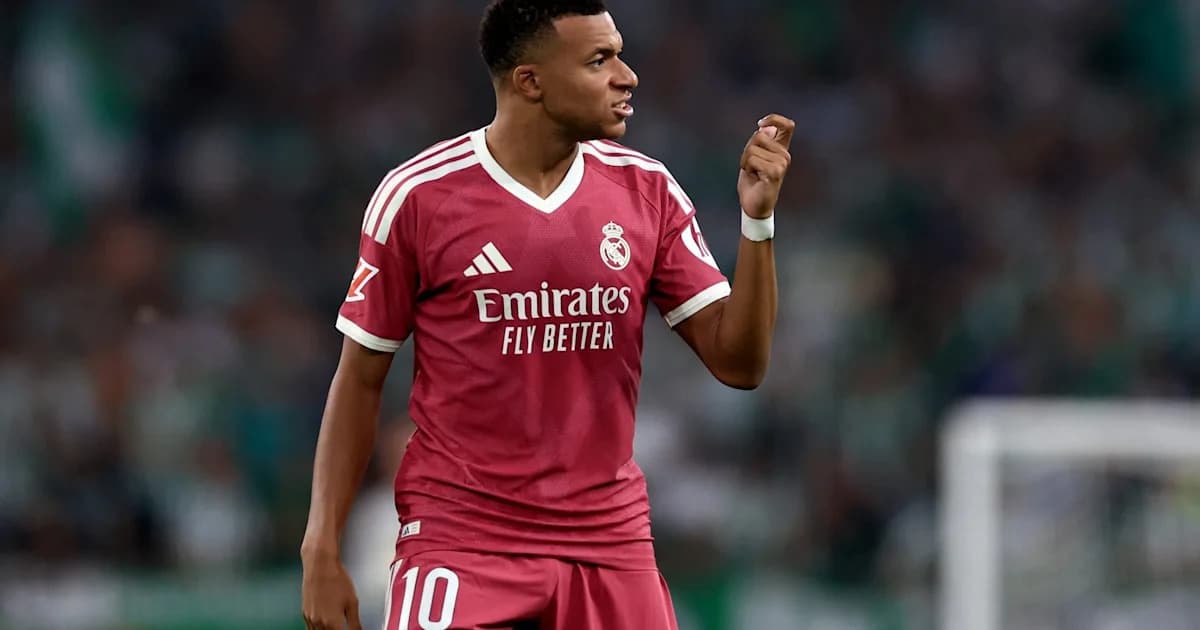
Raphinha’s summer has been about silence, sweat and a stubborn refusal to let his story be defined by a World Cup he barely played.
Three weeks after Brazil’s shock 2-1 exit to Norway on 5 July, the winger is ready to step back into the centre of Barcelona’s plans. Not in Qatar, not in North America, but in England – on training pitches far from the noise, where Hansi Flick is quietly assembling the attack he believes can dominate 2026-2027.
Flick’s trusted winger returns
Mundo Deportivo reports that Flick has every reason to be satisfied. Anthony Gordon, 25, and Karim Adeyemi, 24, have arrived to freshen up the forward line. Raphinha, 29, is not a new face, but he is already one of the pillars of the German coach’s project.
Since Flick took over, Barcelona have lifted five trophies. Raphinha has been at the heart of that run, stretching defences, scoring, assisting, and playing through more pain than most realised. Now he is due back with the squad on 29 July for the pre-season camp in England, which runs until 3 August and includes friendlies against Birmingham City on 31 July and Preston North End on 3 August.
The club has not ruled out the possibility that he could even show up at the Ciutat Esportiva today to travel with the group. That in itself tells a story: he wants in, and Flick wants him close.
World Cup dream that never really started
Raphinha went to the 2026 World Cup as one of Brazil’s most prominent forwards, one of the faces of a new cycle. On paper, he was supposed to be decisive. On the pitch, he barely existed.
A muscle injury in the group stage shattered his tournament. He left the match against Haiti clutching the hamstring area of his right knee, feeling a familiar pain. Medical tests confirmed the problem, but they did not completely rule him out. So he stayed, waited, and worked.
Against Norway, with Brazil’s World Cup on the line, he received medical clearance. The green light came. The minutes did not. He never got off the bench as Brazil crashed out. For a player who had fought his way into the role of leader in the national team’s attack, that image – fit enough to play, sat among the substitutes, powerless – marked a brutal end to a season full of peaks and painful dips.
The same injury, the same betrayal
The right hamstring has become his great enemy. It betrayed him again this summer, the same area that had already broken his rhythm in March with Brazil and then at Barcelona.
That March injury with the national team cost him five weeks at his club. Those five weeks coincided with Barcelona’s exits from both the Copa del Rey and the Champions League. While the team stumbled in the biggest competitions, one of their most dangerous attackers watched from the stands, reduced to a spectator.
He carried that frustration into the build-up to the World Cup. Then came the relapse in the warm-up match against France before the tournament’s opening. In one moment, all the momentum he had built – the goals, the assists, the leadership under Flick – vanished. The World Cup that should have cemented his status turned into a ghost competition for him.
He has taken note. The message from his camp is clear: lesson learned.
Noise off the pitch, clarity at Barça
His physical problems were followed by headlines about alleged financial and family issues, stories that those around him moved quickly to deny. At the same time, talk emerged of an 80 million euro offer from Al-Hilal, an approach that, according to reports, never even reached him and which he chose to ignore.
While the speculation swirled, Raphinha disappeared from the spotlight. Reports placed him in Orlando in the United States and in Ibiza with his family, away from the constant churn of rumours, focusing instead on recovery and calm.
Now he returns to Barcelona with a different kind of urgency. Not the desperation of a player chasing a move or a new contract, but the determination of someone who wants to reclaim the level that once pushed him into the conversation for the Ballon d’Or in the 2024-2025 season.
Under Flick’s first campaign at the club, he hit personal bests in goals, assists and overall output. That version of Raphinha – direct, relentless, decisive – is the one both he and Barcelona are desperate to see again.
A personal plan and a firm stance
Inside the club, the diagnosis is simple: the talent is not in question, the body is. The priority now is to end the string of muscle problems that have cut holes in his seasons and in Barcelona’s plans.
To that end, the coaching and medical staff have prepared a specific, individualised programme for him. The focus is on rebuilding strength in that troublesome area, managing workload, and making sure that when he explodes down the right flank, it is with confidence rather than fear of another pull in the back of his knee.
Barcelona know what they have. President Joan Laporta did not mince his words: “We have no intention of him leaving Barcelona.” For a player who has attracted interest and noise from abroad, there could hardly be a clearer message.
So Raphinha heads into this English pre-season camp with a curious mix of status and unfinished business. He is already a key figure in a team that has collected trophies under Flick, yet he walks into the new campaign with something to prove – to Brazil, to Barcelona, and most of all to his own body.
If the hamstring holds, the winger who once chased the Ballon d’Or discussion might find himself back in the heart of it. If it doesn’t, how many more chances will he get to write the version of his career he believes is still to come?