.svg&w=384&q=75 "Naijagoal logo")

Rangers' Fans Issue Warning to New Owners Amid Struggles
The warning landed long before the final whistle.
At a recent Rangers shareholder meeting, one supporter stood up, took the microphone and cut through the corporate polish with a blunt message for the club’s new US owners.
“Be very careful – as much as we’re loyal, if this rot continues, the atmosphere in the crowd will lead to people not turning up and buying what you’re selling us.”
He handed the mic back. Around 800 fellow shareholders answered with loud applause. It was not theatre. It was a threat.
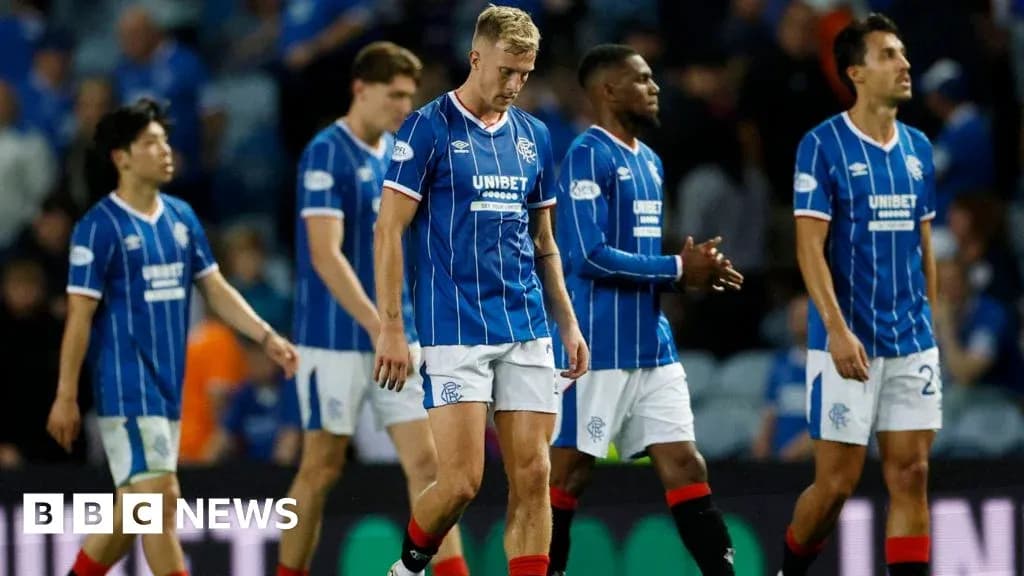
Four days later, that same fanbase watched Rangers stumble out of the Europa League with a 1-1 draw against Jagiellonia Bialystok at Ibrox. A draw that felt like a defeat, and a result that mirrored a bleak opening under new manager Derek McInnes.
Four games. Two draws. Two defeats. No momentum. No convincing signs of life.
Football failure, financial risk
McInnes now has to solve the football problem. The board has a different equation to crack.
If the fans stop “buying what they’re selling”, the numbers stop adding up. The warning from the floor of that meeting was as much about balance sheets as it was about league tables.
Rangers are struggling on the pitch. In the boardroom, they know they cannot afford to struggle in the stands as well. With performances sagging, the club is left trying to sell a failing product to a support that has heard too many promises and seen too few trophies.
Previous regimes learned the hard way what happens when confidence disappears. Once belief goes, money follows.
Winning fixes that. Winning fills seats, sells shirts, drives commercial deals. In Scotland’s tight financial landscape, though, the biggest levers for clubs like Rangers are clear: European participation and player trading.
Over the past five years, excluding matchday income, Rangers have generated roughly £18m from European competition. In their last published accounts, that was about 19% of total turnover. Serious money, and not easily replaced.
This season, to get anywhere near that figure, they would have to go and win the Europa Conference League.
Kieran Maguire of the Price of Football website laid out the brutal arithmetic: “For every pound you make in the Europa Conference League, you can make £2 in the Europa League and £7 in the Champions League.
“And of course in the Conference League you’re only playing three home games as opposed to four in the Europa League, so there will be a loss of matchday income as well.
“On the positive side, if you do qualify for the Europa Conference league stage, you should have a better chance of progressing further.”
That “positive side” comes with a heavy caveat. First, Rangers have to get there. They must beat Czech side Jablonec over two legs to even reach the league stage, never mind think about a deep run.
Even if they do progress, projections point to a shortfall of around £8m from European income compared with recent seasons. For an English Premier League club, that kind of drop is uncomfortable but survivable. For Rangers, in this financial climate, it bites hard.
Missed windfalls and transfer dilemmas
One obvious way to plug the gap is player trading. It is also an area where Rangers have repeatedly fallen short.
Reports suggest the club recently turned down a bid in the region of £22m for striker Youssef Chermiti. He has since suffered a serious injury that could keep him out for the rest of the season. A fee of that size would have gone a long way towards easing the pressure created by their Europa League exit. Now it sits in the “what if” column.
Nico Raskin is widely seen as the next major saleable asset. The Belgian midfielder carries an estimated value of around £14.5m, according to Transfermarkt. Cashing in, though, would open another problem: how to replace a key player in a squad already under scrutiny.
The board has not been idle. A recent share issue raised £16m in fresh capital, with a clear promise attached – the money would strengthen the team. At the same time, serious doubts swirl around recruitment at a club that has brought in more than 20 players over the past 12 months. Volume has not translated into obvious progress.
On top of that, Rangers have unveiled plans to refurbish Ibrox and upgrade their training ground. Both projects carry significant cost at a time when core football income is under threat.
The new consortium of owners, many still unnamed, injected an initial £20m when they took control a year ago. The direction of travel now suggests they will need to reach into their pockets again before the year is out. Whether they are willing to do that, and on what terms, remains an open question.
Loyalty, apathy and the breaking point
Before any new money arrives, the club has to win something even more fragile than a European tie: trust.
Inside Ibrox, the message is that recent poor results have not altered the long-term financial outlook or the ambition to win consistently and sustainably. The rhetoric is steady. The reality on the park is anything but.
The owners have already admitted to mistakes. That buys a little patience, but only if it comes with visible change. Supporters have heard apologies before. They now want proof that lessons are being learned, not just words that sound good at AGMs.
Chris Jack of the Rangers Review summed up the mood when he spoke to BBC Scotland News.
“You cannot knock the loyalty and support the Rangers fans have given the club over many, many years, but every individual fan or fan base has a breaking point.
“They’re going to have a point where they say ‘actually, I don’t fancy it this afternoon and it’s time for the club, the players and the manager to give me something.’”
Historically, Rangers fans have responded to crisis with anger. Anger fills phone-ins, fuels protests, keeps the club at the centre of conversation. Now, in some corners, that anger is softening into something more dangerous.
Apathy.
In football, apathy is deadly. It means empty seats, flat atmospheres, season tickets left unused, merchandise left on shelves. It means the warning from that shareholder floor turning into reality.
Rangers can survive a bad month. They can survive a bad season. What they cannot afford, on or off the pitch, is a support that stops caring whether they turn up at all.