.svg&w=384&q=75 "Naijagoal logo")
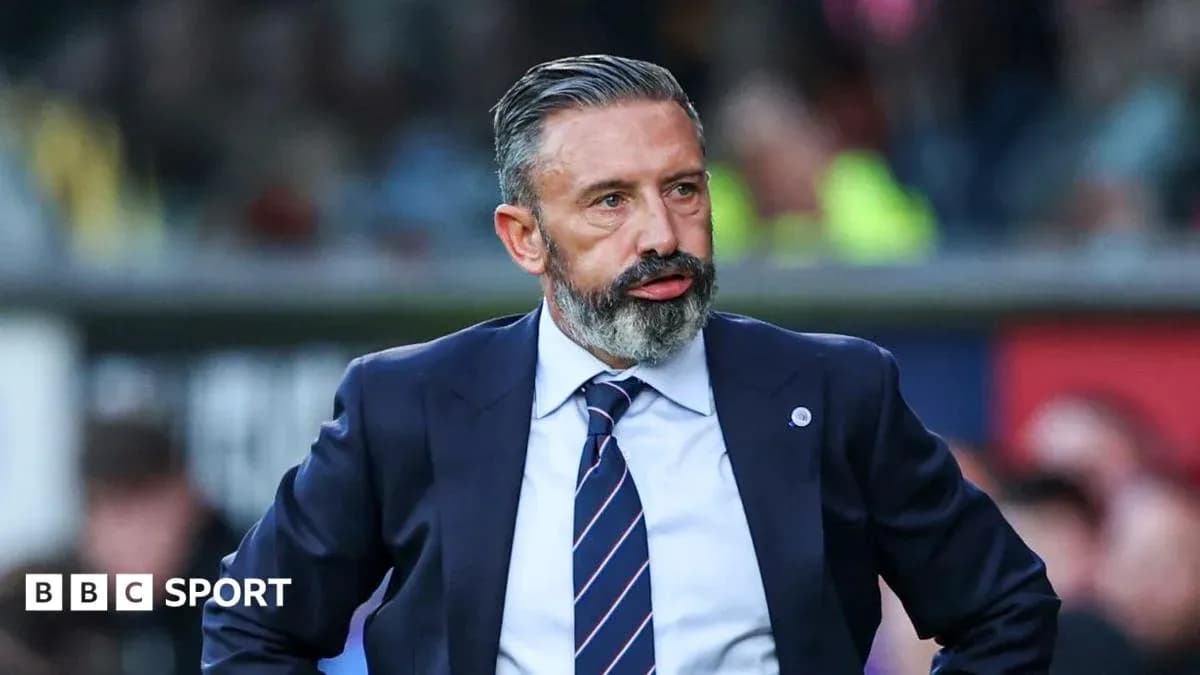

Rangers Draw at Dundee United: McInnes Faces Challenges
Derek McInnes walked into Tannadice knowing all about the weight of the badge on his chest. He left with a point, a scratchy performance and a clear reminder that Rangers remain very much under construction.
Same scoreline as last year’s opening-day stumble at Motherwell. Very different mood.
A new era, same old stutter
Twelve months ago, Russell Martin tore into his Rangers side after an opening-day draw. On Friday night, McInnes chose calm over fury as his tenure began with a 1-1 draw at Dundee United that flattered neither team and certainly not the visitors.
“It’s one game,” he told Sky Sports. The message was deliberate. No rage, no theatrics, just a manager asking for time as he tries to drag a reshaped squad through a summer of upheaval.
He will need it.
Rangers were slack and stretched in the first half, punished when Lachlan Rose struck to give Dundee United a deserved lead. The goal underlined exactly what Andy Halliday later highlighted: a defensive structure that looked anything but compact, regardless of how many bodies McInnes put behind the ball.
Glimpses of what might come
If the first half hinted at trouble, the second at least offered a glimpse of what this new Rangers might become.
Thelo Aasgaard dragged them back into it after the break, the standout visiting attacker on a night when too many of his team-mates played within themselves. His equaliser gave Rangers a foothold and briefly shifted the tempo, yet they never quite managed to turn pressure into control.
The game opened up. Spaces appeared. Dundee United, sensing fragility, went after the winner and should have had it when Jesse Randall broke clear, only to dink a tame finish straight at debutant goalkeeper Ivor Pandur. It was a big chance, and a big let-off.
McInnes didn’t pretend otherwise.
“It’s disappointing – we’ve dropped a couple of points, but we weren’t good enough to get all three,” he admitted. Honest, blunt, and accurate.
Debuts, doubts and a tactical question
This was not a night short on new faces. Pandur started in goal. Ben Godfrey marshalled the back line until a hamstring issue forced him off. Cammy Devlin and Lawrence Shankland, familiar to McInnes from their Hearts days, were thrown straight in.
From the bench came summer signings Dan Neil and Ross McCrorie, more pieces in a squad that is clearly being rebuilt on the fly. McInnes has made no secret of the fact that more are coming.
Rangers need them. Especially at the back and out wide.
Godfrey’s injury and uncertainty over whether Olwethu Makhanya will receive a visa in time for Thursday’s Europa League qualifier against Jagiellonia Bialystok leave the defence looking light. Yet it was the lack of width that really jarred.
Djeidi Gassama started on the left but failed to land a punch and was withdrawn at half-time. By the closing stages, Rangers were effectively playing without natural wingers, with Mohamed Diomande and Aasgaard operating narrow and Dundee United rarely forced onto the back foot.
McInnes didn’t sugar-coat that either. He wants pace and bravery in the wide areas, players who can beat a man and change the rhythm of a game.
“I thought second half as the game got stretched, we had opportunities to play in the spaces and we need people with the ability to go past [defenders],” he said. “We still would like a winger to go get at people, make a difference and get people on the back foot. We never quite had that and we’re working hard to bring those types of players to the club.”
No panic, but no illusions
From the outside, it might have felt like a familiar story: Rangers starting slowly, dropping points, questions being asked. Inside the punditry box, though, there was a note of restraint.
Former Rangers striker Steven Thompson saw no need for alarm.
“It’s not the result Rangers wanted, but it is a point away from home at a difficult venue,” he told BBC Radio Scotland, pointing out that other sides will struggle at Tannadice. For him, this is a moment for observation, not overreaction. One game, one scratchy draw, a long season ahead.
Halliday, however, went straight for the tactical jugular on Sportsound. For all the talk of systems and shapes, he argued, the basics weren’t there.
“No matter how many defenders you play with, the main fundamental is being compact, and I thought Rangers were the furthest thing from compact,” he said, adding that most of the standout individuals – Aasgaard aside – wore tangerine, not blue.
The verdict was simple: Rangers are a work in progress, and this was not the launch McInnes had in mind.
Work to do, and not much time
McInnes knows his strikers live off service. They didn’t get enough of it. He knows his back line needs bodies and his wide areas need a jolt of quality and aggression. He knows, too, that patience at Ibrox is rarely in generous supply.
For now, he leans on perspective. One game. One point. A team still learning his demands.
But the next test comes fast. Jagiellonia Bialystok await in Europe, and Rangers will travel with a patched-up defence, an unfinished squad and a manager already juggling injuries, paperwork and expectation.
The transition has started. The question is not whether Rangers will improve under McInnes – they almost certainly will. It’s how quickly they can do it before early-season frustration hardens into something far more unforgiving.