.svg&w=384&q=75 "Naijagoal logo")


Premier League 2026/27 Preview: A New Era Begins
The Premier League is back this weekend, and it returns with something it hasn’t had for a while: genuine mystery at the top.
For the first time in a decade there is no Pep Guardiola prowling a technical area, no familiar silhouette dictating the shape of a title race. In his place? A new wave. Chelsea, Liverpool and Manchester City all begin the 2026/27 season under fresh management, three big clubs betting on three very different ideas of how the game should be played – pressing, control, domination, each with its own accent.
It feels like the start of a new chapter because the last great reset looked very similar. Cast back to 2016/17: Guardiola arriving at City, Jose Mourinho taking over at Manchester United, Antonio Conte landing at Chelsea. That season lit the fuse on a tactical arms race. Ten years on, Guardiola departs having bent the league to his will: six titles from 10 seasons, a 60% win rate, and a brutal run of four consecutive championships between 2021 and 2024. Six titles in seven years. Four in a row. Everyone else spent a decade chasing his shadow.
They don’t have to anymore. And that changes everything.
Arsenal step into the vacuum
If there is a natural heir to the throne, it is obvious. Mikel Arteta’s Arsenal walk into this season as defending champions, with the most settled squad, the clearest tactical identity and the least upheaval of the traditional elite. While others rip up and redraw, Arsenal refine.
Their 3-0 dismantling of Enzo Maresca’s Manchester City in the Community Shield underlined that point. It wasn’t frantic or emotional. It was controlled, almost casual. Arsenal barely had to leave second gear to put away last season’s runners-up, a quiet but pointed statement about where they sit in the current hierarchy.
They have continuity, confidence and scars that now drive them. The deepest cut came in Europe. Losing last season’s UEFA Champions League final to PSG on penalties still hangs over the club. Arteta knows how close they came to rewriting the club’s history. That proximity to glory could reshape his priorities.
Because this year, the calendar bites.
World Cup fatigue and a fork in the road
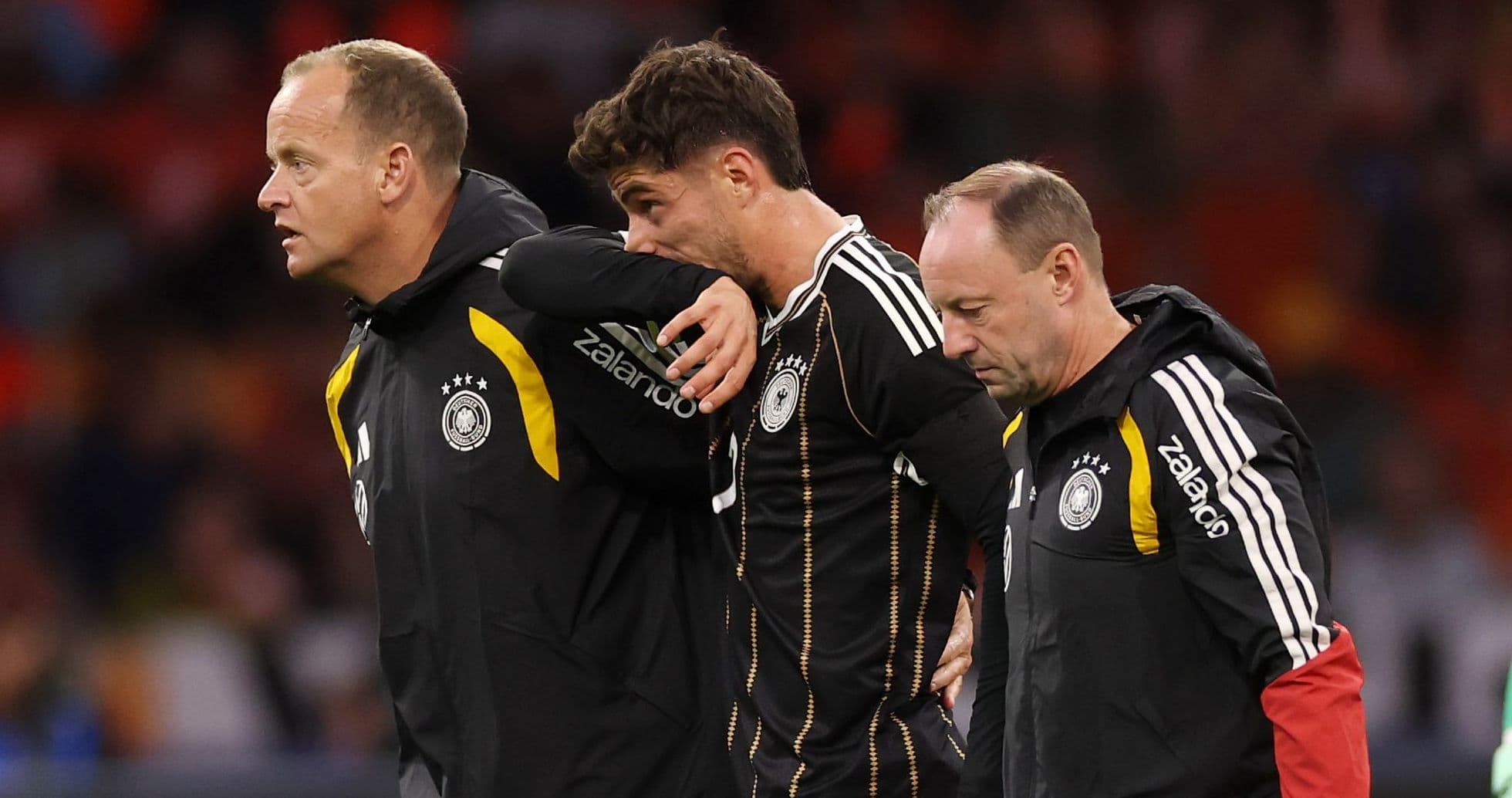
The 2026 World Cup lingers over the new campaign like a cloud. Players have flown back from a summer of high-intensity international football straight into another nine-month slog. Some haven’t even made it that far.
William Saliba and Jurrien Timber are already ruled out of the season’s opening stretch, and they will not be the last to feel the cost of a bloated schedule. Arsenal’s depth, impressive on paper, suddenly looks vulnerable when exposed to the twin demands of a title defence and another tilt at Europe.
That is where the dilemma lies. Does Arteta pour everything into retaining the Premier League, staking Arsenal’s authority in England for a second straight year? Or does he lean into the Champions League, the one prize the club has never touched, after coming so agonisingly close in that shootout defeat to PSG?
He may not be able to go full throttle in both. The World Cup has seen to that.
The lurking threat with empty midweeks
While Arsenal juggle competitions, others sit quietly in the weeds with a powerful advantage: time.
Chelsea under Xabi Alonso and Tottenham under Roberto De Zerbi will not be flying across Europe in midweek. No Thursday night trips, no Sunday fatigue. Just training-ground hours, video sessions, repetition. For managers who build complex, philosophical systems, that is gold.
History already offers Chelsea a reason to dream. The last time they lifted the Premier League trophy was in 2016/17 under Antonio Conte. They had finished 10th the season before, missed out on European football, and used the clear schedule to drill a ruthless, organised machine that stormed to the title. Fast forward a decade and the parallels are impossible to ignore: Chelsea finished 10th again last season, again arrive with a new coach, again have nothing to distract them outside domestic competition.
They have been here before and squeezed every drop from the situation. If Alonso settles quickly and the squad responds, there is no structural reason why that trick cannot be repeated.
Tottenham, too, will fancy their chances of fast-tracking De Zerbi’s ideas without the grind of midweek travel. In a league this tight, fresh legs and sharper game plans by March and April could tilt the table.
A league in the middle of a tactical swing
The managers are new, but the landscape they step into has already started to shift. Last season hinted that the Premier League is moving into a new tactical cycle.
Three themes dominated 2025/26: direct football, man-oriented pressing and set-piece supremacy.
Teams stopped obsessing over building through every line and started asking a simple question: why fight the first press at all? Goalkeepers went long more often. Defenders looked early for the front line. Possession was no longer a trophy to be polished, but a tool to be used sparingly and efficiently.
The numbers tell the story. The league averaged around 713 completed passes per match last season, down 4.68% from 2024/25 and 8.59% from the record high just two years earlier. Coaches embraced the idea that sometimes it is smarter to give the ball away in the right area than to risk losing it in the wrong one.
Man-oriented pressing helped drive that change. Once teams began locking on to individuals all over the pitch, playing short from the goalkeeper became a high-risk act. One loose touch, one poor angle, and the press swallowed you whole. The obvious solution was to go over it. Long, direct, into a striker who could fight for it.
The return of the classic No 9
That shift dragged the traditional centre-forward back to centre stage.
Erling Haaland remained the model, a devastating finisher and physical reference point. But he was not alone. Igor Thiago, Dominic Calvert-Lewin, Danny Welbeck and others thrived in more old-fashioned striker roles, not just as goalscorers but as structural pillars.
They offered an aerial out-ball when the goalkeeper kicked long. They pinned centre-backs, occupied the box, and gave teams a target around which to build set-piece routines. At one stage, after 11 matchweeks, 21.3% of all Premier League goals were coming from headers, up from 15.6% the previous season and on course for a record share.
It was not a quirk. It was a consequence.
Set pieces as a science, not a restart
Nowhere was that more obvious than at dead balls.
Corners, free kicks, long throws, deep throw-ins – they stopped being restarts and became designed attacking phases. Coaches poured time and detail into them. Opposition analysts had to treat them like open-play patterns.
Long throws became a weapon of choice. Opta recorded 14 goals from long throws in 2024/25, the highest figure on record. That spike acted as a trigger. By the start of 2025/26, Premier League teams were averaging 3.03 long throws into the opposition box per game, almost double the highest rate seen at any point in the previous decade.
Every touchline became a potential launchpad. Every throw near the box felt like a corner.
The next battle: who solves the puzzle first?
So the question heading into 2026/27 is not whether these trends will continue. Direct football, man-oriented pressing and set-piece obsession are now baked into the league’s DNA.
The real contest is who finds the antidote.
Can someone design a possession structure that tempts the press but consistently escapes it? Will a coach discover a way to neutralise long throws and crowded-box routines without sacrificing control elsewhere? Does a new idea about space, pressing traps or rest defence emerge to replace the current orthodoxy?
For a decade, Guardiola was the reference point, the coach everyone measured themselves against. With him gone, the field opens up. Alonso at Chelsea, Maresca at City, Andoni Iraola and the rest of this new generation now have the room – and the responsibility – to define what comes next.
This season will not just decide who lifts a trophy in May. It may decide what Premier League football looks like for the next ten years.