.svg&w=384&q=75 "Naijagoal logo")
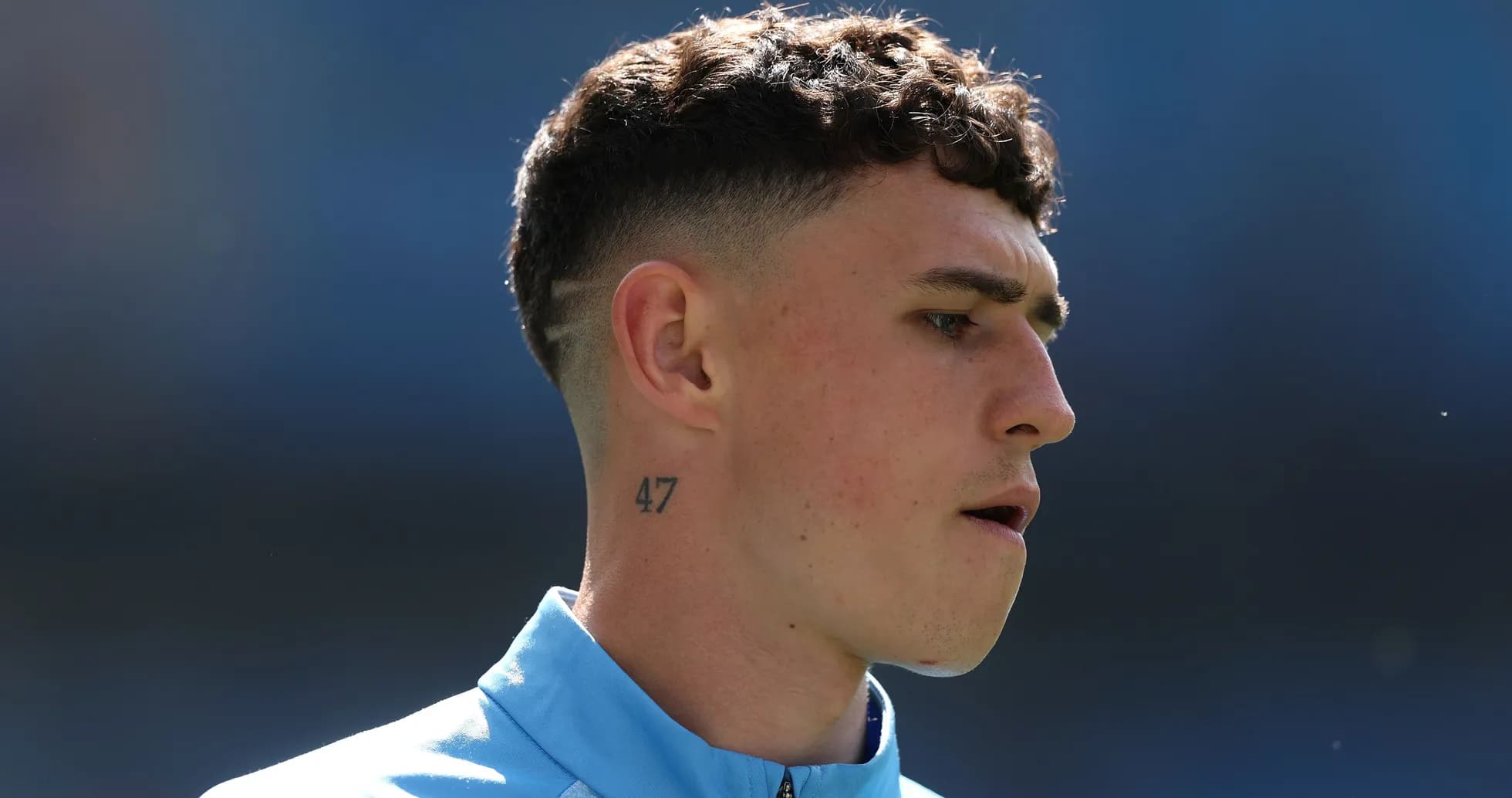

Phil Foden Left Out of Manchester City's Captaincy Team
Enzo Maresca has drawn his leadership lines at Manchester City – and Phil Foden is on the outside of the official group looking in.
The new City boss has confirmed a four-man captaincy team for the season, with Ruben Dias, Erling Haaland, Marc Guehi and Gianluigi Donnarumma handed the armbands. Foden, 26 and a symbol of the club’s modern era, was strongly considered but ultimately left out of the formal hierarchy.
“The captain is Ruben, Erling, Marc Guehi and Gianluigi Donnarumma,” Maresca told reporters on Friday, laying out a structure that blends the club’s established core with two newer faces.
Dias and Haaland were always likely to form the spine of any leadership group. The elevation of Guehi and Donnarumma, though, underlines how quickly Maresca wants their influence to spread through the dressing room.
Guehi arrives with Premier League captaincy on his CV from his time at Crystal Palace. Donnarumma already wears the armband for Italy. That, Maresca stressed, was decisive.
“First of all, because Marc was already captain with Palace. So he has the experience. Gigio is the captain of the Italy national team, so he has the experience,” he explained. “The reason why I decided for them is because I can see them helping the teammates and the dressing room to behave in the right way.”
Foden’s omission is striking. A local hero, academy graduate and 2023-24 PFA Player of the Year, he has been central to City’s identity for years. Maresca made a point of acknowledging that, calling him “one of the guys from the house” and admitting the call was not straightforward.
“These are the four that are going to be the captains,” he said. “But I was also thinking about Phil, because Phil is one of the guys from the house. He’s not in that group, but for me he’s also one of the captains, one of the players that belong to that group.”
So Foden will not wear the armband in any official sense, yet Maresca clearly expects him to lead. Just not necessarily with a title.
On the pitch, the conversation around Foden is just as nuanced. While the new manager sees his best work coming through the middle, the England international has started the Premier League campaign on the right flank, covering for the injured Jeremy Doku.
“I think Phil’s best position is in the middle,” Maresca insisted. “But he’s doing an effort to help the team. Because for the first two games we didn’t have options in the wide area, because Jeremy was injured.
No doubt that Phil’s position in the middle is much better. But I’m very, very happy with Phil since day one. He’s working very good, even when he has played wide in the last two games, he was good.
That willingness to shift Foden around the front line is no accident. Maresca clearly views him as one of the squad’s most intelligent and adaptable players, someone whose technical level allows him to solve problems wherever he is placed. In an early-season injury spell, that flexibility becomes a tactical safety net.
The Italian has been impressed with Foden’s response. No complaints about roles. No public agitation for that central “number 10” pocket. Just a steady acceptance that his job, for now, is to plug gaps and still decide games.
“You can see that inside the pitch he’s much better,” Maresca said, underlining his belief that Foden is at his most dangerous in central areas. “But at the end, Phil is going to play in a different position. Because he’s a good and good players, they can play in different positions.”
The message is clear. The armband belongs to Dias, Haaland, Guehi and Donnarumma. The freedom between the lines will come in time. Until then, Foden’s influence will be measured less by a piece of fabric on his arm and more by how often he bends matches to his will, wherever Maresca asks him to stand.