.svg&w=384&q=75 "Naijagoal logo")
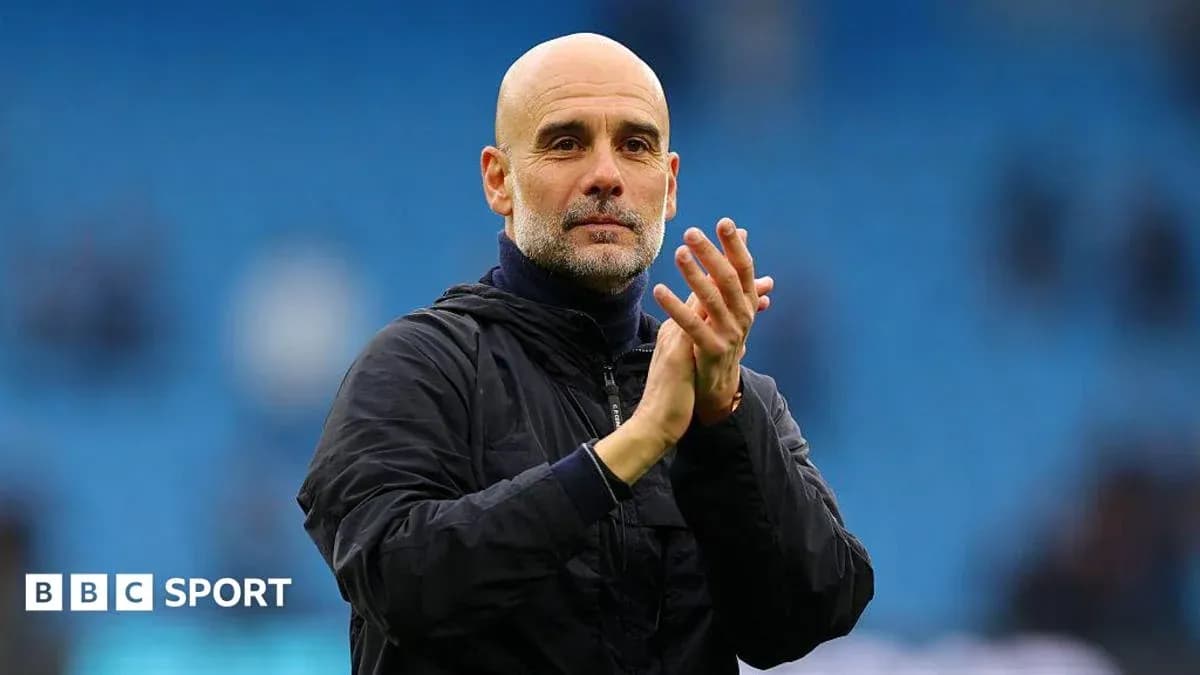

Pep Guardiola in Talks to Become Italy's Next Head Coach
Pep Guardiola has held talks about becoming Italy’s next head coach, Italian Football Federation president Giovanni Malagò has confirmed, opening the door to one of the most intriguing international appointments of the modern era.
The 55-year-old walked away from Manchester City this summer after a decade that reshaped English football. Six Premier League titles, three FA Cups, five League Cups and a long-awaited Champions League turned City into a domestic superpower and Guardiola into the defining coach of his generation.
Now, a nation stuck in reverse wants him to lead a reset.
Italy turn to a serial winner
Italy have been without a head coach since April, when Gennaro Gattuso resigned in the wake of yet another failure to reach the World Cup. Three successive World Cups without the Azzurri is an astonishing statistic for four-time world champions, and the federation has been under growing pressure to act boldly.
Sky Italia first revealed on Monday that the FIGC had made contact with Guardiola. Malagò then went a step further. Speaking to Italian digital outlet Cronache di spogliatoio, he confirmed that discussions with the former City manager have taken place and hinted that the federation is willing to stretch its finances to make it happen.
“[Financial] Exceptions have been made, exceptions that for example may concern the name that is so overbearing in these hours: Pep Guardiola,” Malagò said. “Exceptions for obvious reasons that I am not here to explain, but it is not certain that this thing will go through.”
The message was clear: Italy know they would be entering a different economic bracket to land Guardiola, and they are at least prepared to explore it. BBC Sport has contacted the FIGC for further comment.
A rare foreign bet
If Italy were to appoint Guardiola, it would mark a dramatic break with tradition. The men’s national team has almost always been led by Italians, with only two brief and partial exceptions.
In the 1950s, Hungarian coach Lajos Czeizler formed part of a technical committee that collectively ran the side. In the 1960s, legendary Argentine Helenio Herrera shared the job with Ferruccio Valcareggi. Both cases were unusual, both limited. A full-blooded foreign appointment, with total control and a global profile, would be something else entirely.
Guardiola has never coached in Italy, but the country is not unfamiliar territory. He speaks fluent Italian and spent two seasons in Serie A between 2001 and 2003, in two spells at Brescia and one at Roma. Those were not the most glamorous years of his playing career, but they gave him a feel for Italian football culture that still matters in federation corridors.
Not the only name in the frame
Guardiola is the headline act, but he is not the only candidate. Another former Manchester City manager, Roberto Mancini, is firmly in the conversation. Mancini led Italy to Euro 2020 glory, restoring pride and fluency before his own turbulent exit from the national team job.
Andrea Pirlo is also under consideration. The former Italy midfielder, now in charge of Dubai United, represents a younger, more experimental option, with a deep connection to the Azzurri shirt but a relatively short coaching résumé.
Asked whether Guardiola, Mancini and Pirlo are the only contenders, Malagò was blunt: “Absolutely not. We think about a certain profile and certainly these names fall into that category.” The federation wants a specific type of leader – modern, authoritative, capable of reshaping an ailing giant. Guardiola sits at the top of that list, but he is not alone on it.
A quick return for a tired man?
If Guardiola does accept, it would be a rapid return to the dugout. His time at City ended in May, when he admitted the strain of a decade in Manchester had taken its toll.
“I am so tired. Seriously, I am so tired,” he said at the end of his final campaign. He spoke warmly of his previous spells at Barcelona and Bayern Munich, but insisted the “luggage of memories” from ten years at City outweighed anything he had experienced before.
Those memories came on top of already trophy-laden eras in Spain and Germany. At Barcelona, he built one of the greatest club sides in history. At Bayern, he dominated domestically and refined his positional play philosophy. City then became the ultimate expression of his ideas in the Premier League.
The question now is whether a man who walked away citing exhaustion is ready to embrace the unique demands of international football – less daily intensity, but enormous pressure in short, unforgiving bursts.
Italy, though, are desperate for a jolt. A nation that once set tactical standards for the world is watching major tournaments from the sofa. If the FIGC can persuade Guardiola that the Azzurri are his next great project, the entire landscape of European international football could shift in an instant.