.svg&w=384&q=75 "Naijagoal logo")

Pedri's World Cup Journey: From Untouchable to Tactical Decision
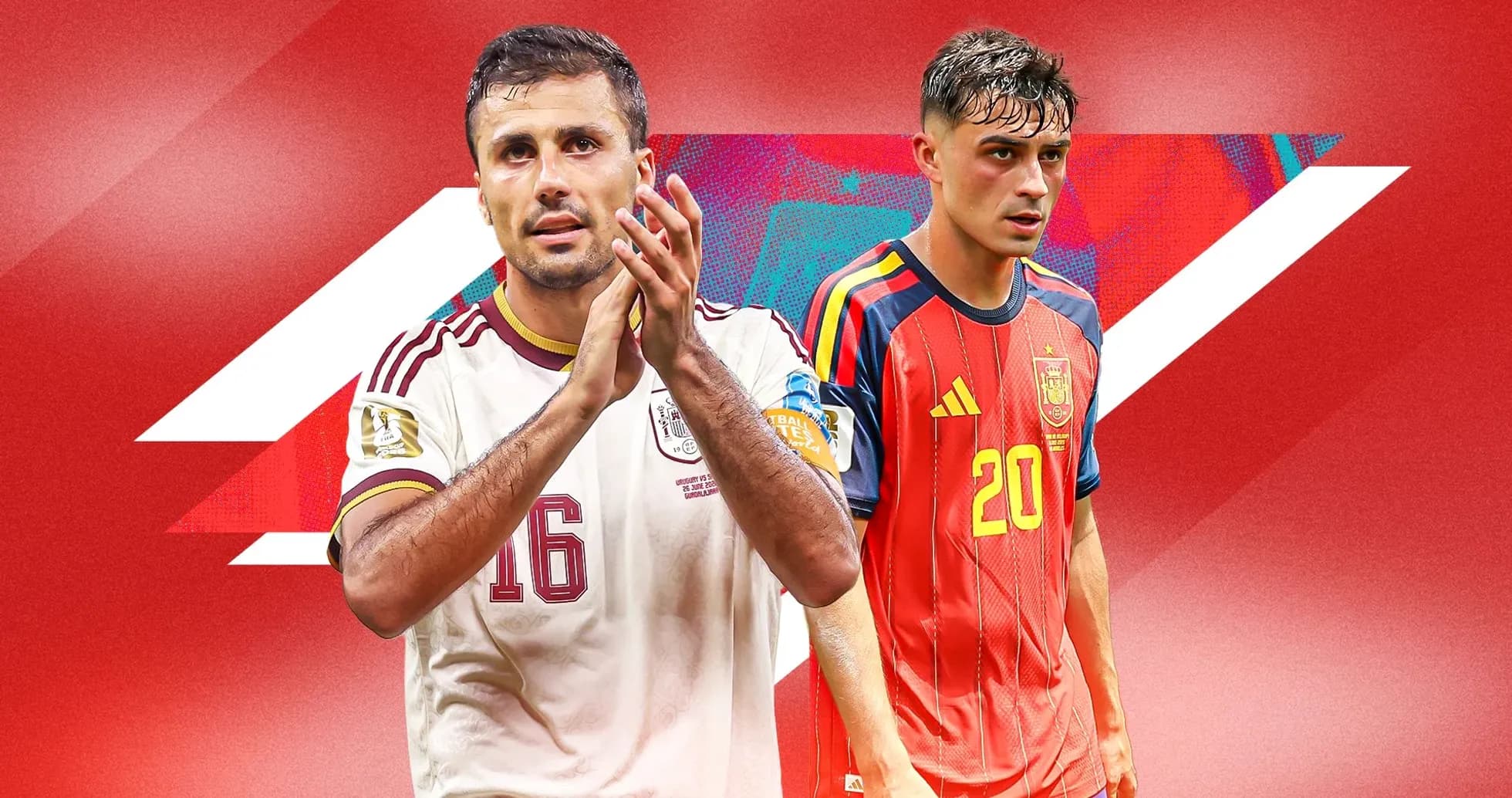
Rodri has spent this World Cup reminding everyone why he walked off with the Ballon d'Or. Pedri, the other half of Spain's supposed dream ticket in midfield, has spent it under the microscope.
Two years ago in Germany, the idea of Rodri and Pedri steering La Roja to back-to-back major titles felt almost inevitable. In North America, only half of that equation is delivering.
Pedri’s World Cup so far has been a study in perception. On paper, he started well: five chances created in the drab, goalless opener against Cape Verde, more than any other player on the pitch. In reality, that display fed a debate that has rumbled all the way from Las Palmas to Barcelona and Madrid. The criticism came anyway. No spark, no decisive moment, no victory.
Cape Verde’s subsequent form has softened the judgement on that 0-0, but not on Pedri himself. The deeper Spain have gone, the louder the question has become: where is the end product?
The comparison with Jude Bellingham was inevitable and, for many, irresistible. Different players, different roles, different teams – but the World Cup is unforgivingly simple. Bellingham is deciding games for England. Pedri is not deciding games for Spain. One scores and creates, the other is accused of knitting patterns without piercing the fabric.
Into that noise stepped Luis de la Fuente with a decision that cut through the sentiment. After five consecutive starts at this World Cup – and nine in a row stretching back to Qatar – Pedri was dropped.
It still jolted. This is the player long treated as untouchable, the Barcelona conductor supposed to guide a golden generation. Yet De la Fuente framed the call with cold clarity: Spain’s squad is loaded, especially in midfield, and reputations do not guarantee minutes.
He even argued that if anyone had a right to feel aggrieved, it was Mikel Merino. The Arsenal midfielder had been left on the bench again despite scoring a late winner against Portugal in the previous round. Merino’s response? No sulking, no storming. Just another decisive contribution, this time the clinching goal in the 2-1 win over Belgium.
“It’s unfair that Mikel doesn’t play from the start, but it would also be unfair if someone else were left out,” De la Fuente said. “Only 11 can play, and they understand that – the role they have to play at any given moment. When they take to the pitch, they know what they have to do; that’s why it’s a pleasure to be their manager.
“What matters is the team. It doesn’t matter who starts the match. Everyone is important, even those who haven’t played.”
The message was blunt: nobody is bigger than the collective. Not even Pedri.
There has been no sign of rebellion from the 21-year-old. No leaks, no sulks, no public frustration. Unai Simón was quick to stress that the midfielder has accepted his new reality with the same composure he shows on the ball.
“He’s taken it well,” the goalkeeper said after the Belgium game. “We all want to play but, in the end, there isn’t room for everyone.
“How must David (Raya) and Joan (Garcia) feel knowing they’re world-class goalkeepers? Everyone wants to play, but everyone wants to win the World Cup. So, when it’s your turn to accept that role, you do it.”
The question now is not about Pedri’s attitude. It is about his impact – and his place in a semi-final against France.
His cameo against Belgium did nothing to quiet the doubters. Thrown on to exploit space in transition, he squandered a late breakaway with a strangely loose pass, the kind of basic error that rarely features in his Barcelona highlight reels. At the same time, Fabián Ruiz strengthened his own case to stay in the XI, scoring Spain’s opener in Los Angeles and earning glowing praise from Simón as “an immense talent” who has just “won two Champions Leagues in a row”.
De la Fuente sees the nuance. He knows what Pedri is when the rhythm is right. Few midfielders recover the ball so often and then use it so cleanly. Few dictate tempo with such quiet authority. Yet the Spain coach has been explicit: there is a Barcelona Pedri, and there is a Spain Pedri – and they cannot be the same.
“Pedri is a class player, one of the best in the world, if not the best,” De la Fuente said, before adding that Fabián “is also one of the best players in the world if not the best.
“But Pedri can’t play like he does for Barca, because we play differently. We have similarities, but it’s not the same. We don’t have the same players either.
“We have Rodri, so of course his partner in midfield is different. For me, Pedri could play as a 6, 8, or 10, but we have to make decisions that are always very elaborate, very analysed, very tailored to the opponent.”
France are the next opponent. Kylian Mbappé, Antoine Griezmann and company bring a kind of attacking threat that can tear open any side that gives up control. If Spain have one area where they can claim an edge, it is in the middle of the pitch. That is where the real dilemma lies.
De la Fuente could repeat the Cape Verde blueprint and field Rodri, Fabián and Pedri together. Three technically gifted midfielders, one clear idea: keep the ball, starve France, suffocate their front four. On paper, it is Spain’s best – perhaps only – route to blunting Didier Deschamps’ arsenal.
But football is not played on paper, and there is a cost. Dani Olmo has grown into the No.10 role in the knockout rounds, knitting attacks, finding pockets, unsettling markers. His finishing still frustrates at times, yet his movement and intensity have been vital. Bringing Pedri back into the XI alongside Fabián would likely push Olmo out.
De la Fuente has often spoken of Pedri as a “special talent” he prefers “closer to the opposition box”, where the midfielder’s feints, flicks and one-twos can hurt. He has also praised the way Pedri “always sets a very good tone, whether he’s in top form or not”. But his recent comments hint at a different plan: use Fabián to grind down opponents, then unleash Pedri against tired legs.
“Pedri could benefit from Fabián’s work,” he said after Belgium. “It’s essentially teamwork.”
That line cuts to the core of this Spain. The squad’s selflessness is not a slogan; it is their competitive edge. Merino accepts the bench and wins games. Fabián steps in and scores. Pedri sits, waits, and is expected to be ready the moment his name is called.
De la Fuente knows what is coming against France. “France have already shown some extraordinary, exceptional potential, but we have too, so I think the game is very open. It will require fresh, energetic players, and it will require us to be the best version of ourselves.”
The best version of Spain almost certainly includes Pedri somewhere in the story. The real intrigue is whether that version features the Barcelona Pedri, dictating and deciding from the start, or a new, national-team edition – one asked to change the game only when the night is at its most demanding.