.svg&w=384&q=75 "Naijagoal logo")

Patrick Vieira Appointed Senegal Head Coach
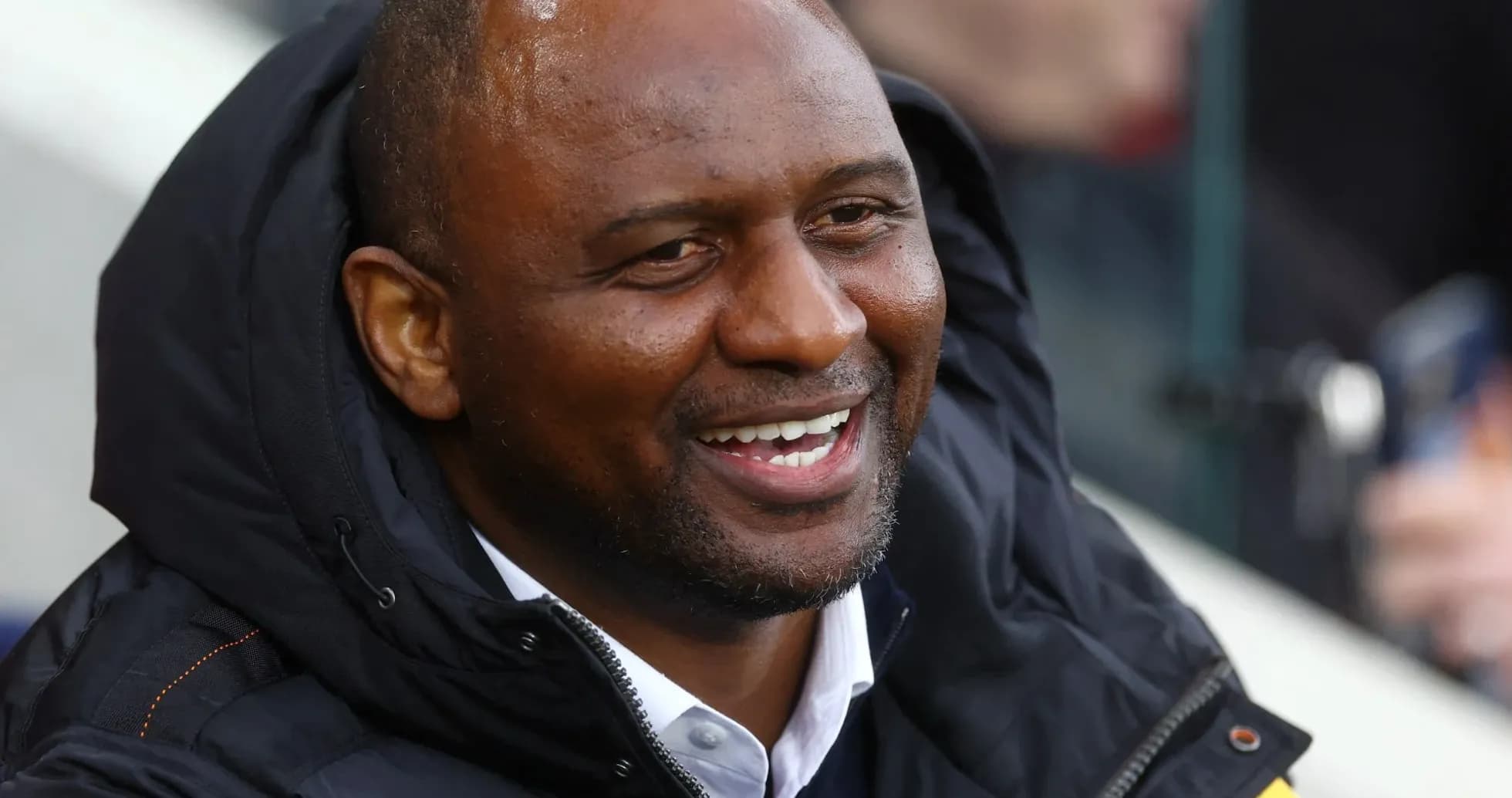
Patrick Vieira is going back to where it all began.
Born in Dakar, crowned a World Cup winner with France, and forged into a midfield enforcer at Arsenal and Inter Milan, the 50-year-old has been appointed head coach of Senegal’s national team, replacing Pape Thiaw.
The Senegalese Football Federation (FSF) confirmed the move in a social media statement, calling Vieira’s arrival a “strategic move” designed to “establish a high-level technical set-up, in line with our country’s sporting ambitions”. In other words: this is a reset at the very top.
End of the Thiaw era
Vieira steps into a job loaded with history and recent turmoil.
Thiaw oversaw what should have been a landmark moment: Senegal’s triumph at the 2025 Africa Cup of Nations. That title never made it into the record books. After a dramatic mid-game walk-off by Senegalese players and staff, the crown was stripped and awarded to Morocco, a decision that sparked anger, debate and deep introspection across the country’s footballing circles.
The fallout did not stop there. At the 2026 FIFA World Cup, Senegal exited in the Round of 32, their campaign ending with a 3-2 defeat to Belgium. The early elimination drew heavy criticism, and Thiaw was dismissed soon after. The federation has now turned to one of the most decorated names in African-born football to change the narrative.
A Dakar-born World Cup winner
Vieira’s story is well known but carries a different weight now he wears Senegal’s colours on the touchline.
Born in Dakar, he left for France as a child and rose through the ranks at Cannes. AC Milan spotted his potential and took him to Serie A, but it was Arsene Wenger and Arsenal who unleashed the full force of his talent. Between 1996 and 2005, Vieira became the heartbeat of a dominant Arsenal side, winning three Premier League titles and setting the standard for the modern box-to-box midfielder.
From there, he moved to Juventus, then to Inter, adding more silverware and authority to an already glittering CV, before closing out his playing days at Manchester City in 2011.
On the international stage, he chose France over Senegal and never looked back. Vieira played a central role in the team that won the 1998 World Cup, the first French side to lift the trophy, and he followed that with victory at Euro 2000. He finished his international career with more than 100 caps for his adopted country, his name etched into French football history.
Now, he is being asked to write a new chapter with the country of his birth.
From MLS to the Lion’s den
Vieira has not been short of touchline experience.
He began his coaching career in Major League Soccer with New York City FC in 2016, where he quickly built a reputation for structured, possession-based football. Nice brought him back to France in 2018, handing him a Ligue 1 platform and a different kind of pressure.
The Premier League called again when Crystal Palace appointed him, a two-year spell that showed flashes of bold, front-foot football. Short stints at Strasbourg and Genoa followed, adding more European experience and dressing-room management to his toolkit.
Now comes his first international job, and it is a big one.
The FSF has not yet confirmed the date of his official presentation. “The date of the official presentation and the next steps in [Vieira’s] installation will be the subject of a subsequent announcement,” its statement on X said. The formalities can wait. The expectations cannot.
A quick countdown to competitive action
There is no gentle introduction waiting for Vieira.
Senegal’s next competitive fixtures arrive in the upcoming FIFA international window between September 21 and October 6, 2026, when the 2027 AFCON Qualifiers get under way. The Confederation of African Football (CAF) has not released the full schedule yet, but the draw is already known: Senegal will face Mozambique, Sudan and Ethiopia in their group.
On paper, it is a group they would expect to control. In reality, it will be the first hard measure of Vieira’s impact — his tactical imprint, his squad selections, and his ability to reconnect a proud football nation with a team that has been through a bruising period.
For a Dakar-born World Cup winner now charged with leading the Lions of Teranga, the question is no longer about his legacy in Europe. It is about whether he can turn Senegal’s recent scars into a new, sharper edge on the African stage.