.svg&w=384&q=75 "Naijagoal logo")
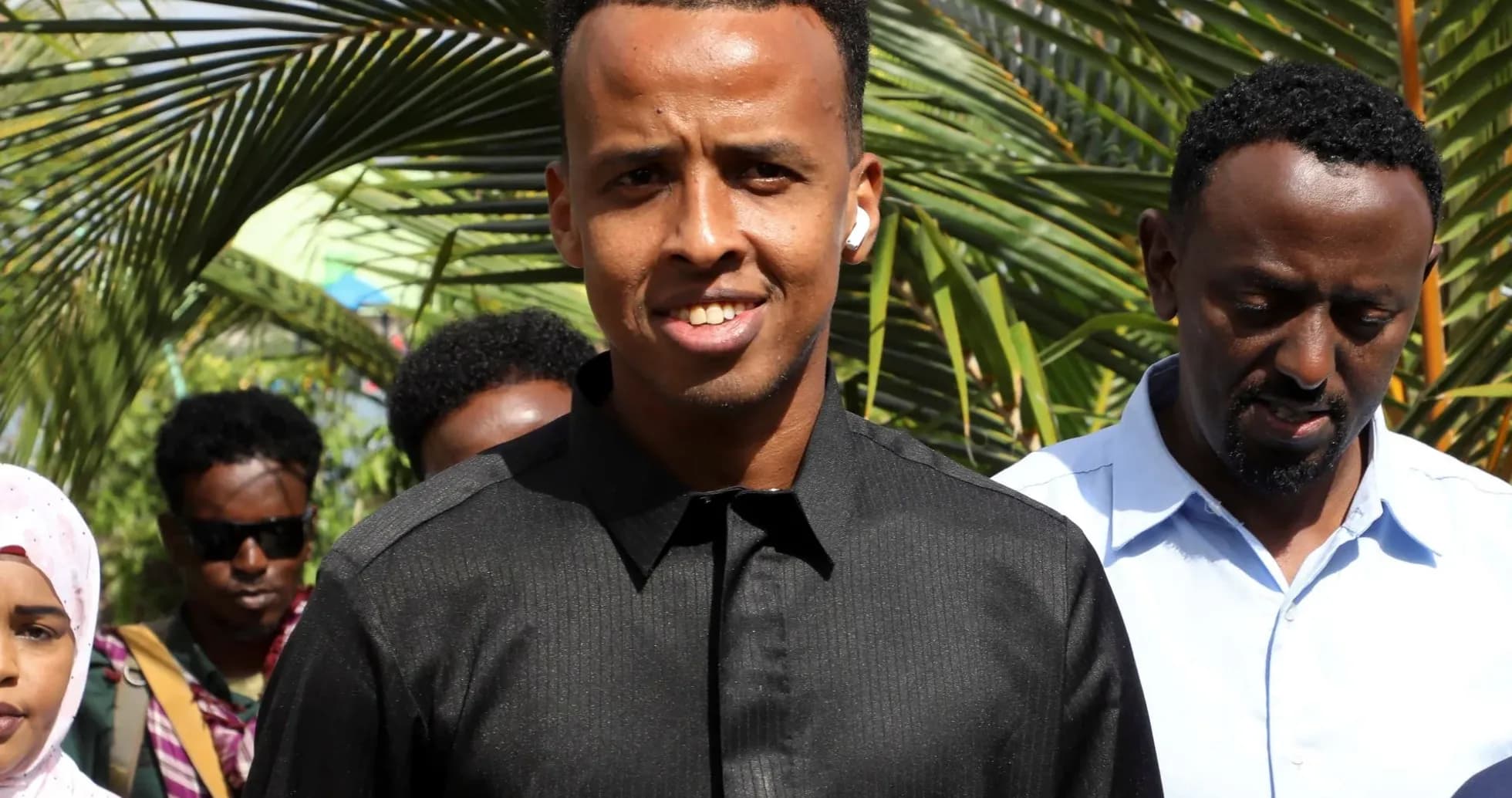

Omar Artan's Journey: From Airport Rejection to UEFA Super Cup Referee
Omar Artan was supposed to stride out at a World Cup this summer. Instead, he was stopped at passport control in Miami and sent home in controversy. On Wednesday night, he will finally walk out on to one of football’s grand stages – not under FIFA’s banner, but UEFA’s – as referee of the Super Cup between Paris Saint-Germain and Aston Villa.
For the 34-year-old Somali, the appointment is far more than a prestigious midweek assignment. It is a public restoration, a pointed message and a political act all rolled into one.
From airport rejection to European showcase
Artan’s story burst into the headlines before a ball had even been kicked at the World Cup in June. Selected by FIFA as part of the refereeing panel, he arrived at Miami International Airport expecting to join the elite group entrusted with the game’s biggest stage. Instead, US officials refused him entry.
A US Department of State official later told AFP that Artan was “associated with suspected members of terrorist organisations”, a designation that rendered him “ineligible for admission to the United States”.
The referee rejected the allegations. In Somalia, the reaction was furious. Artan, already a trailblazer at home, was welcomed back as a wronged hero, his World Cup dream snatched away not by performance or fitness, but by opaque security claims that were never tested on the pitch.
“It was a very tough period,” he said in an interview with UEFA. “A lot of people have sympathy for me, because when someone has been working a lot of years and is supposed to do something, and then can’t do it, it’s very challenging.”
FIFA president Gianni Infantino called the episode “unfortunate” and added, “We don’t control everything.” It was a shrug of a statement, and it left a vacuum. UEFA stepped into it.
UEFA steps in – and makes a point
The European body did not just offer sympathy. It offered a whistle and a stage.
UEFA announced that Artan would referee the Super Cup, the curtain-raiser that pits Champions League winners PSG against Europa League winners Aston Villa. On paper, it was framed as part of a new cooperation deal. In reality, the symbolism runs much deeper.
To justify the appointment, UEFA pointed to the agreement it signed in April with the Confederation of African Football (CAF), aimed at closer collaboration between the two confederations. Artan, the first Somali to officiate at the Africa Cup of Nations in 2024, fits perfectly into that narrative of exchange and opportunity.
But this is not just a development story. It is a political shot across FIFA’s bows.
Relations between UEFA and Infantino have been strained for years, and they have deteriorated sharply over the last fortnight. At the heart of the latest conflict lies an abandoned plan to open up the World Cup to private investors – a proposal that triggered a revolt led by UEFA.
That revolt helped kill the project. It has not ended the fight. UEFA still brandishes the threat of a boycott of FIFA tournaments, including future World Cups, as it seeks to force Infantino out. Against that backdrop, appointing a referee FIFA could not deliver to its own showpiece is not a neutral act. It is a statement.
A personal journey to the European stage
Strip away the politics for a moment, and the human story remains powerful.
“I was lucky, but I have worked very hard to be here and I’m really proud,” Artan told UEFA. His path has been anything but smooth. “As you can imagine, I grew up in a difficult situation, but it didn’t prevent me from pursuing my dreams.”
From a country better known for conflict than for elite football infrastructure, he has climbed steadily. The landmark came in 2024 when he became the first Somali to officiate at the Africa Cup of Nations, a historic step both for him and for Somali football.
Now comes another first: his debut match in Europe, and not just any match. PSG, with their superstar cast and Champions League crown. Aston Villa, resurgent and carrying the Europa League trophy. A global television audience. A single referee at the centre of it all, taking charge of a game he could easily have watched from a hotel room this summer instead.
“Having adventures, making memories and learning new things is always great,” he said. “When we got this call it was, for me and my family, really a very, very happy moment.”
More than a Super Cup
On Wednesday, the focus will ostensibly be on Kylian Mbappé and company, on Villa’s tactical discipline, on who lifts the first European trophy of the season. Yet every close offside, every penalty shout, every flare-up that Artan has to calm will carry a little extra weight.
This is a referee reclaiming the narrative of his career in full view of the football world, backed not by the global federation that first selected him, but by the continental rival now openly challenging its president.
For UEFA, it is a showcase of solidarity with CAF and a subtle rebuke to Washington’s judgment and FIFA’s passivity. For Somalia, it is another barrier broken. For Artan, it is what he wanted all along: a game to referee, a pitch to walk on, a whistle to blow.
The Super Cup will end with either PSG or Aston Villa lifting silverware. For Omar Artan, the real victory comes the moment he leads the teams out and the stadium falls quiet for that first blast of the whistle.