.svg&w=384&q=75 "Naijagoal logo")

Norway's World Cup Ambitions: Beyond Haaland's Stardom
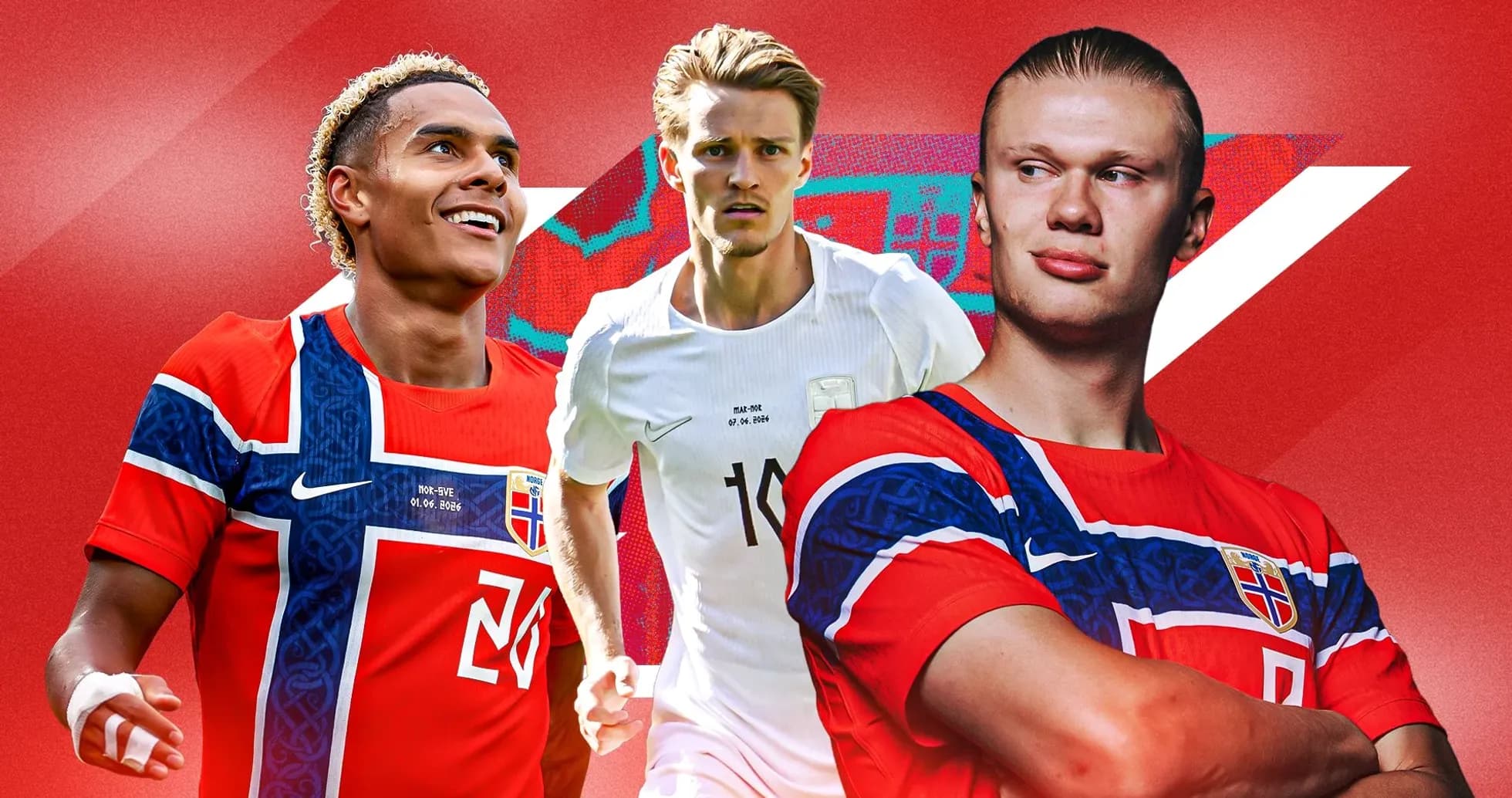
Erling Haaland will dominate the billboards in North America, but Norway are arriving at this World Cup with far more than a single, hulking headline act. Stale Solbakken has built a side with weapons all over the pitch, a team that attacks from unusual angles and leans into its quirks. In the so‑called Group of Death with France, Senegal and Iraq, they will need every one of them.
Wide men built to feed a monster
The brief is simple: find Haaland. The cast around him is anything but.
On the left, Antonio Nusa looks ready to explode onto the global stage. The RB Leipzig winger is only 21, but he glides past defenders as if he’s been doing it on this stage for a decade. Six goal contributions in six qualifying games tell one story; the manner of them tells another. He scored and assisted in a 3-0 demolition of Italy, then did damage again in the 4-1 hammering in the return fixture. When Norway broke big nations in qualifying, Nusa was usually in the frame.
Waiting behind him is another prodigy with superstar noise around his name. Andreas Schjelderup arrives from Benfica on the back of a blistering second half of the season under Jose Mourinho: 10 goals and assists in just 14 league matches, plus a brace against Real Madrid in the Champions League in January. At 22, he’s not yet nailed on as a starter, but few in Portugal doubt where his ceiling lies.
The right flank looks very different. On paper, Alexander Sorloth is a 6'5" centre-forward. On the pitch for Norway, he often starts wide, then slides inside next to Haaland when the ball comes into the box. It’s a nightmare to defend: two giants attacking the same space from different angles. Sorloth backed up the role in qualifying with eight goal contributions in eight games and heads to the World Cup after a 20-goal season with Atletico Madrid, despite not always starting.
Oscar Bobb gives Solbakken a more traditional option on that side. The Fulham man has not fully caught fire yet at Craven Cottage, but his technique and intelligence offer a different rhythm in possession. Jens Petter Hauge, once of AC Milan and now reborn at Bodo/Glimt, has forced his way into the squad without playing a minute in qualifying, his Champions League displays against the likes of Man City and Inter simply too loud to ignore.
Odegaard and a midfield with teeth
If Haaland is the finisher and the wide players the delivery service, Martin Odegaard is the conductor. The Arsenal captain is the undisputed star in the middle of the pitch, the man Norway trust to stitch everything together.
His club form can divide opinion, with some frustrated by spells where he drifts to the margins of a game. In a Norway shirt, that criticism rarely sticks. Despite missing three of eight qualifiers in an injury-hit season, the 27-year-old still produced seven assists – more than any other player in Europe – including a hat-trick of assists in one game against Israel. When Norway needed a pass to unlock a defence, Odegaard usually supplied it.
He will not have to do it alone. Behind and around him, Solbakken can call on serious pedigree. Sander Berge, now at Fulham, anchors midfield with the kind of calm presence Premier League sides pay heavily for. Next to him, Benfica’s Fredrik Aursnes brings relentless running and sharp timing as a No.8, the sort of player who quietly makes everyone else’s job easier.
Aursnes’ story adds a layer of intrigue. Two years ago, at 30, he walked away from international football to “have more time and freedom to prioritise other things in my life besides football”. In February, he changed his mind. Now, without playing a single minute in qualifying, he looks set to start at a World Cup. It’s an extraordinary return, and Norway will lean on his experience.
Depth is no longer an issue in this area either. Bodo/Glimt captain Patrick Berg brings control and elegance, while Serie A-based duo Kristian Thorstvedt and Morten Thorsby offer energy, height and tactical flexibility. Solbakken can change the tone of his midfield without changing its quality.
Still, everything flows back to Odegaard. His vision, his understanding with the wide players, his ability to slide passes into Haaland’s stride – Norway’s attacking structure depends on him as much as on the man finishing the moves. If he catches fire in North America, this side’s ceiling rises sharply.
Life after Haaland? Norway have a plan
Haaland will start every game if his body allows it. That much is non-negotiable. Yet Solbakken has quietly built a striker group that can survive the unthinkable.
Sorloth is the obvious next man up through the middle. His record for the national team is solid, his form for Atletico Madrid even better. Solbakken summed him up in a recent interview with FIFA: a physically imposing forward, loyal to the team, capable of playing anywhere across the front line. A goal threat, an assist threat, and a tireless worker even when asked to operate in roles he might not love. It is no coincidence coaches trust him.
Then there is Jorgen Strand Larsen. The Crystal Palace forward has impressed since his 2024 arrival in the Premier League, catching the eye with his movement and penalty-box instincts. He warmed up for this World Cup with a brace in a friendly against Sweden and struck against Italy in qualifying. Even with Haaland fit, he is expected to see plenty of minutes, especially with Sorloth often starting wide. As stand-ins go, Norway could do far worse.
The right-back who turns everything upside down
This is where Solbakken’s blueprint really bends convention. Most teams rely on wingers to provide width and crosses. Norway’s most dangerous wide threat wears No.2.
Julian Ryerson, the Borussia Dortmund right-back, has become a central figure in the way this team attacks. When Norway have the ball, Sorloth drifts infield, effectively becoming a second centre-forward next to Haaland. The movement clears a runway for Ryerson to surge forward from deep. Once he hits those crossing zones, the numbers speak for themselves: 18 Bundesliga assists in the 2025-26 season. For a full-back, it’s a ridiculous haul.
The beauty of the system lies in the targets. With Sorloth stepping inside, Ryerson doesn’t just have Haaland to aim for; he has two towering forwards attacking his deliveries. Opponents can’t simply double up on Haaland and hope for the best. They have to deal with a second aerial menace and a full-back who whips in quality from both open play and set pieces.
Ryerson’s dead-ball ability only adds to the headache. A significant chunk of those assists have come from corners and free-kicks, turning every foul in the final third into a potential crisis for the opposition. He may not be the name on the back of the majority of shirts in Oslo, but in North America he could be the man that opponents fear most once they study the tape.
A nation finally back on the big stage
For Norway, this World Cup is about more than tactics and talent. It is about ending 28 years of watching the sport’s biggest show from the sofa.
Solbakken has felt that wait more than most. He played at the 1998 World Cup; since then, his country has stayed home every time. When qualification was finally secured, 50,000 fans turned out on a Monday night in minus four degrees to greet the team. That kind of cold doesn’t keep people indoors when they’ve waited this long.
The coach is not selling fairy tales. He has no interest in branding Norway as dark horses to win the whole thing. His view is sharper: on their day, they can beat stronger opponents, but they are in a brutal group and will have to scrap for every inch. Organisation, structure, match-winners in key moments – that is the path he sees to the knockout rounds.
What he does promise is expression. A different kind of football to the Norway of old. An offensive team with good individuals who graft for one another. Haaland’s goals will headline, but the story underneath is of a side trying to be more than its superstar, a collective that believes that on the right night, against anyone, it has enough to land a punch.
The question now is not whether Norway belong back on this stage. It’s how far this bold, unconventional version of them can go once the lights come on.