.svg&w=384&q=75 "Naijagoal logo")

Northern Ireland's Grueling International Schedule: Challenges Ahead for O'Neill
Michael O’Neill is used to juggling windows. This one is different.
Under the revamped international calendar, Northern Ireland head into a four-game block crammed into 11 days, starting away to Georgia on 25 September and ending against the same opponents at Windsor Park on 5 October. Hungary in Belfast and Ukraine in Slovakia sit in the middle of a run that will test not just his tactics, but the depth he has spent the past year quietly building.
A brutal schedule, a smaller pool
Northern Ireland have done this kind of sprint before. The summer of 2022 brought four Nations League games in 11 days. It was draining then, and that was before this latest reshaped calendar.
For countries with smaller populations and tighter talent pools, this kind of congestion bites harder. Recovery time shrinks. Rotation is no longer a luxury; it becomes a necessity. O’Neill knows that as well as anyone.
And already, the injuries have arrived.
Bradley blow lingers
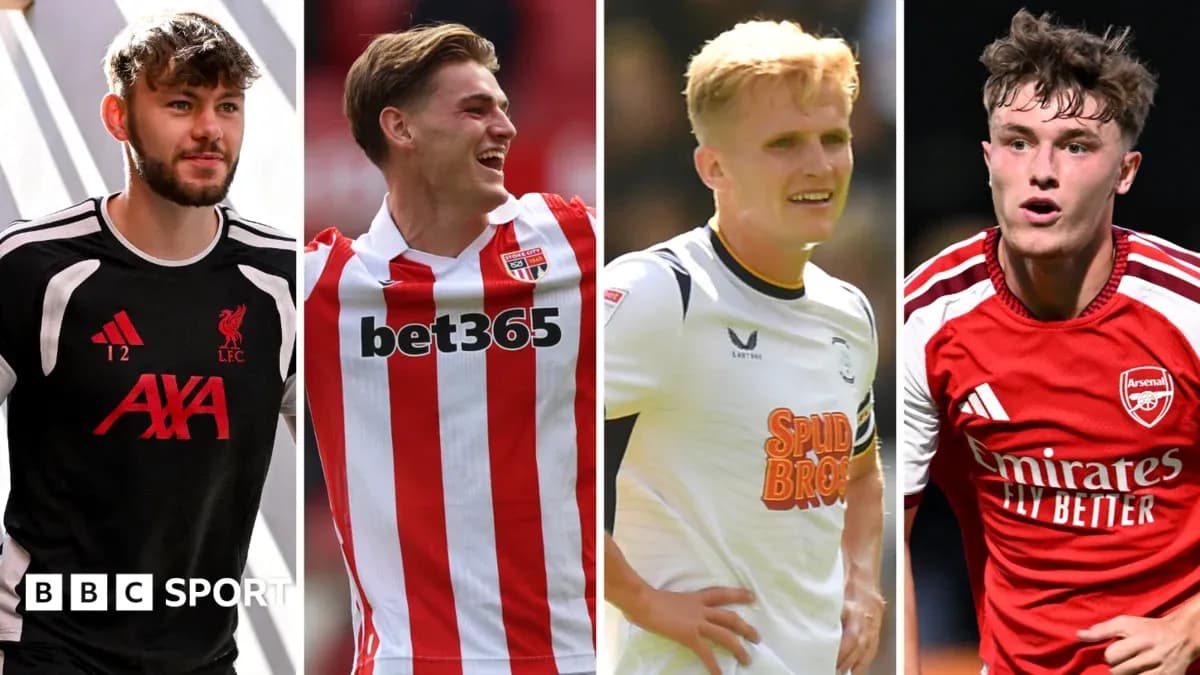
Conor Bradley remains the headline absence. The Liverpool full-back has not played for club or country since knee surgery in January, and O’Neill has been blunt about the timescale. He told BBC Sport NI he always suspected the injury “was going to take longer than maybe some people were thinking” and called it a “bonus” if Bradley is back in green before March 2027.
That is the scale of the loss. Bradley has already missed six of Northern Ireland’s last 14 games through injury and another through suspension, but even that statistic barely captures his influence.
For his country, he is not just a right-back. In O’Neill’s 3-5-2, he pushes higher, operating as a right-sided force of nature: overlapping, underlapping, pressing, recovering. Others can play wing-back. None combine his drive and defensive instinct in quite the same way.
Finding a like-for-like replacement? That is impossible. O’Neill will have to reshape, not just plug a gap.
McCann’s absence opens a hole
Bradley is not the only concern.
Midfielder Ali McCann tore his hamstring in Preston’s 4-0 Carabao Cup defeat by Everton last month. His club manager, Paul Heckingbottom, has already said his captain will be out for “months”.
O’Neill has often talked about McCann as the sort of player whose value only truly reveals itself when he is missing. That is exactly the situation now. McCann’s absence rips a hole in the double pivot alongside Fulham’s Shea Charles, the partnership O’Neill prefers at the base of his midfield.
So the reshuffle continues.
Devenny, Galbraith and the new balance
The summer transfer window has again scattered Northern Ireland’s squad across new clubs, new roles and new responsibilities.
Justin Devenny has wasted no time at Stoke City. A double on his first start since joining from Crystal Palace announced him in style. For Northern Ireland, the natural left-footer has already brought balance as a wing-back since his debut in June 2025.
Now his versatility comes into focus. Stoke have been using him in central midfield, and O’Neill has already trusted him there in big moments, including the World Cup play-off defeat by Italy in March. With McCann sidelined, Devenny looks a realistic candidate to step into that vacancy.
If Devenny is used centrally, the left flank opens up. That is where Oxford United’s Brodie Spencer could come in. If he is not needed to cover Bradley on the right, he becomes a strong option at left wing-back, another piece in a shifting puzzle.
Then there is Ethan Galbraith, Devenny’s new club-mate at Stoke. Deploying him deeper in midfield is another route for O’Neill. It would put the former Swansea City man on the ball more often, dictating play from further back and giving Northern Ireland a calmer base in possession.
Isaac Price is almost certain to occupy one of the more advanced midfield roles. That locks in one position and leaves O’Neill with a key decision to make over who partners the West Brom man higher up the pitch if Galbraith is dragged deeper.
Donley nailed on, kids knocking
Up front, one position feels settled.
Jamie Donley has started as centre-forward in each of Northern Ireland’s last five games. He has scored against Luxembourg and Wales since being moved into the number nine role, and there is little sense that O’Neill wants to tinker with that now. Dropping him into a deeper role would disrupt one of the few stable parts of this evolving side.
So the search for attacking support turns elsewhere.
Patrick Kelly and Callum Marshall are obvious options. Both know the environment, both have been in and around the set-up. But there is a temptation hanging over this window: does O’Neill roll the dice on one of the unproven but exciting youngsters?
Kieran Morrison, on loan from Liverpool to Sheffield Wednesday, Arsenal’s Ceadach O’Neill and Everton’s Braiden Graham were all involved in June. Morrison and O’Neill made their senior international debuts in the friendly win over Guinea, and O’Neill came off the bench again in the defeat to France four days later.
Competitive fixtures are another level entirely. The stakes rise, the margins shrink. Yet O’Neill has never been afraid to push young players forward before they are fully established at club level. This calendar, this injury list, might force his hand again.
Lessons from a bruising past
Northern Ireland do not look back fondly on their last four-game window.
In June 2022, with the schedule squeezed by the Covid-19 pandemic, Ian Baraclough oversaw a grim Nations League run: defeats to Greece and Kosovo, and two draws against Cyprus. It could easily have been worse. Only Jonny Evans’ added-time equaliser at Windsor Park spared them from a home loss to the Cypriots.
That period underlined what this kind of calendar does to smaller nations. Fatigue sets in quicker. Tactical plans fray. The margin for error, already thin, almost disappears.
This time, O’Neill arrives with a clearer idea of his core team. During the last Nations League campaign, when most of his key players were fit, there was a sense he had finally settled on a preferred XI.
But 2026 has been about stretching that list of trusted names.
Across four matches this year, O’Neill has used 27 players. A staggering 21 of them featured in the friendly against Guinea alone, a deliberate attempt to widen the pool before a window exactly like this one.
Bradley is not the only long-term absentee. Sunderland defender Daniel Ballard has not played for Northern Ireland this calendar year because of injury. Dion Charles, Bailey Peacock-Farrell and Jamal Lewis were last involved in November 2025 and now sit on the fringes of the picture.
Depth on trial
O’Neill is closing in on the four-year anniversary of his return to the job. The first spell was defined by a tight-knit core that punched above its weight. This second stint has been more about expansion, about building layers beneath the first XI.
Now comes the stress test.
Four games. Eleven days. Key players missing. A calendar designed for bigger squads and deeper benches.
We are about to find out whether the depth O’Neill has worked so hard to create can carry Northern Ireland through a window that will not wait for anyone.