.svg&w=384&q=75 "Naijagoal logo")
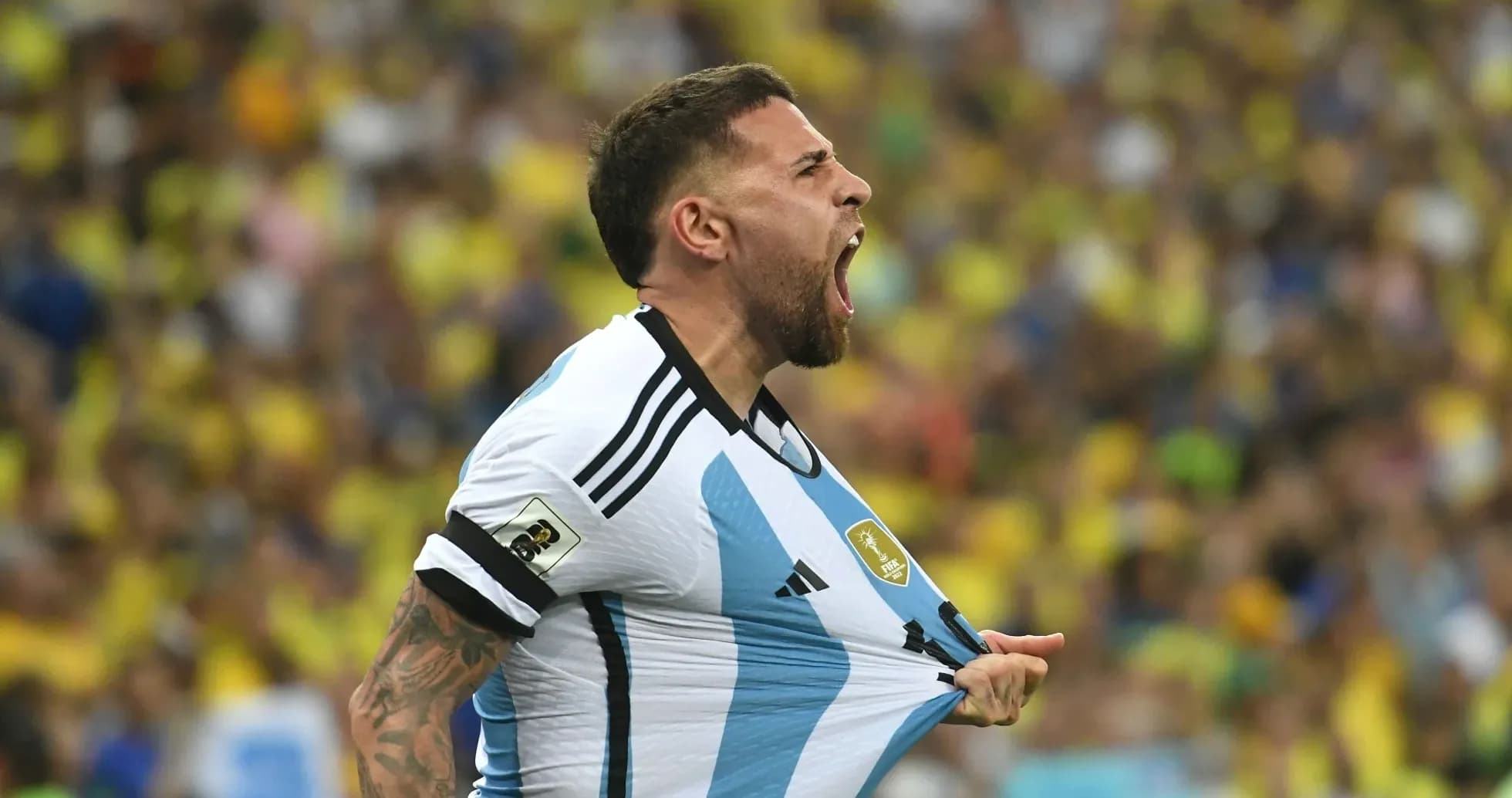

Nicolás Otamendi Ends Argentina Journey After 2026 World Cup
Nicolás Otamendi chose his own moment.
On Wednesday, the Argentina defender confirmed what many around the Albiceleste had long sensed: his journey with the national team will end with the 2026 World Cup. No farewell press conference, no staged photoshoot. Just a raw, emotional message on his Instagram account, written by a man who has lived every inch of the shirt he is now preparing to leave behind.
“Today, I’m writing the most difficult words I’ve ever had to,” he began. For a player who built a career on snarling defiance and full-blooded tackles, it was a rare glimpse behind the armour.
A childhood dream, fulfilled
Otamendi called wearing the Argentina shirt “a childhood dream’’ and “the greatest privilege” of his football life. That wasn’t empty rhetoric. From Vélez Sarsfield in 2008 to the peak of Europe with Manchester City and Benfica, the national team was always his fixed point.
“I defended it with all my heart, with pride, and with a sense of responsibility, knowing what it means to millions of Argentines,” he wrote. That sense of weight never left him, through finals lost and, eventually, finals won.
The 2026 World Cup final defeat still stings. Otamendi didn’t hide it. He admitted his regret at falling short in the last act of his international career, but insisted he walks away “with the peace of mind that comes from giving it all.” For a defender whose style was built on total commitment, there could hardly be a more fitting line.
He closed his message by thanking supporters and family for standing beside him “through the good times and the bad,” and turned his gaze to the dressing room he will soon vacate. He urged the next generation of Argentina players to “never stop believing.”
Then came the farewell that will resonate from Buenos Aires to the smallest barrio pitch: “Thank you, Argentina. Thank you for letting me fulfill my dream of becoming a world champion and wearing the most beautiful jersey in the world.”
An outpouring from the dressing room
The response was immediate and heartfelt. Former teammates flooded his post with messages that read less like social media ritual and more like a guard of honour.
Alexis Mac Allister hailed him as “an exemplar of fight, resilience and love for the shirt.” Germán Pezzella called him “a guide for us all,” a phrase that lands heavily when it comes from another centre-back who shared that defensive line.
Names from different generations and roles lined up to say goodbye: Paulo Dybala, Marcos Senesi, Mariano Andujar, Gianluca Prestianni. All with the same theme — gratitude.
Rodrigo de Paul went a step further. He dedicated an Instagram story to the vice-captain, pulling back the curtain on the internal life of the team.
“From the day I got to the national team, you opened the door to your room, and since then we’ve held the same rituals,” he wrote. Rituals matter in football. They build trust, they build teams. De Paul called his thanks “eternal,” and described Otamendi as “one of the leaders of the beautiful story this team built.” His final line cut straight through the screen: “Thanks for everything, I’ll miss you.”
The old warrior steps aside
Emotion aside, the timing makes sense. Otamendi is 38. At that age, international football is unforgiving, especially in a country that produces defenders as relentlessly as Argentina.
Lionel Scaloni trusted him completely at Qatar 2022, where Otamendi started and anchored the back line on the way to the world title. Four years later, his status shifted. Lisandro Martínez stepped into the starting role alongside Cristian “Cuti” Romero, with Otamendi moving into a support role, the experienced voice rather than the automatic name on the teamsheet.
This is how eras end at the top level: not with a sudden disappearance, but with a gradual passing of the torch.
From Vélez to the pantheon
Otamendi’s story with the Albiceleste began in 2008, when he emerged at Vélez Sarsfield as a rugged, no-nonsense defender in the Argentine First Division. Europe came calling, and with it the spotlight, but his identity never changed.
He was never the most elegant centre-back. He was the one you didn’t want to face. Rugged, uncompromising, abrasive. He relished physical duels, went to war in both boxes, and played as if every aerial ball was personal. At 1.83m, he was hardly towering by international standards, yet he dominated the air with timing, aggression and sheer will.
One image captures him perfectly: Qatar 2022, round of 16 against Australia. Otamendi rising above 1.98m Harry Souttar, an Argentine defender outjumping a giant to clear danger. That snapshot became an instant emblem of his career — effort, defiance, and an absolute refusal to accept the odds.
A legacy for the next generation
Strip away the tattoos, the beard, the snarls at referees, and what remains is a legacy built on three pillars: determination, fierceness, competitiveness. Those qualities turned Otamendi from a domestic prospect into a central figure of the national team across more than a decade, and ultimately into a world champion.
He now steps into the same conversation as Daniel Passarella, Oscar Ruggeri and Roberto Ayala — defenders who defined entire eras for Argentina. Different styles, different footballing ages, but a shared standard of what it means to wear that number in that shirt.
The next wave of centre-backs — Lisandro Martínez, Cuti Romero, and those still emerging from youth ranks — inherit more than a position. They inherit an attitude. The question now is simple, and ruthless in its clarity: who will carry Otamendi’s edge into the next chapter of the Albiceleste?