.svg&w=384&q=75 "Naijagoal logo")

Next Wave of Football Stars for 2030 World Cup
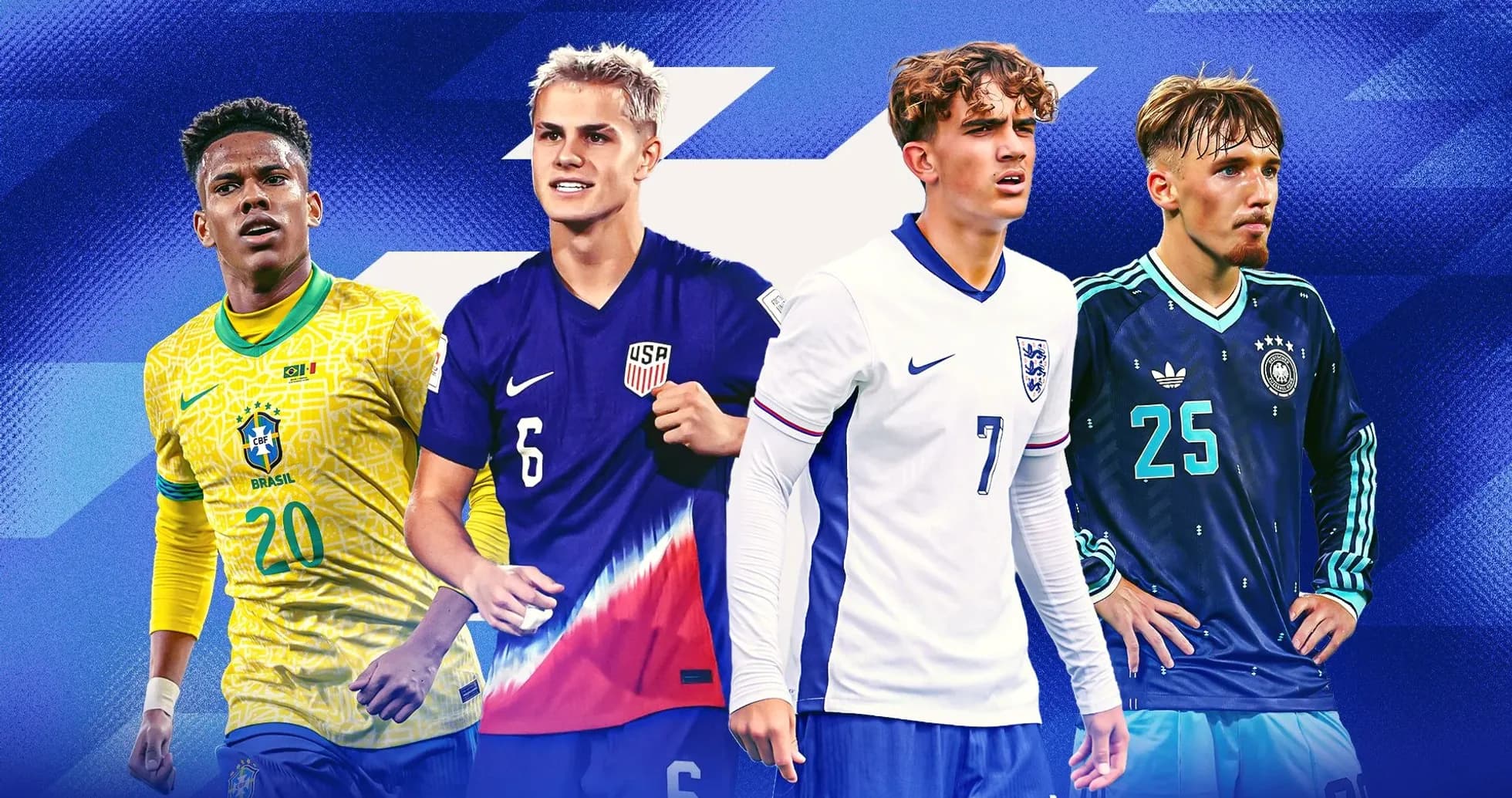
Brazil are out, Germany are bruised, Argentina are bracing for life after Lionel Messi and Spain are planning a title defence on home soil. The 2026 World Cup has barely slipped into the rear-view mirror, yet the race to 2030 is already being run by teenagers who are still sitting exams, still borrowing the family car, still waiting for their first proper paycheque.
Some of them have already felt the heat of a World Cup. Others watched this one from treatment rooms, academy pitches or the sofa. By 2030, they could be the ones dragging their countries through knockout ties and into history.
This is the next wave.
Brazil’s wounded future: Estevao and the new Palmeiras jewel
Brazil’s earliest World Cup exit since 1990 will be picked apart for years. Carlo Ancelotti’s tactics, the balance of his midfield, the late-game collapses. But one absence hung over the Selecao like a cloud: Estevao.
The Chelsea winger had smashed in five goals in six caps between September and November 2025, forcing his way into Ancelotti’s first-choice XI opposite Vinicius Jr. He looked like Brazil’s next great wide menace. Then his hamstring tore in April. First major tournament gone in an instant.
He’s only 19. Time is on his side, and so is talent. The question is his body. If he can adjust to the grind of the Premier League, stay on the pitch and string together full seasons, Brazil won’t just get their winger back. They might get a leader.
And just behind him, Palmeiras have done it again.
Eduardo Conceicao is the latest prodigy off that production line. Like Estevao and Endrick before him, he has been sharpened in the academy to the point that, on the eve of his 17th birthday, he is already pushing at the first-team door. A left-sided winger with a natural feel for the game, he’s being courted by Manchester United, Manchester City, Barcelona and Paris Saint-Germain.
If he makes that jump to Europe soon, the path is obvious. A couple of years to adapt, a run of games at elite level, and suddenly the 2030 Selecao attack could be built around a pair of Palmeiras-bred wide boys.
Germany’s reset: Karl and Eichhorn for the Klopp era
Germany’s campaign ended in the last 32. The inquest has started. One name kept cropping up in conversations about what they lacked: Lennart Karl.
The Bayern Munich attacker was expected to start for Julian Nagelsmann in North America. His early performances for the national side had been that convincing. Then a thigh injury, a week before kick-off, ended his tournament before it began.
Without his quick thinking and sharp use of the ball, Germany looked blunt. They went home early. When Jurgen Klopp finally steps into the job, Karl is almost certain to be central to his rebuild. At 18, he has the intelligence and movement to become the heartbeat of Germany’s attack heading toward 2030.
Behind him, another teenager is already being talked about in reverent tones.
Kennet Eichhorn, just 16, has packed more first-team minutes into his short career than many players twice his age. He cut his teeth at Hertha Berlin, then turned down Liverpool and others to join Bayer Leverkusen this summer, a move that will put him straight into the Bundesliga spotlight.
The comparisons at home are lofty: Toni Kroos. That’s the weight he carries already. A metronomic passer, calm under pressure, with the range to dictate games. If he handles the step up at Leverkusen, the clamour for Klopp to build his midfield around him will be deafening.
Spain’s conveyor belt: from Rodri’s heir to La Masia’s next duo
While Brazil and Germany lick their wounds, Spain are still dancing. World champions again, this time with one of the youngest squads in the tournament, and the pipeline behind them is just as frightening.
Rodri, who took home the Golden Ball as the tournament’s best player, remains the axis. Yet his club season told a different story: a struggle for rhythm and fitness after an ACL injury. Spain cannot assume he’ll be indestructible into his 30s.
They may not have to.
Barcelona’s Marc Bernal looks like the natural heir. Long compared to Sergio Busquets, he spent the past campaign proving he is more than a holding midfielder. He shields the back line with intelligence, but he also steps forward, breaks lines and contributes in the final third. At 19, he already plays with the calm of a veteran. Luis de la Fuente has an embarrassment of riches in midfield, but Bernal will be hard to ignore for much longer.
Then there is the age-group dominance.
Spain’s Under-19s lifted the European Championship in Wales, and one player shone even in that stacked side: Xavi Espart. The 19-year-old Barcelona midfielder, who can also fill in at full-back, drew instant Joshua Kimmich comparisons with his versatility, energy and tactical sharpness.
He made his Barca debut last season. Hansi Flick is expected to give him more minutes in 2026-27. If he nails down a role at the Camp Nou, a senior call-up feels inevitable.
From that same U19 crop, Real Madrid’s Thiago Pitarch already has Champions League knockout starts on his CV. Quim Junyet, once of Barca, has stepped down to Almeria in the second tier in search of regular minutes, a move that could accelerate his development into a genuine 2030 squad option.
Drop down another age group and the talent keeps coming.
Spain’s U17s fell short of the title at their Euros in Estonia, but Ebrima Tunkara still walked away as Player of the Tournament. The 16-year-old attacking midfielder, who can operate centrally or wide, has been talked about as the most exciting La Masia attacker since Lamine Yamal. At Barcelona, they dream of a decade where Yamal and Tunkara torment defences together.
Tunkara will join the senior squad for pre-season this summer. If his trajectory holds, he could be part of Spain’s title defence on home soil in 2030, barely out of his teens, already used to the noise.
Argentina’s post-Messi question: can Mastantuono carry the weight?
Argentina’s defeat to Spain in the final marked the likely end of an era. The post-Messi reality can no longer be postponed.
Into that void steps Franco Mastantuono.
The 18-year-old became the youngest player ever to appear for Argentina in a competitive match when he debuted in June 2025. He was still in Lionel Scaloni’s squad as recently as March, only to miss out on the 2026 World Cup after a flat first season at Real Madrid.
It was a reminder of how unforgiving the Bernabeu can be. But history is full of teenagers who needed time before finding their place in Madrid’s galaxy of stars. Mastantuono, who can operate as a classic No.10 or drift wide, has the technical quality and vision to be a long-term pillar for both club and country.
Argentina will need someone to shoulder the creative burden. By 2030, Mastantuono could be the one carrying the No.10 shirt into a new age.
England’s next wave: Dowman, Ngumoha and the JJ Gabriel hype
England’s semi-final exit extends the drought. No major trophy since 1966. Euro 2028, at home, now looms as the next big chance to end the pain.
Looking further ahead, toward 2030, one teenager is already attracting a heavy share of the expectations: Max Dowman.
The Arsenal midfielder has been labelled a “generational talent” after a string of eye-catching displays for the Gunners’ first team. He became the youngest goal-scorer in Premier League history with a strike against Everton in March, a moment that felt like a starting gun.
At 16, Dowman is at his best in an advanced midfield role. That immediately throws up a tactical puzzle: how do you fit him and Jude Bellingham into the same side? It’s a problem England would love to have. For now, the focus is simply on letting Dowman grow into his gifts.
Rio Ngumoha is a little further along the international path. The Liverpool winger made his England debut in a pre-tournament friendly against New Zealand and impressed Thomas Tuchel enough that another call-up for the Nations League in September and October is already being discussed.
Ngumoha plays with a fearlessness that jumps off the screen. Direct dribbling, quick feet, a willingness to shoot early. With Andoni Iraola arriving at Anfield, he should see more minutes in the Premier League. If he keeps running at full-backs the way he has so far, he won’t have to wait until 2030 to become a regular for the Three Lions.
Behind them, the depth is striking. Manchester City defender Stephen Mfuni, Chelsea forwards Shim Mheuka and Ryan Kavuma-McQueen – all are pushing toward the spotlight.
Yet the loudest buzz surrounds Manchester United striker JJ Gabriel.
He was likened to Lionel Messi as a young teenager, a comparison that does him few favours but hints at the kind of magic people think he possesses. For United’s U18s last season, he was the standout, even though he only turned 15 in October.
The next step is clear: a first-team debut in the coming campaign. Around Old Trafford, there is a palpable sense that this might be the most exciting homegrown talent since the Class of ’92.
If Gabriel lives up to even a fraction of the hype, he has a genuine shot at going to the next World Cup with England. He would still be a teenager.
A new American wave: Sullivan, Hall and the USMNT’s next leap
The United States left their home World Cup with mixed emotions. Encouraging moments, flashes of real quality, but a last-16 exit that felt like a missed opportunity.
The hope now is that 2026 will light a fire under a generation of kids choosing between “soccer” and other sports. The reality is that the next crop is already here.
Cavan Sullivan is the name that keeps coming up. The Philadelphia Union midfielder, who has already agreed a move to Manchester City in the summer of 2027, has taken to MLS life with ease as he edges toward his 17th birthday.
A couple of years ago, some observers claimed he was the most talented player of his age anywhere in the world. It sounded wild. His early senior performances suggest it might not have been hyperbole. If his development continues on this curve, he could become the best American footballer the sport has seen.
Yet even he hasn’t been the standout teenage performer in MLS this year.
That honour belongs to Julian Hall. The New York Red Bulls forward has nine goals and four assists in 15 games this season and became the youngest player ever to score a hat-trick in MLS.
His form sparked sporadic calls for Mauricio Pochettino to take him to the 2026 World Cup. That came too soon, but if Hall keeps scoring at this rate, and makes the expected move to Europe in the next few years, he should be one of the first names on the USMNT teamsheet by 2030.
He is not alone. Team-mate Adri Mehmeti, just 17, has impressed since breaking into the Red Bulls’ senior side at the start of 2026. Borussia Dortmund forward Mathis Albert and Charlotte FC striker Nimfasha Berchimas round out a group that could give the United States a genuinely dangerous attacking core for the next cycle.
Portugal after Ronaldo: Mora, Quenda and Mane
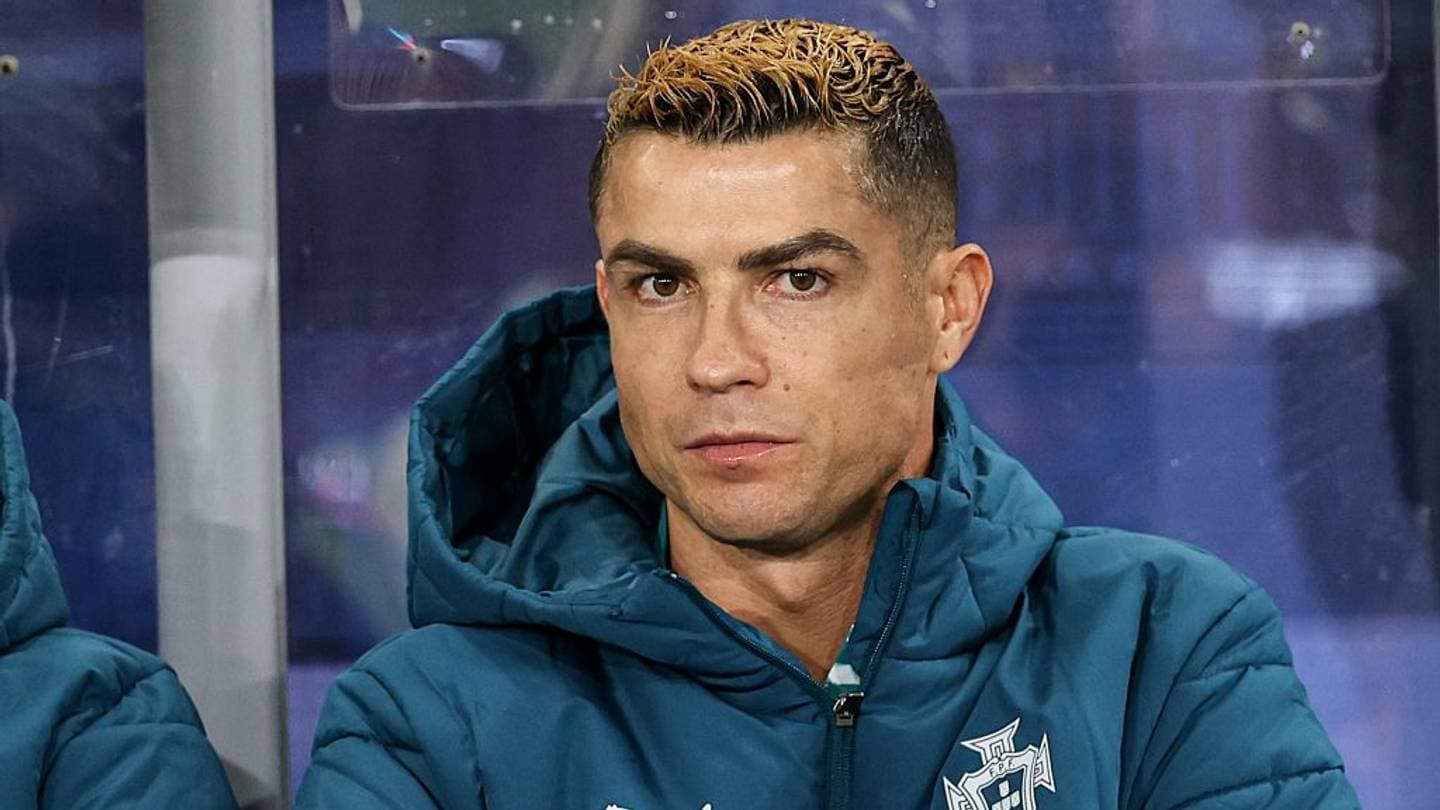
Portugal, like Argentina, are staring at the end of an era. Cristiano Ronaldo’s shadow still looms over every squad list and every tournament exit. It’s time for new heroes.
Rodrigo Mora is at the front of the queue.
The Porto midfielder, 19, already has a Nations League winner’s medal after being part of the squad that lifted the trophy in 2025. He played a key role in Porto’s Liga Portugal title win last season, sprinkling his campaign with Europa League moments that caught the eye of Barcelona and PSG scouts.
His first senior cap feels inevitable. If his club form holds, he could be the one driving Portugal’s midfield by 2030.
Behind him, Geovany Quenda has made the leap to Chelsea. If he adapts quickly to the Premier League, a call from the national team will follow. Wolves winger Mateus Mane, who has committed to representing Portugal, is another wide option Jorge Jesus will watch closely as he reshapes his squad.
The Oranje reload: Steur and Nijstad
The Netherlands’ last-32 exit stung. For a nation that prides itself on midfield artistry, the emergence of Sean Steur offers a timely boost.
Newcastle paid up to £23 million for the Ajax teenager this summer, a fee that raised eyebrows given his limited experience. Those who watched him closely in Amsterdam saw something else: an 18-year-old with an exceptional eye for a pass and the engine to run games from box to box.
If he forces his way into Eddie Howe’s plans on Tyneside, the step into the Dutch midfield should follow. The Oranje will want him settled and seasoned well before 2030.
At the back, Twente defender Ruud Nijstad is being quietly groomed as a potential heir to Virgil van Dijk. Big shoes, but the raw tools are there.
Belgium’s next general: Nathan De Cat
Belgium’s so-called “Golden Generation” has faded without the ultimate prize. The next iteration will look different, more functional, perhaps, but no less ambitious.
Nathan De Cat is central to that vision.
The 18-year-old midfielder left Anderlecht for Hoffenheim in a €20m deal this summer, underlining how highly he is rated. He made his senior Belgium debut in March, only to miss the World Cup as Rudi Garcia leaned on more experienced options.
That won’t last. De Cat is equally comfortable screening the defence or stepping up as a No.10, a blend of security and creativity that modern midfields crave. Bayern Munich sniffed around before Hoffenheim closed the deal. If he settles quickly in the Bundesliga, Belgium’s next coach will have little choice but to build around him.
Norway’s new wonderkid and Morocco’s diaspora magic
Norway’s first World Cup in 28 years ended in a historic quarter-final run, powered by Erling Haaland and a cast that finally matched his level. Qualifying again in 2030 looks realistic. By then, they might have another phenomenon on their hands.
Gabriel Rajkovic made history in March as the youngest player ever to debut in the Norwegian top flight, turning out for Valerenga less than a month after his 15th birthday. A left-sided winger with a knack for direct, fearless play, he has been a regular off the bench since.
The route is familiar: shine at home, jump to a stepping-stone club in Europe, then land in the elite. It worked for Haaland and Martin Odegaard. Norway believe Rajkovic can follow.
Morocco, meanwhile, have become Africa’s standard-bearers at World Cups, reaching the latter stages in both 2022 and 2026. Their success has been built partly on a smart, aggressive approach to their diaspora.
Abdellah Ouazane is next in line.
Born in Amsterdam, schooled at Ajax, the midfielder was named Player of the Tournament at the 2025 U17 Africa Cup of Nations. Real Madrid came close to signing him, only for the deal to collapse late on. The fact Los Blancos were that keen says everything about his ceiling.
Once he breaks into Ajax’s first team and starts dominating Eredivisie midfields, Europe’s giants will circle again. Morocco will hope he is the one dictating games for them in 2030.
DR Congo, Ajax’s next star and Italy’s refusal to disappear
DR Congo returned to the World Cup stage with style, reaching the knockouts and giving England a scare in the round of 32. Their rise has been fuelled, like Morocco’s, by tapping into a rich diaspora.
Jorthy Mokio is the next big addition.
The Ajax youngster, capable of playing in defence or midfield, switched allegiance to DR Congo before the tournament but was left out of the final squad as Sebastien Desabre rewarded those who had done the hard yards in qualifying.
His time is coming. Already one of the brightest talents in the Eredivisie, Mokio has attracted interest from Manchester United and Chelsea, yet recently signed a new deal that keeps him at Ajax until 2031. That gives him room to grow before he anchors DR Congo’s spine in the next cycle.
And then there is Italy.
They didn’t qualify for 2018, 2022 or 2026. A fourth straight absence in 2030 is almost unthinkable, yet recent history refuses to offer comfort. The only way out is through a new generation.
Samuele Inacio looks like the pick of the bunch.
The Borussia Dortmund attacking midfielder, 18, has already scored in the Bundesliga and impressed consistently for Italy’s youth sides. He made his senior debut in June friendlies against Greece and Luxembourg, part of a wave of youngsters thrown into the Azzurri setup.
He won’t be alone. Dortmund team-mate Luca Reggiani, Atalanta defender Honest Ahanor and AC Milan striker Francesco Camarda are all expected to play major roles in dragging Italy back to the main stage.
The 2026 World Cup belonged to Rodri and Yamal, to Haaland and Vinicius, to a Spain side that found its groove again. The next one will need new protagonists.
Some of the names above will fade. Injuries, bad moves, stalled development – the sport is ruthless. But enough of them will make it. The only real question is this:
When 2030 kicks off, whose story will define the next era?