.svg&w=384&q=75 "Naijagoal logo")
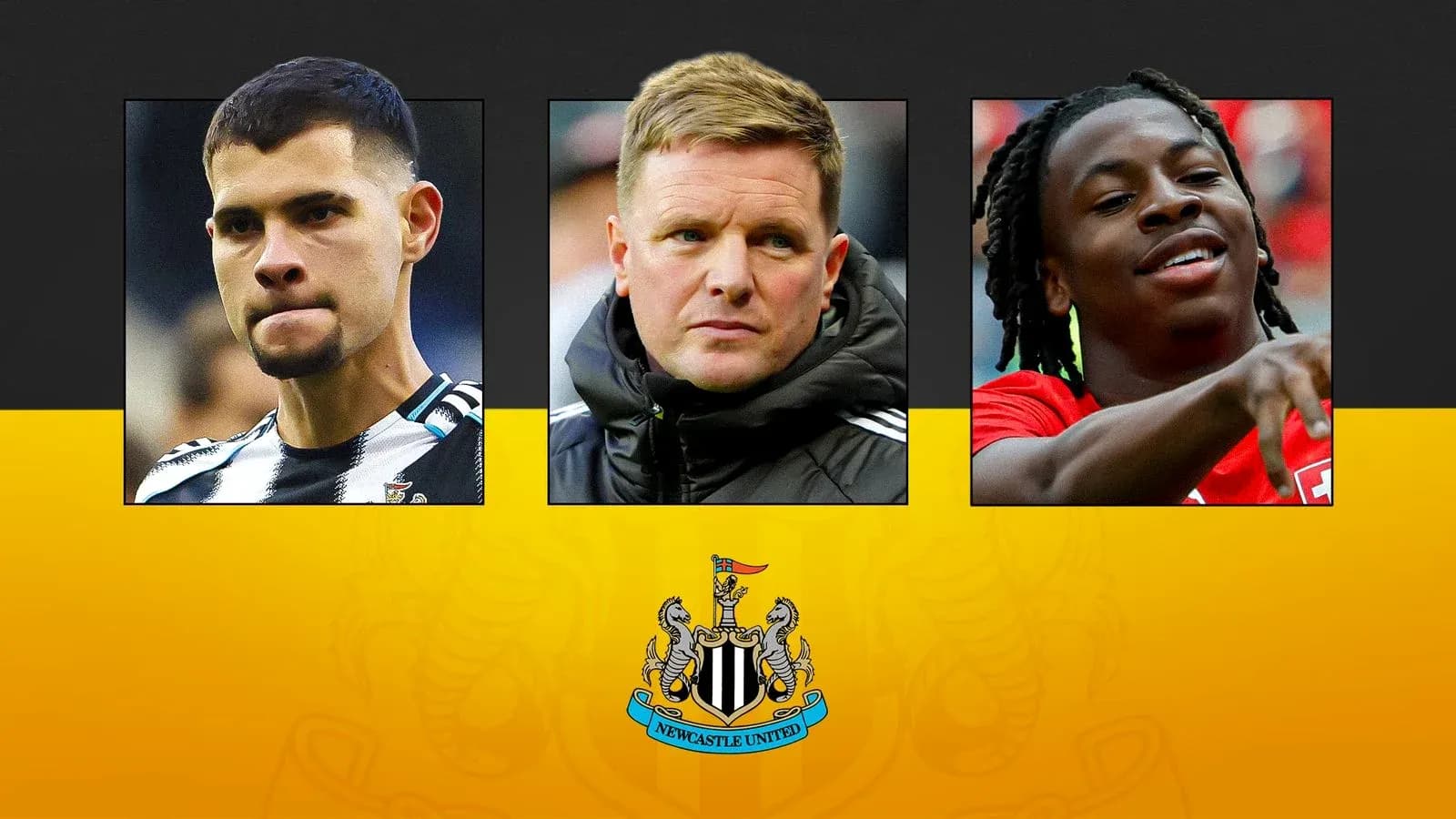

Newcastle's Summer Rebuild: Focus on Bruno Guimaraes and Arsenal
The mood around St James’ Park this summer is not one of gentle evolution. It’s surgery.
Newcastle are ripping into a squad that only recently talked about gatecrashing the elite. Eight, nine, maybe even 10 positions could change before the window shuts. Big earners have gone, big decisions are looming, and one name sits right at the heart of it all.
Bruno Guimaraes.
Bruno, Arsenal and an £80m Question
Bruno has not slapped in a transfer request. There’s been no public stand-off, no sulking, no grand gesture.
What he has done is more pointed: he’s gone directly to Newcastle and made it clear that if Arsenal lodge what he considers a “good” offer, he wants to take that chance.
This is not about a pay rise. He is already Newcastle’s highest earner and would only make slightly more at the Emirates. At 28, turning 29 later this year, his calculation is simple: he wants to win titles, and he doesn’t believe that will happen on Tyneside in the next couple of years – on the pitch or in the boardroom.
He wants the move, but not at any cost to the club that rebuilt his career. If he goes, he wants Newcastle to be properly paid.
The internal tipping point is around £80m. Hit that number and Newcastle know they have to listen.
The twist? Arsenal have not made contact. Not a call, not an email. Nothing. All the noise has come via agents, leaving Newcastle baffled at how a potential exit has dominated the conversation without a single formal approach.
Until a real bid lands, there is technically no decision to make. Inside the club, Bruno remains “not for sale” and they are desperate to keep him. But the clock is ticking, and everyone knows it.
Manzambi Deal: Done… But Not Signed
While the Bruno saga simmers, Newcastle believe they’ve lined up one of the key pieces of their new project.
Johan Manzambi, Freiburg’s Swiss forward, is the headline arrival in waiting. Newcastle have agreed a £49m fee with the Bundesliga side. A delegation flew to Germany this week, thrashed out terms and shook hands. Manzambi has verbally agreed personal terms too.
On paper, it’s done.
In reality, they’re still waiting on ink.
Manzambi is at the World Cup with Switzerland, nursing a minor knee issue but still playing his part in a run to the quarter-finals. He has made it clear he will not sign anything until his tournament is over.
That delay makes Newcastle nervous. They’ve been here before. Victor Munoz was in the building, virtually theirs, when Liverpool swooped in at the last second and hijacked the move. That scar hasn’t healed.
So Newcastle wait. They’ve done everything they can to secure Manzambi for next season and remain confident, but they know another club could yet appear over the horizon.
The risk feels worth it. Manzambi has five goal involvements at this World Cup – the best return for a player of his age since records began. That is exactly the profile this new Newcastle want to bet on.
Four More After Manzambi
Manzambi is not the end of the story. He’s the start.
Newcastle expect three or four more signings once that deal is over the line. A midfielder is on the list, especially if Bruno leaves. A new No 1 goalkeeper is also a priority, with long-standing interest in Manchester City’s James Trafford likely to turn into concrete movement in this window.
A versatile full-back is another target, ideally someone who can play both sides but with a leaning towards left-back. The squad needs more flexibility, more legs, more upside.
Out wide, Jacob Murphy’s future will shape their plans. If he moves on after a decade at the club, Newcastle will look to bring in another winger.
Up front, the picture is clear. If one of Nick Woltemade or Yoane Wissa leaves, they’ll go for another striker. If both stay, they’re happy to roll with a front three of Wissa, Woltemade and Will Osula next season.
The volume of change is not accidental. It’s a reset.
A New Transfer Model: Dortmund on the Tyne
The days of scattergun, big-ticket spending are over. Newcastle’s hierarchy have redrawn the lines.
The core strategy is now tightly defined: players aged 18 to 24, costing between £20m and £40m. High ceiling, high resale value, and plenty of room for Eddie Howe to mould them on the training ground.
There will be exceptions. Ewen Jaouen arrived for £18m. Manzambi, at £49m, is a deliberate stretch. But they are not going to be in the £80m–£100m market for one player. Not now.
The model they’re chasing looks a lot like Borussia Dortmund’s: buy young, develop, sell at a profit, and still try to compete for trophies while doing it.
It’s a bold choice in a league where instant success usually wins the argument. Newcastle believe it’s the only realistic way to bridge the gap under current financial rules.
Who’s Heading for the Exit?
To reshape a squad, you need room. And money.
Nick Pope is expected to go. Ipswich showed interest but that trail has gone cold for now. Even so, the writing feels on the wall for the England international.
Murphy could finally move on after 10 years of service. Joe Willock is another who might depart if a suitable offer arrives. There are no bids on the table yet, but Newcastle are open to moving all three on to accelerate the overhaul.
If Pope, Murphy and Willock all leave, they will need replacing. That only adds to the scale of the job in one window.
Sean Steur: The Long Game
Not every new arrival is being groomed as an instant starter.
Sean Steur, signed at 18, is very much one for tomorrow. He will train with the first team, make benches, and pick up minutes where he can, but he is not walking straight into Howe’s XI.
The club want to build him up physically and tactically, let him adapt to the Premier League’s intensity without the glare of weekly pressure. The lack of European football helps here. With no midweek fixtures, Howe can spend full weeks drilling his ideas into players like Steur.
If all goes to plan, this time next year Steur could be a regular. That’s the kind of arc Newcastle now crave: development, not instant gratification.
Howe’s Second Project
Eddie Howe is not fighting this shift. He’s driving it.
Last summer’s window was brutal in its lessons. Newcastle spent around £250m and too many of those signings failed to deliver. The drawn-out Alexander Isak saga cast a shadow over the season; the club do not want to be scrambling in late August again.
Howe, sporting director Ross Wilson and chief executive David Hopkinson are aligned: the business has to be smarter, earlier and younger.
This is where Howe feels most comfortable – on the grass, improving players. Steur, Bazoumana Toure, Manzambi: these are his kind of projects. No European football means more training time, fresher legs at weekends, and a better environment for young signings to bed in.
The expectations are being quietly adjusted. A top-four or top-five finish looks unlikely. A push for the European places? That feels realistic. And without Europe, Newcastle might just have an edge in the run-in when others are stretched.
PIF, PSR and the Ceiling Above Newcastle
Over all of this hangs a bigger question: how far can Newcastle actually go under current financial rules?
Saudi Arabia’s Public Investment Fund remains committed. There is no hint of them walking away. But supporters look at Sandro Tonali, Anthony Gordon, Alexander Isak – and potentially Bruno – leaving for clubs higher up the food chain and wonder how long this phase lasts.
The reality is harsh. Newcastle are still on the outside of the top six, and the financial regulations make it brutally hard to break in. Their commercial revenues sit at roughly half the level of the so-called big six. Until that changes, they will struggle to match those clubs on fees and wages.
The owners know it. They’re pushing to grow sponsorships, explore the possibility of a new stadium and expand revenue streams. Progress is there, but slower than many expected.
They’ve already brushed up against the limits. A recent breach of PSR led to a fine, a warning shot that they cannot simply spend their way to the top. They will invest as heavily as they can, but within those lines.
So Newcastle head into this season with a new model, a new squad and the same old question hanging in the air.
Can a club trying to be Dortmund in a Premier League shaped by super-clubs really crash the party – or is this the ceiling until the rules, or the revenue, change?