.svg&w=384&q=75 "Naijagoal logo")

A New Era of the Champions League: 2026/27 Season Overview
The penalty pain in Budapest is starting to fade. Not forgotten, not forgiven, but filed away as the kind of scar that can drive a season. A first Premier League title since 2004 has changed the mood entirely. This club heads back into the Champions League not as hopefuls, but as a heavyweight that expects to be there when the trophies are handed out.
For the fourth year in a row, Europe’s top competition will feature their name. This time, the path is familiar, the stakes even higher, and the margin for error brutally thin.
A New Era of the Champions League
The 2026/27 campaign will again follow UEFA’s revamped league phase format, now firmly replacing the old group-stage routine. No more four-team mini-leagues. No early dead rubbers. Just one big table and a constant fight for position.
Thirty-six teams enter. Each plays eight matches against eight different opponents: four at home, four away. Every fixture matters because every point feeds into a single league ranking.
Finish in the top eight and the reward is instant: direct passage into the knockout stage. Land anywhere between ninth and 24th and the season gets more complicated. Those clubs are thrown into two-legged play-offs, fighting just to reach the last 16. Below that, the journey ends before the real drama even starts.
Two of the extra league-phase spots go to the countries whose clubs performed best in Europe the season before. In 2024/25, that honour went to England and Spain, handing the Premier League and La Liga an additional place each.
This club thrived under the new system last time out. In 2025/26, they didn’t just top the league phase. They won all eight matches – the first side ever to do that in this format. Perfection in the mini-marathon. Agony only at the final hurdle.
Who’s Already In?
The cast for 2026/27 is almost complete. Twenty-nine of the 36 teams have already booked their spots, with the final seven to emerge from the summer qualifiers.
England will send five sides. Liverpool, Manchester City, Manchester United and Aston Villa join the champions, all having secured their places through league finishes.
Spain also boasts five representatives: Real Madrid, Barcelona, Atletico Madrid, Villarreal and Real Betis. It’s a line-up that underlines La Liga’s depth and explains why the country earned that extra berth.
Italy and Germany each provide four clubs. From Serie A come Napoli, Inter Milan, AS Roma and Como. The Bundesliga contributes Bayern Munich, Borussia Dortmund, RB Leipzig and Stuttgart.
France’s trio is led by the defending European champions Paris Saint-Germain, joined by Lens and Lille. From the Netherlands, Eredivisie winners PSV and runners-up Feyenoord step back into the continental spotlight.
Portugal’s challenge comes from Porto and Sporting Lisbon. Galatasaray carry the flag for Turkiye, Slavia Prague for Czechia, Shakhtar for Ukraine, and Club Brugge for Belgium – all champions of their domestic leagues and early qualifiers for this league phase.
Seven more teams will battle through the qualifying rounds to complete the 36. Five of those will come through the ‘champions path’, a route reserved for title-winners from 42 different nations. The remaining two spots are reserved for clubs that finished second, third or fourth in their domestic leagues.
The qualifying campaign wraps up on August 26. Twenty-four hours later, on August 27, the full league phase draw will be made and the map of Europe’s most demanding competition will finally be clear.
Pot Power and Possible Opponents
The draw, as ever, comes with layers of protection and intrigue. One rule stands out immediately: English clubs cannot face each other in the league phase. That means no Liverpool, no Manchester City, no Manchester United, no Aston Villa at this stage.
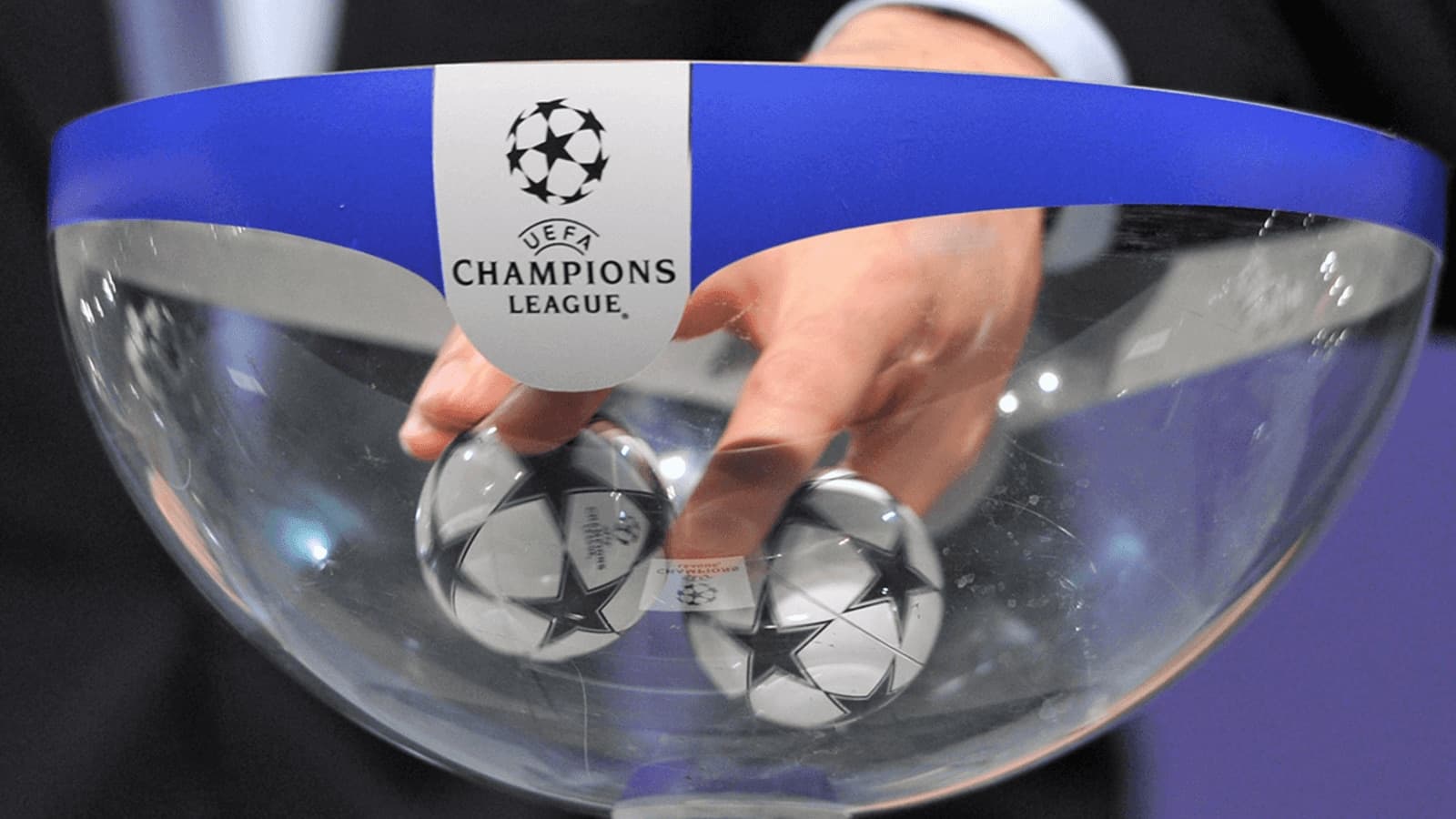
UEFA sorts the 36 clubs into four pots using its club coefficient system. The champions will sit in the elite company of pot 1. That bracket already includes Paris Saint-Germain, Bayern Munich, Real Madrid, Liverpool, Inter Milan, Manchester City, Barcelona and Atletico Madrid. It’s a roll call of European royalty – and a sign of how far this side has climbed.
Pot 2 brings another wave of threat: Borussia Dortmund, AS Roma, Sporting CP, Porto, Club Brugge, Real Betis, PSV Eindhoven, plus Aston Villa and Manchester United from the Premier League. These are the teams nobody wants to underestimate. Too strong to dismiss, too clever to allow a bad night.
Pot 3 is no softer. Feyenoord, Lille, Napoli, RB Leipzig, Villarreal, Shakhtar Donetsk and Galatasaray all wait there, each capable of turning a league phase into a minefield.
Pot 4, at the moment, contains Como and Lens. Slavia Prague, Stuttgart and the seven qualifiers will drop into pot 3 or pot 4 depending on their coefficients. On paper, this is where some clubs hope to find relief. In reality, there are no easy trips and no guaranteed points.
The rules are simple but ruthless. This team will face two opponents from each pot – one at home, one away. They cannot be drawn against more than two clubs from the same country, and they cannot meet another Premier League side in this phase.
Every pairing will matter. Every away day will test their depth, their nerve, and their ability to handle a schedule that allows no lull.
Dates That Will Shape a Season
The Champions League will begin to dominate the calendar as soon as the draw is made on Thursday, August 27, 2026. Eight league phase matchdays then stretch across the season, each one a checkpoint in the pursuit of a top-eight finish.
The fixtures are set for:
- September 8–10
- October 13–14
- October 20–21
- November 3–4
- November 24–25
- December 8–9
- January 19–20
- January 27
Once those eight games are done, the table will decide who breathes and who scrambles. On January 29, 2027, UEFA will draw the knockout play-off ties, with the two-legged clashes scheduled for February 16–17 and February 23–24.
Then comes the real cut-throat stage. On February 26, 2027, the draw will be held for the round of 16, quarter-finals, semi-finals and the final itself. One ceremony, four stages, and a clear road to the showpiece.
The round of 16 will be played on March 9–10 and March 16–17. The quarter-finals follow on April 6–7 and April 13–14. The semi-finals arrive on April 27–28 and May 4–5.
And then, the destination: Saturday, June 5, 2027. The Wanda Metropolitano in Madrid. A stadium built for noise, pressure and nights that define careers.
They came within a penalty shootout of lifting the trophy last time. Now, armed with a league title and a perfect league phase on their recent record, the question is no longer whether they belong at this level.
It’s whether this is the season they finally finish the job.