.svg&w=384&q=75 "Naijagoal logo")

Mourinho's Squad Strategy at Real Madrid: Balancing Trust and Numbers
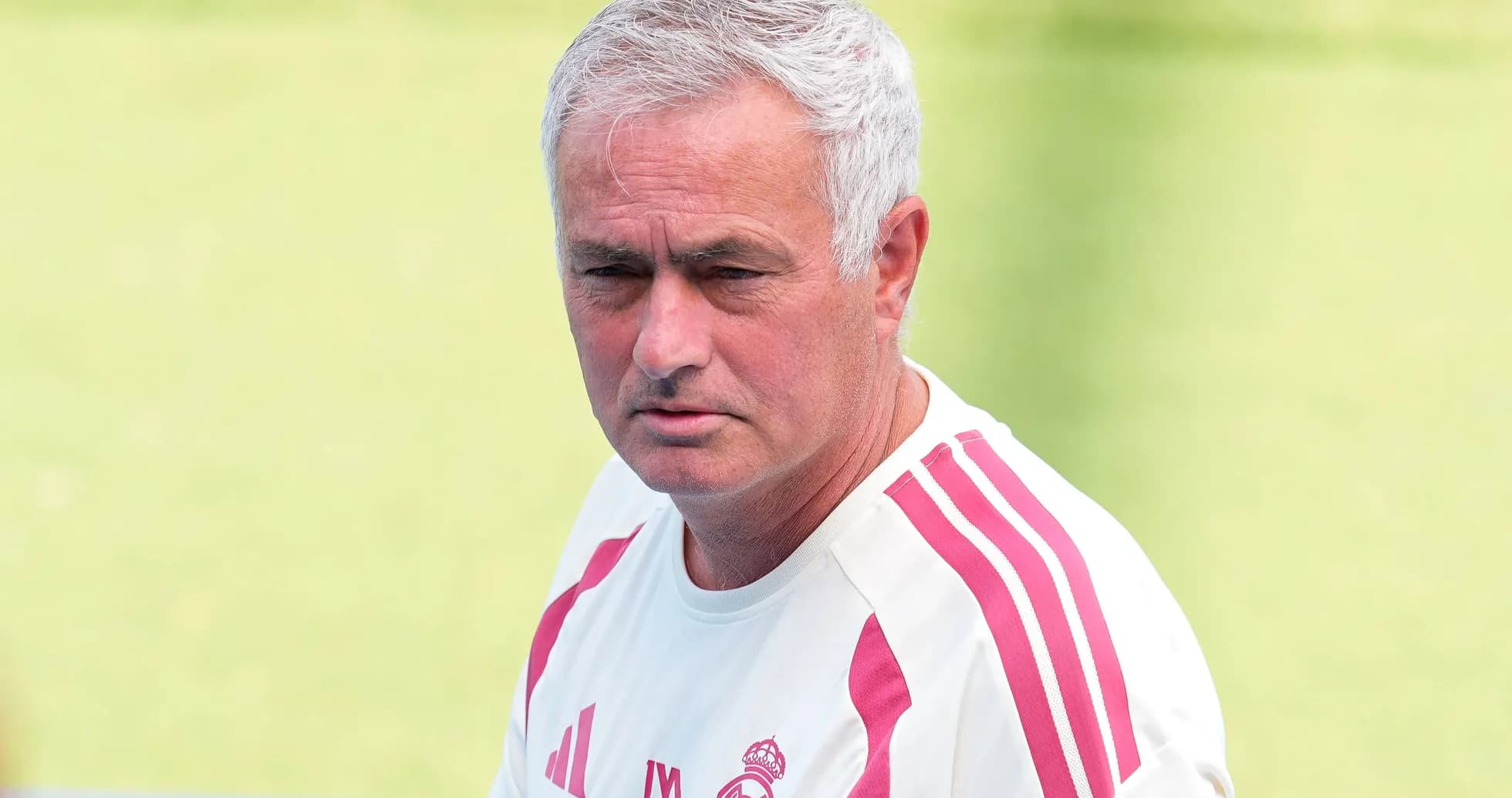
José Mourinho has never been shy about what he wants. Right now, at Real Madrid, what he wants is simple: 20 outfield players he trusts, plus the long-term injured. Nothing more.
He said it bluntly after the match in Budapest: “I want a small squad, made up of 20 players plus the injured ones.” The message was clear. The numbers were not.
Because as of today, Madrid sit at 26.
Thiago Pitarch’s promotion from the academy to the first team has tipped the balance. Add in the three long-term absentees – Éder Militão, Rodrygo and Ferland Mendy – and the squad is bloated by Mourinho’s standards. Even counting the injured, three players are now surplus to requirements.
This is not a summer of wild movement at the Bernabéu. The heavy lifting has already been done. Madrid have spent 225 million euros on six signings tailored to Mourinho’s demands: Diomande, Cucurella, Dumfries, Konaté, Bernardo Silva and Carlos Espai. The idea was that Rodri would be the marquee arrival in midfield, the anchor around which everything else would be built.
Instead, Rodri left Manchester City at a critical moment in the window, and Madrid have no current plans to return to the market for another midfielder. The structure is set. The fine-tuning is where the tension lies.
A squad trimmed by versatility
Mourinho’s ideal is ruthless in its logic: two players for every position. No more. No passengers. No one sitting in the stands growing bitter on the fringes.
He is leaning heavily on those who can cover multiple roles. Arda Güler and Bernardo Silva are central to that thinking. Both can operate across the attacking line, both can drop into midfield. Jude Bellingham fits the same profile, a midfielder who can play between the lines, arrive in the box, or slot deeper when needed.
With that kind of flexibility, Mourinho sees little sense in carrying extra bodies who will barely see the pitch. In his view, players who collect minutes only in dead time become a problem. They sulk. They question decisions. They test the atmosphere in the dressing room. He wants to remove that risk before it takes hold.
That is why, even with the market seemingly calm, three players are effectively on the edge.
Camavinga in limbo
One of the most intriguing cases is Eduardo Camavinga. Madrid still hope to sell him if the right proposal arrives. It has not. Not this summer.
The Frenchman has hinted he would like to stay. He has also given Mourinho reasons to appreciate him. His pre-season performances impressed the coach, and his attitude in training has drawn praise inside Valdebebas. Yet admiration does not automatically translate into a guaranteed future.
If a major club comes forward with a serious offer, Madrid will not stand in his way. That is the reality. Camavinga’s situation is a test of the club’s resolve: keep a talented player who might struggle for consistent minutes, or cash in and tighten the squad in line with Mourinho’s blueprint.
For now, there is only silence from the market.
Endrick stays, Mendy stalls
Endrick’s case was more delicate. A young forward, a major investment, and a player many at the club wanted to see out on loan, gaining experience away from the pressure of the Bernabéu. Mourinho intervened.
According to Spanish newspaper AS, it was at the coach’s request that Madrid shelved any loan move. Endrick will stay and grow under Mourinho’s watch.
Attention now turns to Ferland Mendy. Left-back is one of the most congested areas in the squad, with three options for the position and lingering doubts over Mendy’s reliability. Madrid want clarity on his future. AS reports that the player, for the moment, has no intention of leaving.
That resistance complicates the numbers. Mourinho wants two per role. At left-back, he has one too many, and one he finds hard to fully depend on, especially with Mendy currently among the long-term injured.
Asensio’s gamble
Then there is Asensio, another academy product standing at a crossroads.
His name has been floated as a potential departure that could trigger one last defensive signing. If Madrid receive a strong offer and Asensio agrees to go, the club may move for a new central defender. For now, that remains a hypothetical. Asensio keeps repeating that he wants to stay.
He has backed that belief with work. His pre-season was intense, his effort unquestioned, right up until a muscular injury in his quadriceps cut him down. The diagnosis is brutal in market terms: around six weeks out of training at Valdebebas.
Those six weeks run straight through the heart of the window. Any club thinking of bidding must now weigh the risk of signing a player who will not be fully fit before the season is underway. The injury does not just stall his momentum; it freezes his market.
Madrid, meanwhile, wait. They await offers that may never come.
A squad almost built, but not yet balanced
Across the pitch, the picture is uneven.
At centre-back, there is a surplus while Militão recovers, his situation still uncertain. On the right wing, numbers are high, softened only by Bernardo Silva’s ability to drift inside and operate as a midfielder. Up front, there is no shortage of options either.
The club’s stance is pragmatic. If any of the surplus players leave, Madrid will consider it a positive outcome: fewer headaches for Mourinho, more room for those he truly trusts. If the offers do not arrive, those players will stay, and the coach will manage the tension that follows.
What is clear is that the foundations of Mourinho’s Real Madrid are already in place: 225 million euros spent, a spine shaped to his demands, and a clear tactical idea built around versatility and competition.
What remains is the uncomfortable part – telling good players there is no room for them, or waiting to see if the market does that job instead.