.svg&w=384&q=75 "Naijagoal logo")

Jose Mourinho and Manchester United: A Missed Opportunity in 2013
“Sliding doors.”
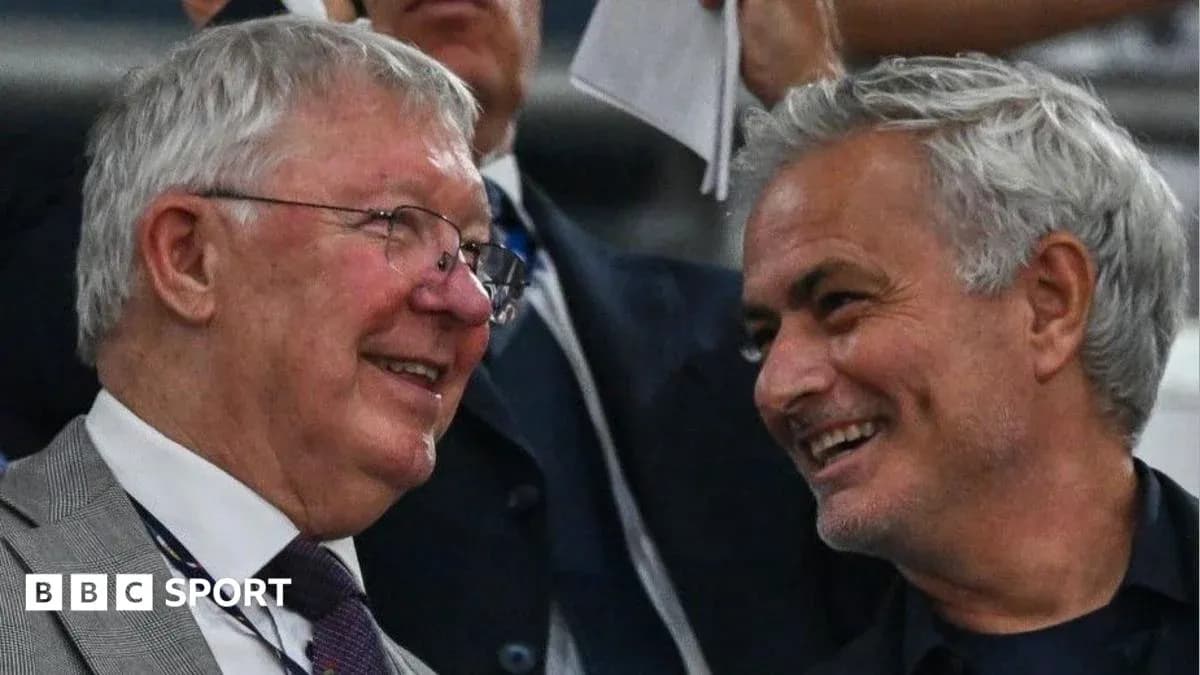
Inside Manchester United, that’s how 2013 is still described. The summer when the club thought it had Jose Mourinho lined up to walk straight into Sir Alex Ferguson’s office – and then watched the moment vanish.
A new Netflix documentary on Mourinho, released on 11 August, finally pins down what had long been rumoured. United didn’t just consider Mourinho. They moved for him. Hard.
The week United thought Mourinho was theirs
By the time Ferguson told Mourinho in person that he would retire at the end of the 2012-13 season, the groundwork had already been laid.
Meetings in Madrid. Meetings in London. A shared respect between the two men. Ferguson admired Mourinho’s edge, his charisma, his record. Mourinho, then at Real Madrid, was flattered and intrigued. United were preparing to lose not only the greatest manager in their history but also chief executive David Gill in the same summer. They knew they needed more than a safe pair of hands.
One source describes the final U-turn as happening in “days”. Another says the courtship had gone on for weeks. Either way, once Ferguson had made his intentions clear, the process accelerated.
Terms were discussed. An agreement was reached. Manchester United believed they had their man.
Then they didn’t.
Ferguson recalls the pivotal phone call in the documentary. Mourinho, emotional, backing away from the brink.
“One night, he phoned me and he was crying and he says: ‘Alex, I can't take it. I've given my word to Chelsea and I'm not going to break my word’.”
Just like that, the door slammed shut.
Chelsea’s pull – and United’s doubt
Mourinho pointed to family reasons. He had a home in London, had promised his family he would return there after his first Chelsea spell ended in 2007, and retained a strong relationship with Roman Abramovich. Those factors clearly mattered.
Yet inside United, some still question whether family was the full story.
What is not in dispute is how close it came. For a brief period, Old Trafford genuinely believed Mourinho would lead them into the post-Ferguson era. The club saw him as the man with the shoulders broad enough to absorb the shock of losing Ferguson and Gill in one hit, while also helping to reshape a structure that had revolved almost entirely around one manager.
Ferguson was unique. He controlled virtually everything from a football perspective. United knew they had to modernise around his departure and do it while still winning.
Mourinho, with his force of personality and experience at the very top, looked the perfect bridge.
When he chose Chelsea, the plan collapsed.
From Mourinho to Moyes
With Mourinho gone and Pep Guardiola already committed to Bayern Munich, United pivoted to David Moyes.
Moyes shared some of Ferguson’s traits: work ethic, discipline, longevity at one club. But he did not share his track record at the highest level. United presented him as “The Chosen One”. He was anything but.
This is where the counterfactual bites hardest. Those inside the club at the time are convinced Mourinho would have attacked that first summer very differently.
Where Moyes hesitated in the market, Mourinho would have driven deals through. Thiago Alcantara, whose move from Barcelona had been agreed in principle, would have arrived, sources insist. The messy pursuit of Marouane Fellaini – eventually signed on deadline day from Everton for £27.5m after United had let a lower release clause lapse – would never have happened. In fact, the belief is simple: Fellaini would not have been signed at all.
Mourinho had even supplied United with his views on specific players, including Italy midfielder Daniele de Rossi. There was a clear sense of what he wanted and how he would reshape the squad.
The feeling now is that he would also have squeezed more from the experienced core Ferguson left behind. Everyone accepts that Ferguson himself got every last drop out of that 2012-13 title-winning group. They overperformed. Yet the collapse to seventh the following season was still brutal and unexpected.
Even the players have struggled to explain it. Many around the club remain convinced that Mourinho’s presence, his relentlessness, would have kept standards higher and minds sharper.
The Mourinho who finally arrived
Mourinho did eventually walk through the Old Trafford doors in 2016, three years late and into a very different dressing room.
Louis van Gaal had just been sacked, two days after winning the FA Cup against Crystal Palace. Of the 18 players who started 10 or more Premier League games in Ferguson’s final title season, only six did so in Mourinho’s first campaign: David de Gea, Phil Jones, Wayne Rooney, Chris Smalling, Michael Carrick and Antonio Valencia.
The squad had turned over. So had Mourinho.
He had returned to Chelsea and won another Premier League title, but his second spell there ended badly in December 2015 with the club 16th in the table, one point above the relegation zone. The sharp edges in his management style had not softened. If anything, they had hardened.
His United reign still splits opinion. On one hand, he delivered the Europa League and EFL Cup in his first season and secured Champions League qualification twice. He calls finishing second in 2017-18 – 19 points behind Manchester City – one of the “best achievements” of his career. The 81 points United collected that year remain, by some distance, their highest total in the Premier League since Ferguson retired.
On the other hand, he left a trail of conflict. He clashed with record signing Paul Pogba. He publicly questioned the club’s ambition, accusing the hierarchy of failing to back him in the market, particularly over his desire to sell Anthony Martial. The football turned sour. The atmosphere did too.
United parted ways with him in December 2018, the club again mired in uncertainty.
A turning point that never happened
Inside Old Trafford, the belief lingers that the Mourinho of 2013 – hungry, at the peak of his powers, convinced he could outperform Ferguson’s legacy rather than live in its shadow – would have been a different proposition.
This Mourinho would have attacked the job. He would have embraced the challenge of succeeding Ferguson, not tiptoed around it. He would have demanded the structure, the signings, the authority to reshape United quickly.
Instead, United entered the post-Ferguson years with a manager who had never worked at that altitude and a club still trying to figure out what it wanted to be.
In the documentary, Ferguson tells the story of Mourinho’s tearful call with clarity and a hint of lingering regret. The Portuguese coach, choked with emotion, choosing his word to Chelsea over the chance to inherit the most powerful job in English football.
For Manchester United, it was more than a missed appointment. It was a fork in the road.
More than a decade on, with the club still searching for the stability and certainty that defined the Ferguson era, the question hangs in the air: what if Mourinho had walked through that door in 2013 and never looked back?