.svg&w=384&q=75 "Naijagoal logo")

The Week Mourinho Almost Became Ferguson’s Heir
There is a moment in Manchester United’s modern history that never actually happened, yet still shapes how people inside the club talk about the years that followed.
They call it a "sliding doors" day.
The week Mourinho almost became Ferguson’s heir
In 2013, deep in the final stretch of Sir Alex Ferguson’s last title-winning season, United thought they had their next manager. Not in theory. In practice.
Talks with Jose Mourinho had been running for weeks. Quiet meetings in Madrid. Follow‑ups in London. Ferguson, who admired Mourinho’s edge and charisma, stunned him in one of those conversations by revealing the secret that had been locked inside Old Trafford for months: he would step down at the end of the 2012-13 campaign.
The reaction around the table was not shock at Ferguson’s retirement. It was the sense that United’s succession plan might actually be perfect. The serial winner from Porto, Chelsea, Inter and Real Madrid walking straight into the seat of the greatest manager of his generation.
Negotiations quickly moved from intrigue to detail. Terms, structure, the handover. One source describes the final reversal as taking "days". Another insists the build‑up had taken far longer. Either way, agreement was reached.
Then it vanished.
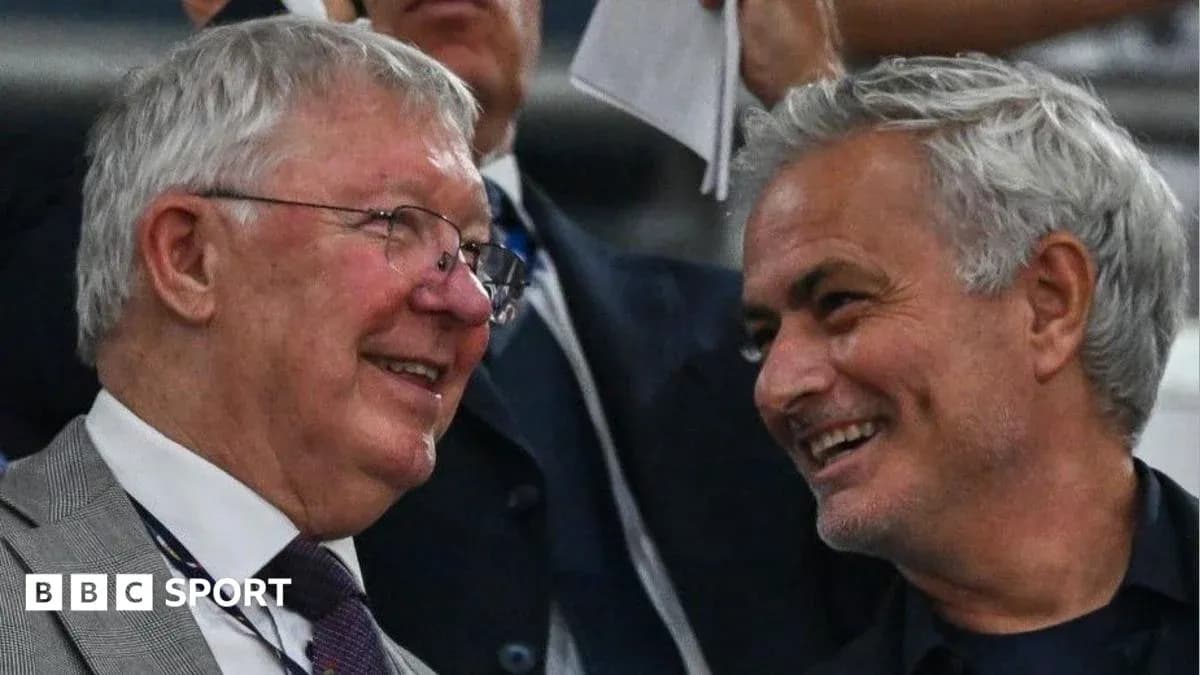
Ferguson recalls the moment in a new Netflix documentary series on Mourinho, released on 11 August. The call came late. Mourinho was in tears.
"One night, he phoned me and he was crying and he says: 'Alex, I can't take it. I've given my word to Chelsea and I'm not going to break my word'."
Just like that, the future bent in a different direction.
A promise to Chelsea, doubts at United
Mourinho pointed to family. His home was in London. When he was sacked by Chelsea in 2007, he had promised he would return. He also retained a functional, even positive, relationship with Roman Abramovich. The gravitational pull of Stamford Bridge remained strong.
Some at United never fully bought the family explanation. They accept the facts – the London base, the history, the promise – but question whether that was the whole story. What they cannot dispute is that, for a short time, they believed they had their man.
Inside Old Trafford, that belief still marks a turning point.
Ferguson was leaving. So was David Gill, the chief executive who had been his closest ally in the boardroom. United were not just replacing a manager; they were dismantling a command structure built around one dominant figure who controlled almost every football decision.
Senior figures knew they needed something different. A stronger framework. Clearer lines of responsibility. A manager with the stature to ride out the turbulence while that new shape bedded in.
They thought Mourinho’s shoulders were broad enough for that job.
From Mourinho to Moyes
Once Mourinho chose Chelsea and Pep Guardiola confirmed his move to Bayern Munich, United’s options narrowed. The club pivoted to David Moyes.
Moyes shared certain traits with Ferguson – intensity, work ethic, a belief in building teams over time. What he did not share was experience at the highest level. His work at Everton had been impressive, but he had not lived inside the pressure cooker of a superclub, with its politics, egos and relentless demand for trophies.
United announced him as "The Chosen One". The banner went up at Old Trafford. The phrase stuck. The reality did not. Moyes never looked like the man who could carry Ferguson’s legacy, reshape the club’s structure and keep United competitive in the short term.
In the counterfactual version many at United still play in their heads, Mourinho would have attacked that challenge differently. Where Moyes hesitated in the transfer market, Mourinho would have driven deals through.
Thiago Alcantara’s move from Barcelona, which had reached an agreed stage before collapsing, is cited as one that would almost certainly have been completed. The messy pursuit of Marouane Fellaini – signed on deadline day from Everton for £27.5m after United had failed to trigger a cheaper release clause earlier in the window – is held up as another sliding‑doors moment. Under Mourinho, insiders insist, Fellaini simply would not have been signed.
Mourinho had already supplied his views on potential recruits, including Daniele de Rossi. There was no lack of clarity about what he wanted or how he would use the players he would inherit.
The squad Ferguson left – and what followed
Ferguson’s final Premier League title, in 2012-13, is now widely seen as an overachievement. The squad, while decorated and experienced, was not regarded as Europe’s strongest. Yet Ferguson wrung every last drop from it.
What came next was brutal. United fell to seventh. The drop shocked even the players, who have struggled since to pinpoint a single cause.
This is where the Mourinho question bites hardest. Those around the club believe he would have squeezed more from that dressing room. His personality, his confrontational edge, his certainty – all of it, they feel, might have pushed a group that suddenly lost its reference point.
Of the 18 players who started 10 or more league games in that title season, only six did so in Mourinho’s first year when he finally arrived at Old Trafford in 2016: David de Gea, Phil Jones, Wayne Rooney, Chris Smalling, Michael Carrick and Antonio Valencia. By then, the Ferguson squad was already fractured, its core aged, sold or disillusioned.
Mourinho, too, was no longer the same manager United had first courted.
The Mourinho United actually got
When he eventually walked through the doors at Carrington, replacing Louis van Gaal in 2016 just 48 hours after United had lifted the FA Cup, Mourinho arrived with a mixed recent history.
He had won the Premier League in his second spell at Chelsea, but his reign had imploded spectacularly. In December 2015, he left with the club 16th, one point above the relegation zone, his relationship with key players in tatters.
At United, his tenure still divides opinion.
On one hand, the numbers support the argument that he brought success. Europa League and EFL Cup trophies in his first season. Two Champions League qualifications. An 81‑point league campaign, still United’s best return in the post‑Ferguson era, even if it left them 19 points behind a rampant Manchester City. Mourinho himself has called that runners‑up finish one of the "best achievements" of his career.
On the other hand, he left a trail of conflict. His relationship with record signing Paul Pogba collapsed. He criticised the club’s hierarchy for failing to back his judgment on Anthony Martial, a striker he wanted to move on. The mood darkened. The football turned sour. When he left, the sense of chaos felt familiar.
Which is why the question lingers: what if he had come three years earlier, when Ferguson’s influence still hung in the air and the squad still carried the confidence of champions?
A decision that still echoes
Those close to United now talk about that missed appointment with a kind of weary certainty. They are not naive enough to believe Mourinho would have replicated Ferguson. No one could. But they are convinced he would have given the club a better chance of managing the transition, of imposing a new structure while the team remained competitive.
They picture a manager who would have walked in believing he could improve on Ferguson, not merely survive him. A manager who would have forced decisions, not delayed them. A manager whose presence alone might have prevented the sharp drop from champions to seventh.
In the documentary, Ferguson recalls Mourinho’s tears with clarity and, it seems, a hint of regret. One phone call, one promise to Chelsea, and United’s path bent sharply away from the plan they had built in private.
For Manchester United, that was more than a missed appointment. It was a fork in the road.
You look at the decade since and wonder: have they ever truly found their way back?