.svg&w=384&q=75 "Naijagoal logo")
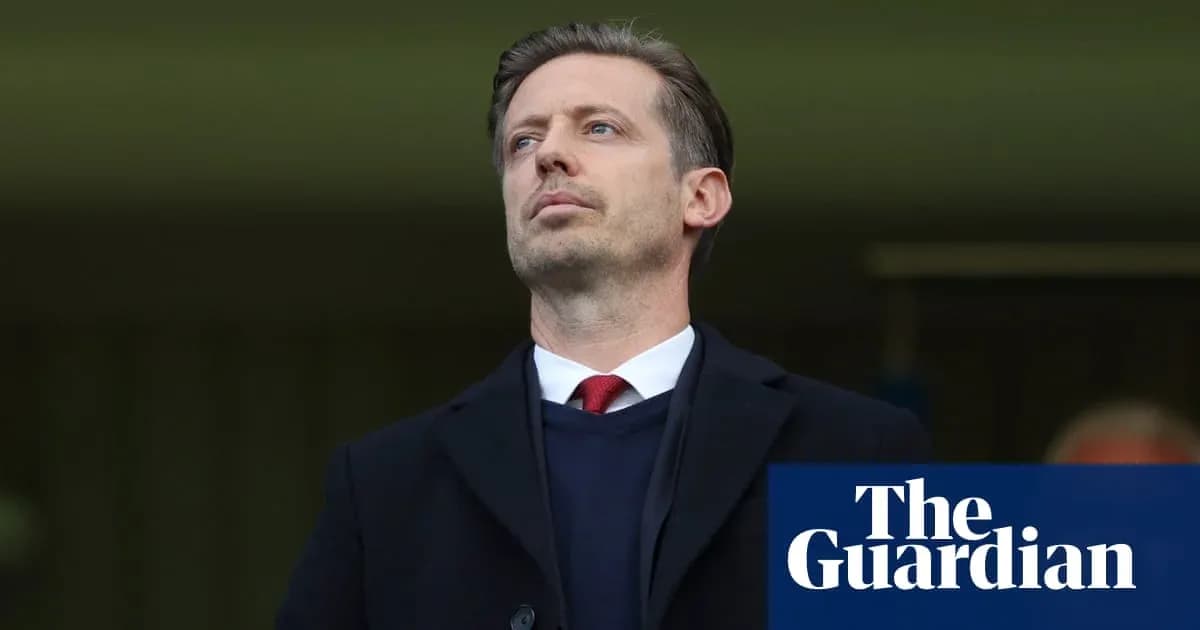

Michael Edwards Resigns from Fenway Sports Group: Impact on Liverpool's Future
Michael Edwards has stepped away from Fenway Sports Group for a second, and almost certainly final, time – and this time the parting cuts right to the heart of Liverpool’s long-term vision.
The architect of Liverpool’s modern recruitment machine has resigned as FSG’s chief executive of football, a role created specifically for him and now left vacant with a year still to run on his contract. He informed FSG in the autumn of 2025 that he would go once he felt the club’s future was properly mapped out. On Friday, the owners finally confirmed what they had been trying to avoid: he is leaving, on his own terms.
A grand project that never truly started
Edwards did not come back just to keep the lights on at Anfield. When FSG lured him back in March 2024, after his glittering spell as Liverpool’s first sporting director from 2016 to 2022, they handed him a much broader canvas.
This was not simply about steering Liverpool through the end of the Jürgen Klopp era, vital though that was. His new title – FSG’s chief executive of football, not Liverpool’s – told the real story. He was asked to build out a wider football empire: multi‑club ownership, strategic alliances, a portfolio to match the sport’s emerging giants.
The brief was bold. Targets were explored. Among the clubs examined were Getafe and Bordeaux, as FSG tested the market and the model. The ambition was clear: Liverpool at the centre of a wider network, talent and ideas flowing both ways.
Then the brakes went on.
FSG did not find a club they felt they could buy on the right terms. The multi‑club project was quietly shelved last year. Once that decision landed, Edwards’ position shifted from central pillar to awkward fit. The role existed because of the project; without the project, the logic of the role weakened.
He chose not to wait for a compromise.
Edwards walks, but leaves his imprint
Edwards’ departure is not expected to derail Liverpool’s immediate plans. The summer transfer window will still be run by sporting director Richard Hughes, whose work for this window is already in place.
Edwards, in his parting words, stressed the state he believes he leaves behind.
“It has been a privilege to return to Fenway Sports Group and Liverpool Football Club at such an important moment. I leave believing Liverpool is in a strong position, with outstanding people, a clear direction and the foundations in place for continued success,” he said.
“When I returned, I was excited not only by the opportunity to help guide Liverpool through an important period of transition, but also by the chance to help shape FSG’s wider football ambitions. While that broader project ultimately evolved differently to how we had originally envisaged, I am proud of the work our team undertook in presenting ownership with a broad range of thoughtful and well-developed options for the future.”
There will be no payoff. This is a resignation, not a dismissal, and FSG may not even seek a like‑for‑like replacement. The job, after all, was built around Edwards himself.
Stability on the pitch, questions upstairs
On the football side, the machine keeps turning. Hughes remains in charge of transfers, but his own future now hangs over the club’s medium-term planning.
His contract runs to 2027, yet he has been heavily linked with a lucrative move to Al‑Hilal in the Saudi Pro League. The man who sacked Arne Slot and brought in Andoni Iraola – a call made in tandem with Edwards – could himself walk away once this summer’s window closes.
So while Liverpool’s squad planning for the coming months is stable, the structure above the manager is anything but. The club that once set the benchmark for joined‑up thinking now faces the prospect of losing, in quick succession, the two men who shaped its post‑Klopp direction.
Gordon steps back into the spotlight
In Edwards’ absence, FSG will turn again to a familiar figure. Mike Gordon, the group’s president and long-time key liaison with Liverpool’s football operation, is expected to resume a more hands‑on role.
Gordon, who has been central to the club’s strategic decisions for more than a decade, paid a pointed tribute to the man who helped design Liverpool’s modern football structure from 2011 onwards and then rebuilt it during his second spell.
“Throughout both periods he has consistently demonstrated exceptional judgment, integrity and an unwavering commitment to building a strong football organisation for the long term,” Gordon said.
“His return to the organisation saw Liverpool successfully navigate a significant period of transition before securing the club’s historic 20th English league title, an achievement to which Michael made an important contribution. While we are naturally disappointed to see him leave, we will always be grateful for everything he has given.”
That 20th title, and the way Liverpool managed the immediate aftermath of Klopp’s departure, will be central to how Edwards is remembered. He arrived first as a data‑driven outsider, became the quiet power behind some of the most transformative signings in the club’s history, left at the peak of his influence, then returned to guide them through their most delicate handover in decades.
Now he walks away again, with the multi‑club dream parked and the ownership model unchanged.
Liverpool, on the pitch, still look ready for the next phase. The real test now sits above the dugout: who writes the next chapter of the club’s football vision, and how long can the current stability hold without the man who helped design it?