.svg&w=384&q=75 "Naijagoal logo")

Mauricio Pochettino Reflects on World Cup Experience and Future Ambitions
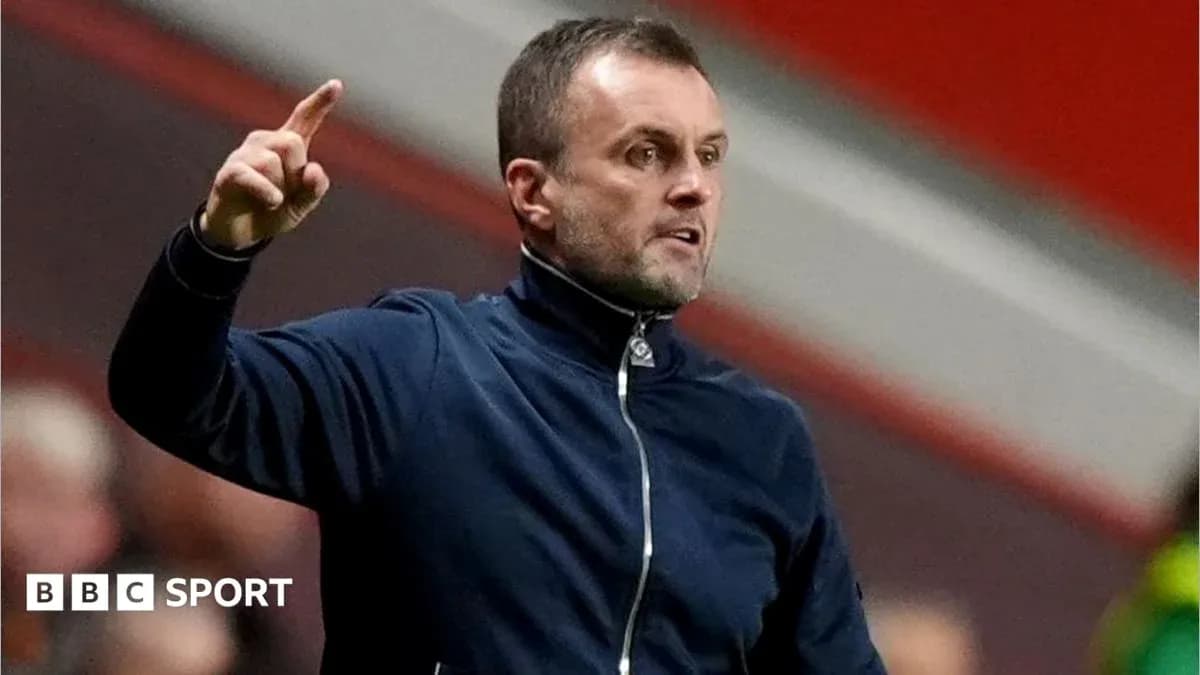
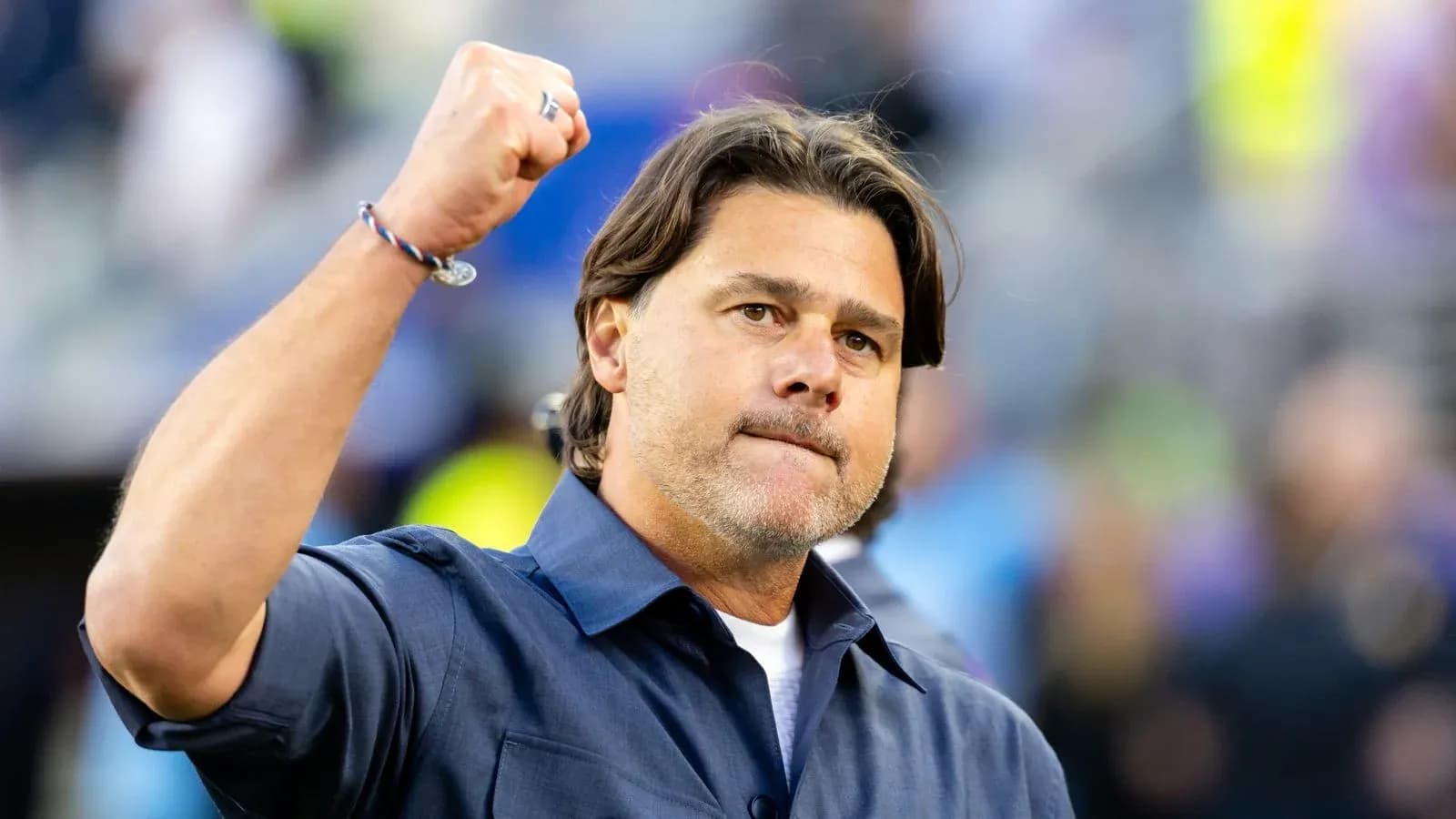
Mauricio Pochettino walks into the room like a man who has finally had a chance to breathe. Hugs, jokes, stories about the summer. The usual warmth. Only his summer has been anything but usual.
He has just taken the USA to the last 16 of a home World Cup, watched their campaign end with a thud against Belgium, navigated a political storm around Folarin Balogun, shared a dressing-room moment with Donald Trump and, somewhere along the way, become an unlikely style reference point for touchline fashion.
Then, when the dust should have been settling, he signed on for four more years with the USA. No sabbatical. No quick return to club football. A bold decision from a coach who still talks about the Premier League like unfinished business.
‘We are much better coaches now’
Ask Pochettino what he has taken from the World Cup and he barely pauses.
"We are much better coaches now," he says, referring to himself and long-time assistant Jesus Perez. The tournament has hardened him, sharpened him, reminded him how brutal international football can be when you only get short windows with your players and every decision is magnified.
He leans into the idea that at this level, the margins are microscopic. The smallest detail matters. The timing of a substitution, the way a message lands in a team meeting, the clarity of a tactical tweak with players who do not live in your system every day.
"Everything needs to be perfect," he says. He knows it never truly is, but the pursuit of that perfection still drives him.
And this was no ordinary World Cup. Managing the host nation is one thing. Doing it with a President who relishes the cameras is another. Pochettino chooses his words carefully around Trump, stressing the support and backing the team received rather than the circus that followed.
The real storm, though, arrived with Balogun.
Balogun, FIFA and the noise around Belgium
On the eve of the last-16 tie with Belgium, the focus should have been tactical. Instead, it was legal, political, explosive. Balogun’s suspension was suspended by FIFA, triggering a furious reaction elsewhere and dragging Pochettino into a debate he never wanted.
He later admitted the "politics and manipulation" around the situation overshadowed the game. The anger, the accusations, the noise. He understood it all. He just refused to live in it.
"If you pay attention to the noise, you become crazy," he says now.
FIFA’s letter landed the day before the game confirming Balogun could play. From Pochettino’s point of view, that was that. "When the letter arrived the day before the game confirming Balogun was available, the decision was straightforward."
The forward has been back in the headlines since, his proposed Deadline Day move from Monaco to Everton collapsing late. Pochettino has kept his distance so far, out of respect.
He knows how bruising a failed transfer can be.
He would have liked to see Balogun in the Premier League. Instead, the striker stays at Monaco. Pochettino just hopes he can reset and find a better place, mentally and on the pitch.
The touchline suit that went viral
Somewhere between the politics, the pressure and the knockout football, Pochettino’s navy touchline ensemble became a story of its own.
He has always cared about how he presents himself, but this was different. The outfit took off. Social media loved it. So did Wayne Rooney, who went out and bought it.
"I saw him. He looked good on him, like a top coach," Pochettino laughs.
It was that kind of summer. High stakes, high drama, and a manager suddenly being talked about as a style icon as well as a tactician.
Then came the next twist. As the managerial carousel in Europe started to spin, his name appeared on plenty of shortlists. Yet just as the speculation began to gather pace, the announcement dropped: Pochettino would stay with the USA until 2030.
Four more years in USA – but Premier League dream still burns
Six years away from club football is a long stretch for a coach whose reputation was built in the week-to-week grind. So is this it for the Premier League chapter?
He shakes his head.
"I have the ambition," he says. "My dream now is to be in the USA for four years, but after that, why not? We are still young, and I think coming back is always my goal; to win the Premier League, to be in the Premier League and to build a project with the possibility of winning.
"I love the football here. I think to have the chance again is one of my wishes and I hope that happens."
The word "unfinished" hangs in the air without him needing to say it.
Spurs, the call that never really came
Eighteen months ago, Pochettino spoke openly about wanting to return to Spurs one day. At that point, Tottenham were struggling under Ange Postecoglou. Since then, Postecoglou has gone, Thomas Frank and Igor Tudor have come and gone, and the club flirted dangerously with relegation.
So did the phone ring? Was there a moment when the rescue mission felt real?
"Always I say, one day, why not?" he replies when asked about a return.
Pressed on whether it was close this time, he is clear. "People talk and maybe we receive some approach, but it never was close." Not this time.
AC Milan were another name thrown around as a potential destination. Pochettino does not deny the interest, but he is adamant about the timing.
"We were not open during the World Cup to talk with different clubs that were interested," he says.
Were there clubs interested?
"Yes, always," he answers, as if this is simply the reality of his world. "Yes, always have different, you know, options," he adds, with a hint of mischief.
Did any of them get near tempting him away?
"We never gave the opportunity to be close. We always closed the door before it got close."
The USA project, at least for now, comes first.
Spurs spending big – and Poch’s wry smile
Talk turns back to Tottenham and the latest reset in north London. He laughs when it is suggested that it is never dull at Spurs.
"They are investing like other clubs," he says. The model has shifted. Tottenham are now spending heavily on players who already know the Premier League, rather than betting on raw potential.
You think back to Pochettino’s era. To the title challenges, the Champions League final, all achieved with comparatively modest spending. What would he have done with £300m?
There’s a glint in his eye and a playful shrug. He pretends he cannot even comprehend what £300m looks like.
So does he think this new strategy will deliver?
"You never know," he replies. "We need time to see if that works or not.
"Like in all the games, when you make a decision like a coach that can work well or not. I think it's a different strategy and a different way to operate. I always wish the best for Tottenham because it's in my heart."
Whatever comes next in his career, that bond clearly remains.
Chelsea, Xabi Alonso and the new direction
Chelsea, another of his former clubs, have also changed course. The head coach role he held two years ago is now a manager’s job, with more authority. The transfer policy has shifted too. Under Xabi Alonso, the club have moved away from long-term "projects" towards Premier League-ready signings.
Pochettino will not be drawn into direct comparisons, but he recognises the intent.
Buying players ready to perform now, he says, brings an expectation. "Buying players like this you can expect to fight, to be a contender for the Premier League."
Chelsea’s defeat to Arsenal has already served as an early jolt. Some are twitchy. Pochettino is not.
"Of course they are disappointed after the defeat against Arsenal, but I think we need to give time to Xabi's first season after three games in the Premier League," he says.
"I think we need to give time, and of course for Tottenham the same."
Patience is not a word often associated with either club. He knows that better than most.
Arteta, Arsenal and the current benchmark
Ask him who sets the standard right now and he does not hesitate.
"For Pochettino, Arsenal are very much in pole position."
"Mikel [Arteta] is the best coach in the Premier League today," he says. "Knowing what he needs to do, it's going to be tough to beat them."
It is a striking admission from a man who still wants to come back and win that very league. Yet it also frames the challenge he craves.
If he does return to England after his USA adventure, he will walk back into a landscape shaped by Arteta’s Arsenal, a new-look Chelsea and a Spurs side still searching for a stable identity.
For a coach who insists he is "much better" now than when he left, the question almost asks itself: when that next Premier League job comes, will English football be ready for the new version of Mauricio Pochettino – and will he finally get the project that lets him finish what he started?