.svg&w=384&q=75 "Naijagoal logo")

Matthias Ginter Reflects on a Bitter Season Ending
Matthias Ginter still remembers the timing more than the words.
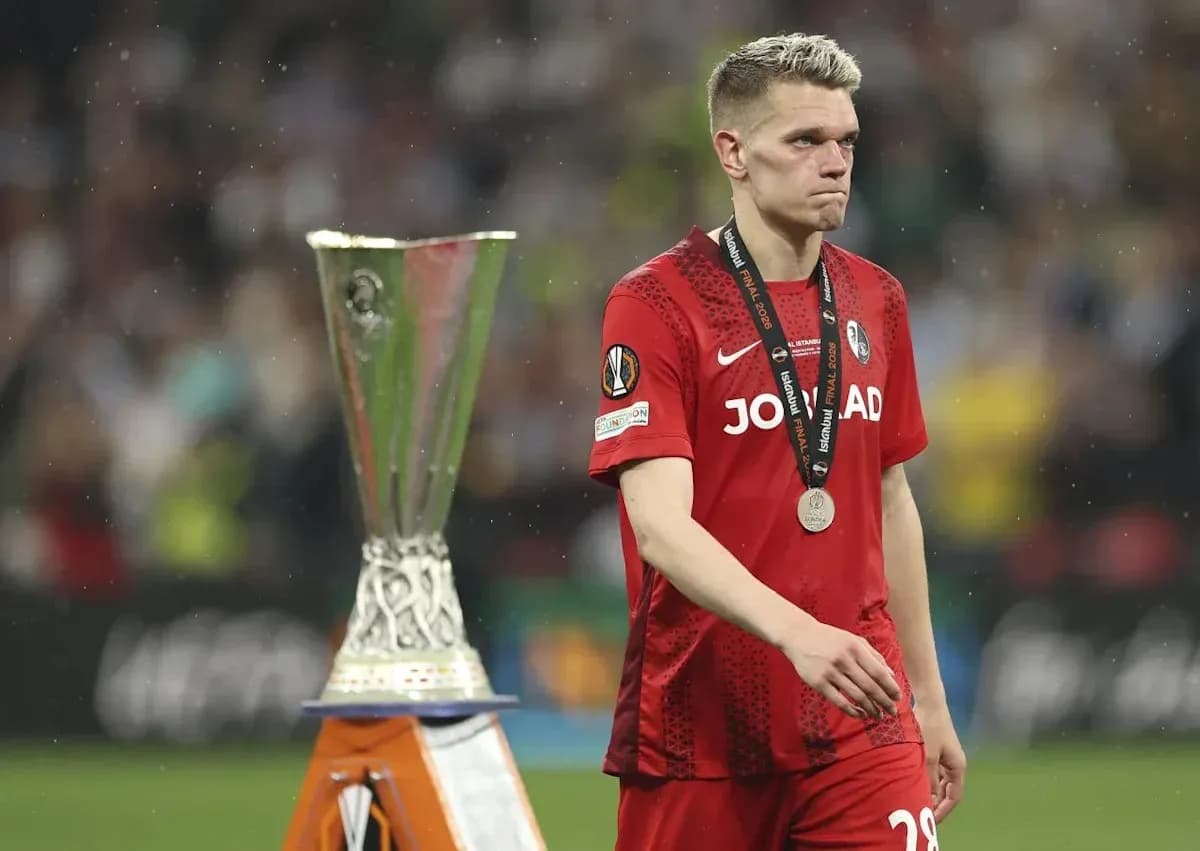
On 20 May 2026, he walked off the pitch in Dublin as a beaten Europa League finalist, SC Freiburg’s remarkable run stopped by Aston Villa. Twelve hours later, on 21 May, came the second hit: Julian Nagelsmann’s World Cup squad list dropped – and his name wasn’t on it.
Two days. Two blows. One season suddenly stained.
“It was the bitterest time in my career. A double blow at the end of an actually very special season,” Ginter told Kicker.
At 32, he had been Freiburg’s defensive pillar, the calm at the back of a team that had punched far above its weight in Germany and in Europe. Inside the club, he was seen as a lock: leader, organiser, big-game presence. For the national team, Nagelsmann saw it differently.
The omission hurt. The way it unfolded hurt more.
Ginter made no attempt to hide his frustration with the communication from the national setup, hinting at a longer, more complicated history with the Bundestrainer. “I don't want to talk about the way it generally went down for three years (with Nagelsmann),” he said, alluding to tensions that never fully surfaced in public but clearly left a mark. “There were published leaks, but I was only informed of the decision on Thursday, the day of the nomination.”
By then, the story was already out there. The leaks had set the tone, the headlines had rolled, the debates had started. The player at the centre of it all was the last to be formally told.
For a 2014 World Cup winner, the irony is cruel. Ginter lifted the trophy in Brazil without playing a single minute, a squad player then, a symbol of depth in a golden generation. Twelve years on, he was no longer the youngster waiting his turn, but the seasoned professional who had done enough, in his eyes and Freiburg’s, to earn one last shot on the biggest stage.
At first, he tried to keep it at arm’s length. The season had been long, emotionally charged, and the Europa League final defeat still raw. Missing out on the World Cup felt almost abstract.
That changed when the tournament actually began.
“It was only with the opening match of the World Cup that I became really aware of it,” Ginter admitted. The anthem, the flags, the familiar faces on screen without him among them – that was when the void took shape. “And, because it was a package, the disappointment of losing the Europa League final came back again.”
One moment dragged the other back to the surface. The missed tackle in Dublin, the unread message from the national team, the delayed phone call, the leaks. The sense that a “very special season,” as he called it, had been redefined in 48 unforgiving hours.
Ginter cannot rewrite those days in May. What he can control is what comes next: how a 32-year-old leader, still central for Freiburg, channels two of the worst days of his career into whatever remains of his time at the top.