.svg&w=384&q=75 "Naijagoal logo")

Martin O’Neill to Remain as Celtic Manager After Keane's Backlash
Celtic are set to turn the clock back and push forward at the same time. Martin O’Neill, the man who once dragged the club into a modern era of success, has agreed a one-year deal to remain as permanent manager in Glasgow, with an option for a second season.
At 74, O’Neill was supposed to be a short-term fix, a steady hand after turbulence. Instead, he has forced the club’s hierarchy into a simple conclusion: when the man who just delivered a double wants to stay, you find a pen.
Keane backlash clears path for O’Neill
For a spell this week, the story looked very different. Robbie Keane had moved into pole position, holding talks with principal shareholder Dermot Desmond and emerging as the preferred candidate inside the boardroom.
Outside it, the reaction was fierce. A vocal section of the Celtic support railed against the idea, angered by Keane’s decision to work in Israel with Maccabi Tel Aviv before his subsequent move to Ferencvaros in Hungary, where he resigned at the end of May. The protests were loud enough, and pointed enough, to shift the mood.
Keane’s candidacy stalled. O’Neill’s momentum grew.
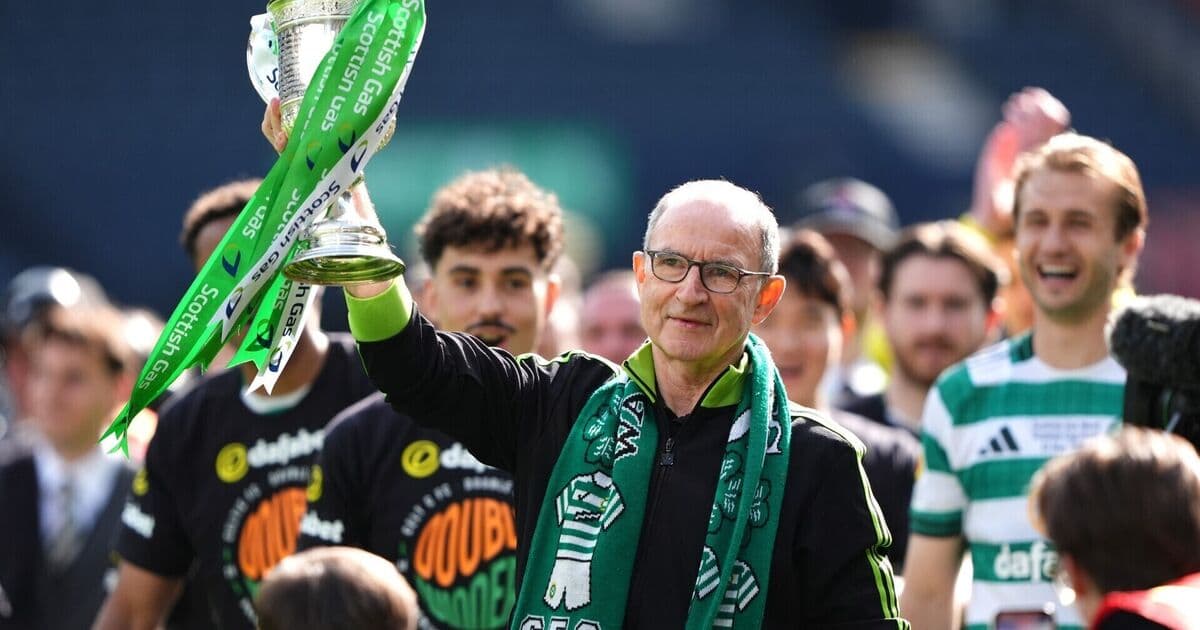
The Northern Irishman had asked for time to think after guiding Celtic to Scottish Cup victory over Dunfermline, completing a domestic double in the second of his two interim stints this season. In truth, the pause felt more like formality than doubt. Those close to the situation always expected him to be open to staying on. The club, faced with a choice between a divisive gamble and a proven winner, have moved towards the latter.
A return written 26 years in the making
There is a symmetry to Desmond turning again to O’Neill. It is 26 years since he first persuaded the former midfielder to leave Leicester City for Glasgow. That decision reshaped Celtic’s modern history.
O’Neill’s first reign brought three Scottish titles, three Scottish Cups and two Scottish League Cups. It also delivered one of the defining European runs in the club’s recent past, the charge to the 2003 Uefa Cup final, where Celtic fell to José Mourinho’s Porto in Seville after an epic, draining night.
Those memories still carry weight in the stands. They also colour every conversation about what Celtic should be: aggressive, ambitious, unafraid of big occasions. By returning to O’Neill now, the club are not just hiring a manager; they are reattaching themselves to an identity.
From crisis cover to title defender
This second act began in chaos. Brendan Rodgers resigned last October, leaving Celtic exposed mid-season and scrambling for a solution. O’Neill agreed to step in on a short-term basis, a firefighter with a legendary CV.
The club then tried to pivot quickly, appointing Wilfried Nancy in what was framed as a bold, forward-looking move. It collapsed almost immediately. The Frenchman lasted only eight games, his tenure unravelling so badly that Celtic had little choice but to turn back to O’Neill.
He did what he has so often done in his career: simplified the message, stiffened the mentality and pointed the squad towards the finish line. Celtic retained their Premiership crown and added the Scottish Cup, a domestic double that forced the board to reassess any grand plans for a radical reset.
The pressure finally told in O’Neill’s favour. Results spoke louder than blueprints.
One year, with history at his back
The new agreement, expected to be confirmed shortly, ties O’Neill to Celtic for another year, with an option to extend into a second. It is pragmatic, not sentimental. The club get continuity and authority in the dugout; O’Neill gets the chance to shape a squad in his image again without being locked into a long-term commitment at this stage of his career.
He returns not as the fresh, insurgent figure of 2000, but as a seasoned operator who has already proved he can still win in the modern game’s unforgiving environment. The challenge now is different: to turn a rescue job into a renewed era, not just a nostalgic epilogue.
Celtic have chosen the man who knows the club, the city and the weight of the shirt better than almost anyone. The question now is whether this late-career chapter becomes a coda, or the start of one last, serious run at dominance.