.svg&w=384&q=75 "Naijagoal logo")

Marseille and Athletic Bilbao: A Unique Summer Transfer Window
As the summer transfer window slammed shut, a strange statistic emerged from the chaos of Europe’s market: across the top five leagues, only two clubs did not register a single new signing.
Olympique de Marseille. Athletic Bilbao. And that was it.
No permanent deals. No loans. No options triggered. Nothing. In an era when even mid-table sides shuffle squads relentlessly, the pair stand out as outliers in very different ways.
Athletic Bilbao
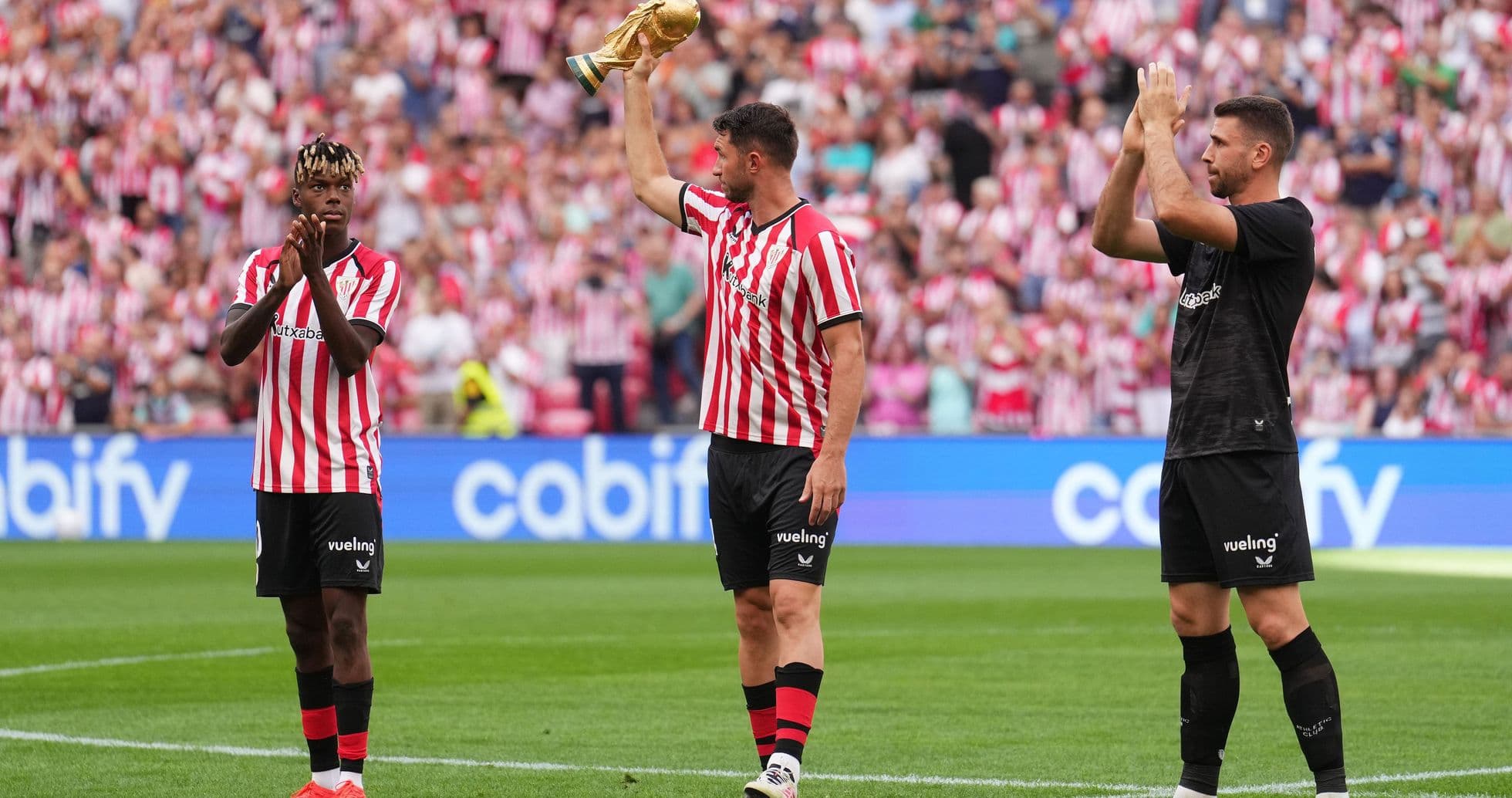
For Athletic, the silence felt almost familiar. The Basque club have long lived by a self-imposed rulebook, drawing almost exclusively from their own academy and players of Basque origin. Their summer told a story of continuity rather than caution, a club once again backing its identity over short-term temptation.
Olympique de Marseille
Marseille’s story could hardly be more different.
Here, the quiet window was not a statement of philosophy but a symptom of strain. Severe financial constraints gripped the Ligue 1 side all summer, shutting doors that in previous years would have been flung open. While rivals refreshed and retooled, Marseille watched the market from the outside, unable to act.
The consequence was brutal: an exodus with no replacements.
- Mason Greenwood left for Fenerbahce.
- Facundo Medina moved to Leverkusen.
- Quinten Timber joined Crystal Palace.
- Geronimo Rulli departed for Manchester City,
- Pierre-Emerick Aubameyang for La Coruna,
- Leonardo Balerdi for Roma.
- Bilal Nadir and Hamed Traore also exited, chipping away further at the squad’s depth.
One by one, experienced options walked out of the door. Nobody walked in.
What remains is a drastically thinned group expected to carry the weight of a demanding domestic campaign and European commitments. The margin for error has shrunk. So has the room for injuries, dips in form, or any prolonged loss of key players.
The pressure now shifts inside the club. Coaches and recruitment staff must squeeze every drop of value from what they already have, leaning heavily on internal solutions and the club’s youth ranks. Prospects who might have been eased in will instead be thrown into meaningful minutes. Established players will be asked to do more, and do it more often.
Marseille have no choice. They must turn a static transfer window into a rallying point.
As the season accelerates and the fixtures pile up, the question is stark: can a proud, demanding club survive – and compete – after a summer in which the only real movement was out of the door?