.svg&w=384&q=75 "Naijagoal logo")
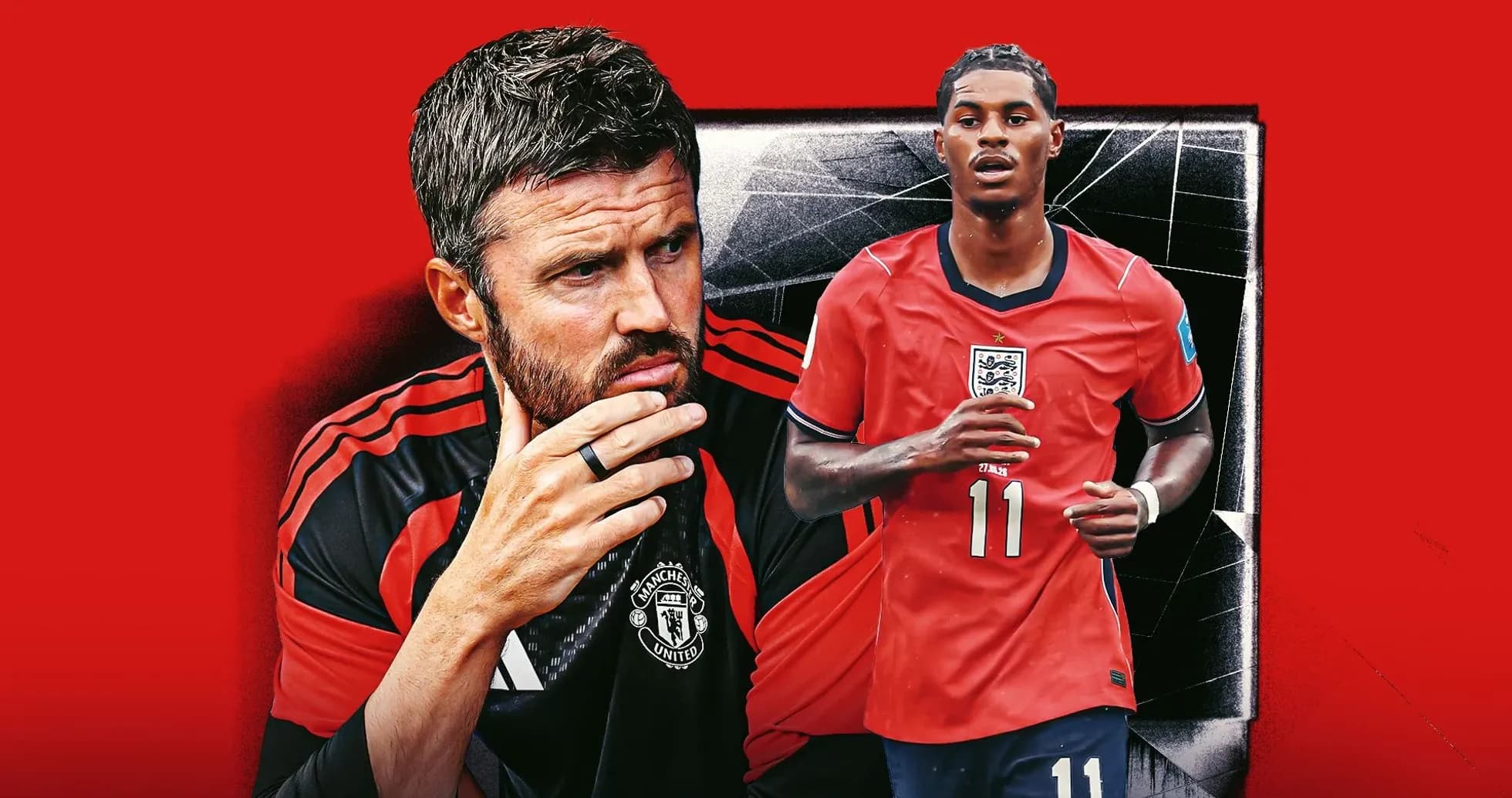

Marcus Rashford's World Cup Struggles and Future Uncertainty
Marcus Rashford went to the 2026 World Cup needing a shop window. He came back with the shutters half‑down and the “For Sale” sign looking increasingly weather-beaten.
England’s campaign in North America was supposed to be his reset. Instead, it became the backdrop to a shrinking market and a career edging towards stalemate.
World Cup chance that slipped away
Rashford began the summer locked in a straight fight with Anthony Gordon for the left-hand berth in Thomas Tuchel’s front line. On paper, it was set up for him: Gordon started slowly, Rashford struck a composed finish in the opening win over Croatia, and the door creaked open.
He never walked through it.
Those flat, functional victories over Panama and DR Congo did nothing for his standing. Tuchel wanted spark. Rashford didn’t provide it. By the time the knockouts arrived, the United forward had lost his place and Gordon – fresh from sealing a £69m move from Newcastle to Barcelona – had seized the stage, becoming one of England’s key attacking outlets.
Rashford’s World Cup ended with a modest line: one goal, one assist, the latter coming in a chaotic third-place play-off against a French defence that barely turned up. For a 28-year-old trying to convince Europe’s elite he was still worth building around, it felt thin.
Barcelona door shuts, clauses expire
While Rashford was drifting on the pitch, the market was moving without him.
Barcelona, his loan club last season, had already nailed their colours to Gordon. That £69m deal effectively closed the Catalan route before the tournament even kicked off. The option to buy Rashford, written into the loan agreement with United, sat there untouched and quietly expired on June 15, four days into the World Cup.
United have refused to renegotiate that figure and have ruled out sending him back to Camp Nou on loan. The message from Old Trafford is clear: no discounts, no repeat arrangements.
A month later, the £40m release clause in Rashford’s contract also lapsed, the day after England’s semi-final defeat to Argentina. Any buyer must now negotiate a fee, with Barcelona’s previous £26m option widely viewed as closer to United’s realistic asking price.
Yet even that feels academic. Barca have moved on, turning to Karim Adeyemi from Borussia Dortmund. Any lingering hope Rashford held of a late-summer U-turn from the Blaugrana has all but vanished.
Few takers, fewer options
The problem is not just Rashford’s. United’s own plans have hit roadblocks.
They had weighed a move for West Ham winger Crysencio Summerville, only to watch the Netherlands international head towards Al-Hilal and Saudi riches in a £60m package. It fits the pattern of a frugal United window: limited income from sales, a tight budget, and a squad light on natural options down the left.
Even so, a Premier League escape route for Rashford looks remote. According to The i Paper, United will not sell him to another English top-flight side, despite Tottenham’s readiness to trigger his now-expired £40m clause. The fear inside Old Trafford is starkly put: they do not want to be “humiliated” by an academy graduate rediscovering his scoring touch for a domestic rival, an outcome described internally as a potential “PR disaster”.
Arsenal and Chelsea have been monitoring the situation, but neither looks likely to move. Chelsea, in particular, have already committed £117m to Morgan Rogers from Aston Villa, a statement that leaves little room for another high-cost wide forward.
Wages that block the exit
Strip everything back and one figure towers over the debate: £325,000 per week.
Rashford is among United’s top earners, and that wage has become the biggest obstacle to any resolution. It prices out most suitors. It also constrains United, who are trying to reshape a bloated salary bill under Sir Jim Ratcliffe and INEOS.
The remaining two years of Rashford’s deal are projected to cost around £39m in basic wages alone, according to The Athletic. Bonuses would push that higher. For a player no longer guaranteed to start and approaching 29, Ratcliffe’s stance has been firm since January 2025, when both the board and then-head coach Ruben Amorim backed the decision to move him out on loan.
Yet even when money is not the issue, appeal is. Rashford is understood to have turned down interest from Fenerbahce and Galatasaray, clubs capable of paying handsomely but unable to offer the Champions League platform he still craves. Were his priority purely financial, he would almost certainly have a new employer by now.
Carrick’s olive branch
The dynamic may be shifting under Michael Carrick.
The new United manager is said to be open to reintegrating Rashford, with the forward expected to link up with the squad in Dublin for the latter stages of pre-season once his post-World Cup break ends. Despite being exiled to the so-called “bomb squad” under Amorim, Rashford is reported to hold no grudge against the club.
Carrick, for his part, sees an opportunity. Transfer specialist Fabrizio Romano has described both men as “really looking forward” to working together, with Carrick “genuinely excited” about the chance to help revive Rashford’s United career.
The plan, as it stands, is simple: give it another go. Club and player will reassess later in the window and decide whether to continue together or part ways.
Carrick’s public line back in April left the door ajar without making promises: “There’s decisions to be made in time on certain things, and obviously Marcus is in that situation. But at this point in time, nothing’s been decided. From my perspective, whoever’s here, I want to work with, make the best out of and help them improve.”
With Champions League football returning to Old Trafford and United short of proven wide players, the temptation to keep Rashford as an in-house solution is obvious.
Can he really go back?
The biggest complication might not be financial or tactical. It might be emotional.
By the time Rashford left on loan in January 2025, his relationship with sections of the United fanbase had fractured badly. He had become a lightning rod for frustration, accused of poor attitude and application, even if many inside the club felt Amorim used him as a convenient scapegoat amid wider failings.
Winning those supporters back will take more than a few polite soundbites. He will need visible fight, intensity without the ball, and decisive contributions early in the season. If those don’t arrive quickly, the atmosphere could sour again, and a homecoming risks turning toxic.
There is also the old football warning: never go back. United’s hierarchy, led by Ratcliffe, must weigh that against the cold numbers on the balance sheet. Are they as ready as Carrick appears to be to welcome Rashford back into the fold at such a cost?
Loan, compromise, or stalemate?
United find themselves trapped in a dilemma of their own making. They want Rashford’s wages off the books and a fee close to £26m. Potential buyers see a club under pressure to sell and are in no rush to meet those demands. Rashford, meanwhile, is right to reject moves that don’t match his ambitions.
The most pragmatic outcome might be another loan.
If United can replicate the Barcelona model, a new club would shoulder most of his salary and perhaps negotiate a temporary pay cut, as the Catalans did. Given United’s urgency to shift that £325,000-a-week burden, a 40/60 wage split – rather than full coverage – may be the realistic compromise.
Any suitor knows time is on their side. The longer the window drags, the more leverage they gain, especially if United spend on a new winger and need room on the wage bill. Rashford, being selective, can afford to wait for the right project, but every passing week tightens the squeeze on all parties.
For now, the only certainty is uncertainty. Rashford stands at a crossroads with no obvious path, United are juggling pride and pragmatism, and the market is watching, sensing weakness.
Where he plays his football next season is still anyone’s guess. What’s becoming harder to ignore is the question that shadows every stalled talent at a superclub: is this the moment he finally breaks free, or the summer when the walls close in for good?