.svg&w=384&q=75 "Naijagoal logo")

Marcus Rashford's World Cup Journey: Attitude Over Image
Marcus Rashford has spent the last year rebuilding his reputation under the Catalan sun. Now, as England chase a World Cup in North America, the debate around him has nothing to do with haircuts, image or shop windows. It comes down to something far more basic: attitude, commitment, and whether he can truly be trusted when it matters most.
Barca revival, United crossroads
Rashford’s season-long loan at Barcelona in 2025-26 did what his stuttering Manchester United career could not: it reignited the professional spark that once made him the darling of Old Trafford. In a side featuring Lamine Yamal and Robert Lewandowski, he hit 14 goals and collected La Liga and Spanish Super Cup medals. He looked liberated.
Barcelona had the option to make it permanent for just £26 million. They walked away. The money instead went on Anthony Gordon, the former Everton and Newcastle winger, leaving Rashford’s future dangling again.
Back in England, Michael Carrick, now confirmed as United’s full-time manager after his interim spell, is understood to be open to a reset. A clean slate, a fresh role, a chance to start again at the club where it all began. Rashford, though, seems to be leaning towards a clean break. His camp is listening. Premier League suitors have been mentioned, as have clubs across Europe. No firm resolution, only speculation.
So he arrives at the World Cup carrying medals from Spain, doubts from Manchester, and a point to prove. But not, insists John Barnes, in the way many expect.
Barnes’ warning: England first, not the shop window
Barnes, speaking to GOAL in association with viagogo’s ‘World Cuts’ campaign, cut straight through the noise around Rashford’s situation. For him, the World Cup is not a transfer showcase.
“England needs to do well as a team,” he said. “If he feels he wants to do well by himself, that's not going to help England.”
Barnes spelled out the temptation that stalks a player in Rashford’s position: to treat the tournament as a personal audition.
“If he wants to make this a market or a shop window for himself, where he's going to say, ‘I'm going to get the ball, I'm going to dribble around players because I want to look good individually’ - that is not what's going to win the World Cup. So him needing to do well for himself is not important. He needs to do well for England.”
The message was blunt. If Thomas Tuchel, the England manager, decides Rashford is a bit-part player, that is the reality. No amount of individual chest-beating will change it.
“And if Thomas Tuchel feels that he's going to be a bit-part player in the squad, he can do nothing about that,” Barnes said. “So it's not a question of individual players feeling I'm going to take this mantle upon myself to do things, to put myself in the shop window. That's not going to help England. Helping the team play is more important than him looking good for himself.”
Barnes made it clear: in his eyes, this World Cup is not about Rashford’s next club.
“Thomas Tuchel isn’t worried about Marcus Rashford putting himself in the shop window. He's worried about Marcus Rashford playing well for England, which means he just holds the position, passes it simple, plays a simple game, which maybe will help the team but not help him individually. That's the decision Thomas Tuchel will take. So this has got nothing to do with Marcus Rashford. It has nothing to do with Marcus Rashford trying to find himself a club. It's to do with England trying to win the World Cup.”
A flying start – and a reminder not to get carried away
On the pitch, the early signs are promising. England opened their campaign with a 4-2 win over Croatia, a scoreline that felt as emphatic as it sounds. The record books were nudged again by Harry Kane, who struck twice to move on to 81 international goals. Jude Bellingham, deployed in the coveted No.10 role ahead of Morgan Rogers, justified that call with a second-half goal.
Then came Rashford’s moment.
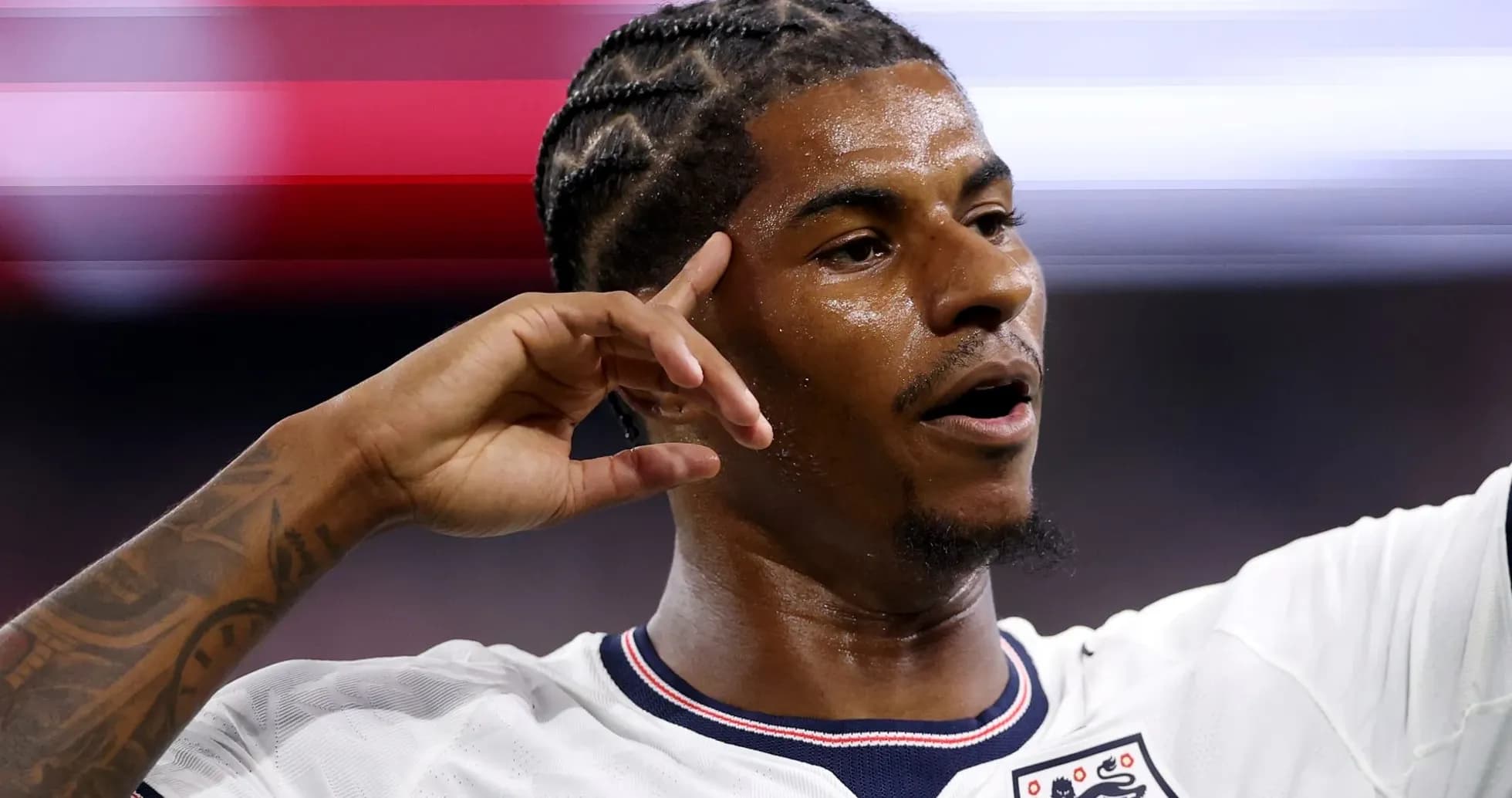
Bukayo Saka drove at Croatia, the kind of direct burst that unsettles even the most seasoned defence. The ball broke to Rashford on the edge of the box. One touch to shift it onto his right foot, one clean strike into the bottom corner. It looked like the Rashford of old: decisive, ruthless, sure of himself.
Was this proof that he is “back”? Barnes refused to jump to that conclusion.
“Watching Marcus Rashford for 15 minutes isn't going to lead us to know whether he's back to his old self or not,” he said. “We can't get carried away because he came on and did what he did to say, ‘OK, he's back to his old self, let's play him’. Very much like we can't get carried away that we've beaten Croatia 4-2 and thinking we're going to win the World Cup.”
He does not deal in snap judgments.
“I don't go from minute to minute or from game to game to make a decision as to who I think is going to do well, either individually or collectively.”
Barnes has long believed Rashford is more suited to international football than the week-to-week grind of the Premier League.
“Marcus Rashford, I always felt that he'd do better for England than he does for his club. I think international football, particularly from an attacking perspective, you get more room, you get more space. It's easier for him. I remember Darius Vassell at Villa always did better for England than he did for Villa. But I don't think that that's necessarily going to mean that Thomas Tuchel is going to put him in to start when the big games come along.”
The underlying concern, for Barnes, has never been talent.
“It depends on his attitude and his commitment. That has always been the issue with Marcus Rashford. I know he's got the talent, but in terms of his attitude, his commitment is the most important thing.”
Confidence back – but what comes next?
Rashford’s year in Spain has clearly restored something. Confidence has crept back into his game. The body language is lighter. The strike against Croatia carried the conviction of a player who believes again.
England, meanwhile, are chasing the end of a 60-year wait. Every surge from Saka, every glide from Bellingham, every Kane finish, every Rashford run is weighed against 1966 and the empty decades that followed. This squad knows exactly what is at stake for a fan base that has lived on near-misses and nostalgia.
Out in the streets, the inspiration is already taking hold. Kids are copying celebrations, rehearsing commentary lines in the park, dreaming of being the one who ends the drought. They are looking to Rashford and his teammates not just for goals, but for a moment that defines a generation.
No more mohawks – just football
Once, tournaments like this were also about image. David Beckham’s mohawk. Paul Gascoigne’s bleach-blonde look, echoed years later by Phil Foden. Haircuts became part of the story.
Barnes does not see that era returning.
Asked if fashion and football would intertwine again at this World Cup, he was dismissive.
“No, those days are over. Footballers are sensible now. You don't let anything get in the way of football. Marcus Rashford, he has some kind braids, but haircuts don't mean much anymore. So no, I think they'll be concentrating on the football this World Cup, not the hairstyles.”
So the focus narrows. No distractions, no gimmicks, just the pressure of a nation and the sharp edge of elite sport.
For Rashford, that pressure is doubled: one eye from Tuchel, the other from the clubs circling in the background. If his attitude and commitment match his talent, as Barnes demands, he has the tools to shape England’s summer and his own future in one sweep.
If not, this World Cup will move on without him – and so, quite possibly, will Manchester United.