.svg&w=384&q=75 "Naijagoal logo")

Manchester United's Struggles Continue Under Carrick
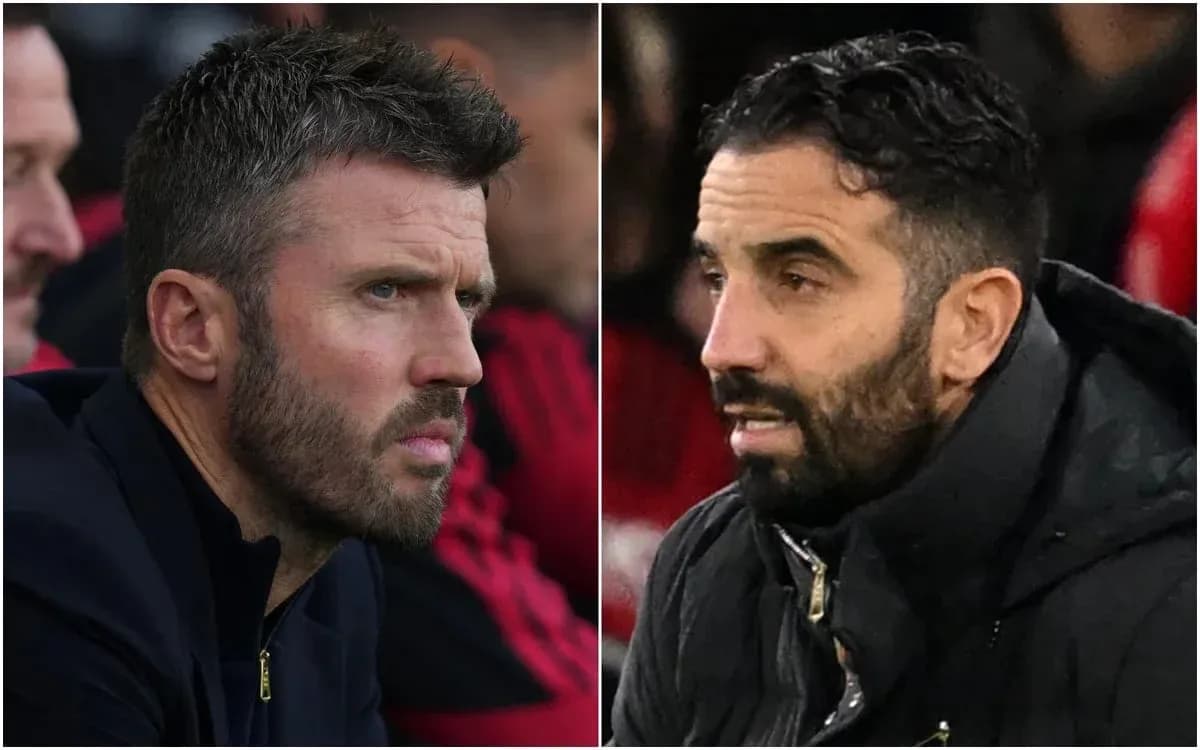
The mood around Manchester United was supposed to be different this year. Michael Carrick’s stunning rescue job last season – more points than anyone else in the Premier League from January and a charge to third – had reset expectations. This was meant to be the take-off.
Seven games in, the optimism has drained away. And the echoes of Ruben Amorim’s doomed start are getting harder to ignore.
Same stage, same problems
Strip away the emotion and the records look brutally familiar.
After seven matches of his first full season, Carrick has two wins and three defeats. Amorim had exactly the same return at the same point last year, and that was with a Carabao Cup penalty shoot-out exit to Grimsby weighing down his numbers.
United are already out of the Carabao Cup again, this time beaten by Brighton last week. No shock, no drama, just another early exit.
The league table is just as stark. Five games in, United sit 12th with five points – their joint-lowest tally at this stage of a Premier League season, matching the 2014/15 start under Louis van Gaal. Only newly promoted Ipswich have lost to them in the league.
Under Amorim, six of his first seven games of last season were also in the league. United were 14th, with home wins over Burnley and Chelsea offering thin comfort. It felt bad then. It doesn’t feel much better now.
The numbers say one thing, the goals say another
Look beneath the surface and the resemblance tightens.
Last year, the expected-points table painted a far kinder picture of Amorim’s United than the real one. After seven games, they sat fourth on xPts despite being 14th in reality. The data said they were playing like a top-four side. The table said otherwise.
This season, Carrick’s team are living the same split life. The xPts model has United sixth. The actual table has them 12th.
The main driver is familiar too: wastefulness in front of goal.
Under Amorim at this stage last year, United had scored seven league goals from an expected-goals figure of 12.04. The chances were there; the finishing was not. Carrick’s side are following the same script, if not quite as dramatically – eight goals from an xG of 10.59.
In plain terms, United are not putting chances away. Last season, the gap did eventually close – they finished the campaign with an xG total only a little over three higher than their actual goals scored. The finishing caught up, at least partially.
You can take that as a sign that this current slump in front of goal will correct itself. Or you can look at the squad and wonder if there are enough ruthless finishers to make the numbers count.
Different manager, different narrative
Where this season does diverge is in the noise around the club.
Carrick has credit. A lot of it. That surge to third, the calm he brought to a chaotic dressing room, the sense of tactical clarity – all of that has bought him time and patience.
Amorim never had that luxury. After seven games of 2025-26, the pressure on him was already suffocating. He had collected just 34 points from 33 Premier League matches in charge and had failed to win back-to-back league games. The questions were not about if he would go, but when.
There was also a clear tactical villain in the story. His wing-back system was hammered by pundits and fans alike. The perception was that he was stubbornly clinging to a shape that did not suit his players, refusing to move to a back four that many felt was obvious.
Carrick has avoided that kind of tactical caricature so far. The criticism after Sunday’s flat draw with struggling Fulham was not about systems, but effort. Off the ball intensity. Running. Data backed up what everyone could see: United did not work hard enough without possession.
That is a very different kind of accusation – and one that cuts just as deep.
Lessons from Amorim – and a warning
Ruben Amorim tried to sound unfazed as his own United tenure started to unravel. "I am never concerned about my job," he said after United’s seventh game last season, a 3-1 defeat at Brentford.
It did not turn around. Not properly. He survived until January, and even then it took his public criticism of the board to finally tip the balance. United were sixth when he left. The table was respectable; the feeling around the club was not.
Amorim has landed on his feet. He is now at AC Milan, unbeaten and two points off the pace in Serie A. His reputation is rebuilding nicely, far from Old Trafford.
Carrick’s story is still being written. He was only confirmed as permanent manager in May on a two-year deal. That, for now, is acting as a shield. The sack talk is more murmur than roar.
But the warning lights are there. The data says United should be higher. The table says they are not. The performances, especially without the ball, are starting to grate.
Gary Neville put it bluntly on Sunday: "If those types of performances continue, he will find himself in a lot of trouble."
The numbers suggest this season can still be salvaged. The question is whether Carrick’s United start finishing their chances – and start running like a top side again – before Old Trafford’s patience runs out in the same way it did for Amorim.