.svg&w=384&q=75 "Naijagoal logo")

Manchester United's Pressure Ahead of Key Matches
“It puts a bit of pressure on United. They've got City next week and European games starting in midweek.”
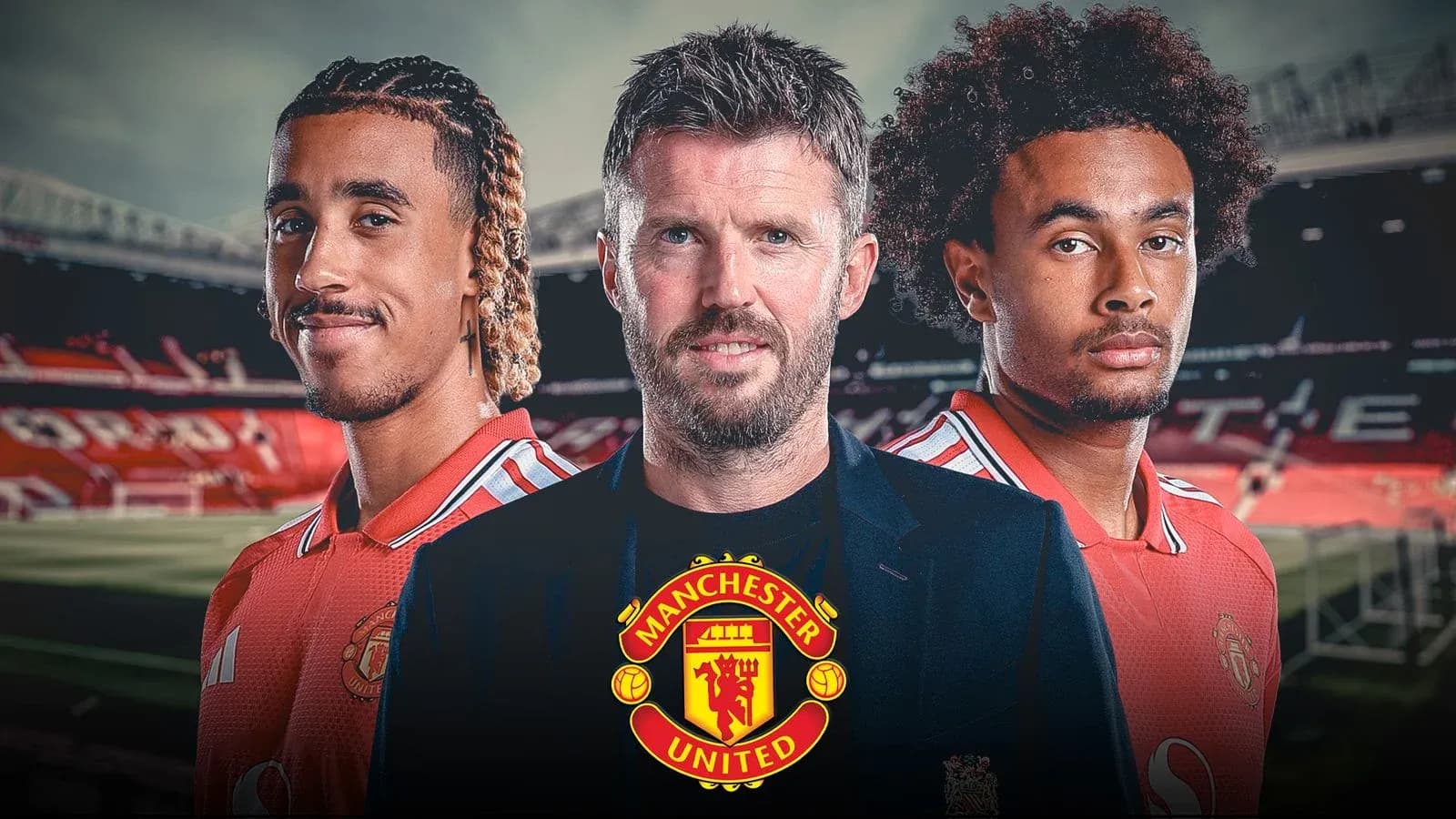
Gary Neville said it on Sunday. By Monday morning it already felt less like a line of punditry and more like a warning. A 2-2 draw with Everton in September should not feel like a sliding-doors moment, yet here we are. The pressure on Michael Carrick is real, and this week suddenly looks like it could shape Manchester United’s entire season.
Easy start, hard questions
When the 2026/27 Premier League fixtures dropped, the numbers painted a kind picture. On paper, United had the statistically easiest opening six games in the division. A gentle runway, supposedly, for a new-look side and a manager still bedding in ideas.
Halfway through that run, they have dropped more points than they have taken.
Now the schedule turns nasty. United launch their Champions League campaign on Thursday night against Azerbaijan champions Sabah, then walk straight into the first Manchester derby of the season three days later. One game to find rhythm in Europe, the next to prove they can live with City.
You don’t need a coaching badge to guess what Carrick is thinking. Sabah at home is the obvious night to rotate, to finally lean on the wider squad rather than the same trusted core. It will be the first real look at what his group offers beyond the preferred XI.
And that is where the unease starts.
A big squad, the wrong way round
The criticism has been consistent since the window closed: United’s transfer business has left them short where it matters. Not in numbers, but in balance. Not in headlines, but in depth.
The data backs it up. According to Transfermarkt, United have the second biggest squad in the Premier League. Yet when you slice it by position, the picture changes.
They are stacked in forward areas. They rank first for depth in attack. Once you move back the pitch, the floor drops away. They sit eighth for midfield depth and 10th in defence. Go even more specific and it gets starker: ninth at right-back and 18th at left-back, a spot that has hovered over every discussion thanks to Luke Shaw’s injury record.
This is not misfortune. It is the result of choices. Since 2022, only Everton and Liverpool have invested less in their backline than United. For a club that has spent as much as any in Europe, that is a damning skew.
One issue is the imbalance. The other is more brutal: the gulf in quality between the starters and the players who come on to replace them.
United, even under financial restrictions, have posted the highest net spend of any Premier League club since 2022. Yet that outlay has not produced a squad bristling with internal competition. It has produced a team that looks strong until you start to turn to the bench.
The drop-off that won’t go away
Everton at Old Trafford offered a clear snapshot. Carrick waited until the 70th minute to make his first substitutions. From that point, United’s entire territorial profile shifted.
They spent more time in the opposition half, but with less bite. The ball went forward without purpose, passes into the final third dipped, and the volume of chances created fell away. The team became stretched, less involved in duels, and began to invite Everton on. Pressure grew, opportunities conceded mounted.
Context matters. Everton were chasing the game, throwing more bodies forward, and no match plays out identically from first whistle to last. But the pattern fits a wider trend: once Carrick turns to his fringe players, the performance level drops.
Benjamin Sesko stands apart as the obvious exception, an impact substitute who genuinely changes games. One player, though, cannot carry an entire bench.
The same story appears in the numbers from the Hull match. On the surface, the data suggests United improved after the substitutions. Look closer and the explanation is simple. Four of the players who started that game were dropped for the next two. Carrick had been forced to rotate heavily on the opening weekend with several key names still building fitness. His changes against Hull actually moved the team closer to what would become his preferred XI for Ipswich and Everton.
That is the crux. Even when Carrick changes fewer than half of his side, there is a clear dip. The second string are not pushing the starters; they are pulling the level down.
Careers and credibility on the line
All of which brings Thursday night into sharp focus. For some, Sabah at Old Trafford is not just a group-stage opener. It is an audition.
If you are Leny Yoro, Patrick Dorgu, Andrey Santos or Joshua Zirkzee, this is the moment. The golden chance to prove you are more than cover, more than a name on a squad list used to tick a depth chart.
Of course they all want the derby. Everyone does. But United cannot afford to treat Europe as a rehearsal. They need to start their Champions League campaign with authority, not anxiety. The pressure on those fringe players, if selected, will be every bit as intense as the scrutiny on the core who are almost certain to face City.
Neville spoke about Carrick needing to earn the trust of the fans. He is not alone. The squad players must do the same. Win on Thursday and some of the noise quietens, some of the doubts ease. Fail, and the questions around Old Trafford will get louder, sharper, and far more unforgiving as the season’s real tests arrive.