.svg&w=384&q=75 "Naijagoal logo")
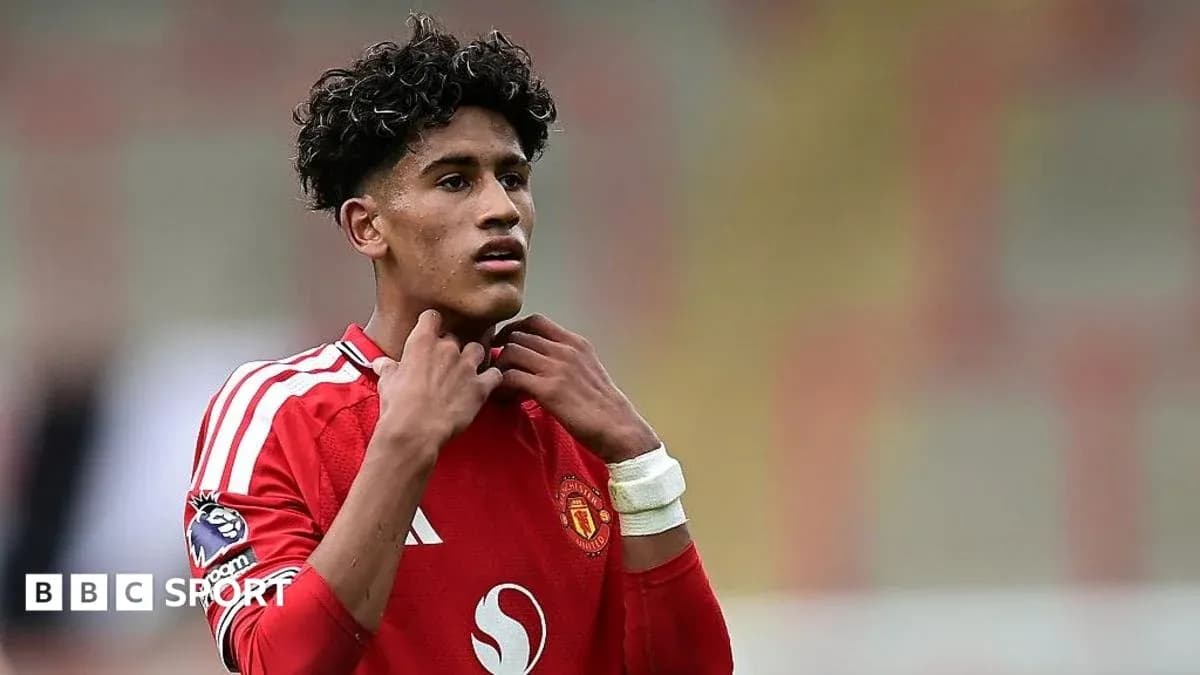

Manchester United Faces Crisis Over JJ Gabriel's Future
Old Trafford was meant to be dressing itself up for a landmark night. Instead, on the eve of a potential slice of history, Manchester United are dealing with a crisis around the club’s brightest teenage light.
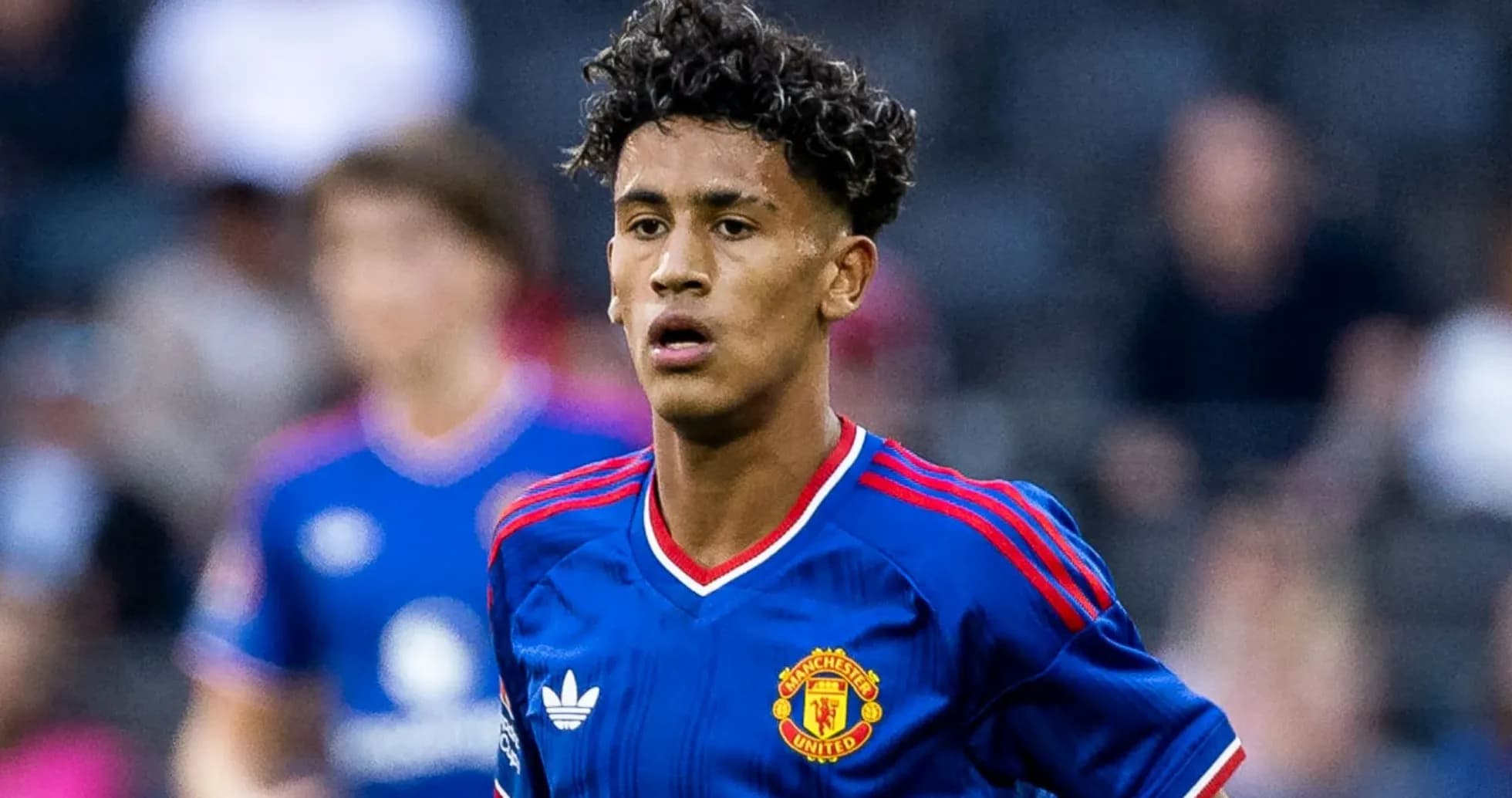
JJ Gabriel, the 15-year-old many inside Carrington regard as a once-in-a-generation talent, wants to leave.
The mood has turned sharply. Only a week ago, Gabriel was the poster boy of United’s future – fresh from a hat-trick on his Uefa Youth League debut at Leigh, widely expected to become the club’s youngest ever first-team player with an appearance against Brighton in the Carabao Cup on Wednesday.
Now, United are in salvage mode.
Chief executive Omar Berrada and director of football Jason Wilcox are locked in talks, trying to convince Gabriel to reverse his decision and commit to the club that has built much of its youth strategy around him. Those involved know the odds. It feels like an uphill battle.
The damage runs deeper than a simple contract stand-off. There is a belief on the player’s side that promises about his pathway have not been honoured. Confidence in the club’s plan for him has eroded. Belief in his own ability and destiny has not.
Europe’s elite are watching. Real Madrid, Barcelona and Paris St-Germain are all monitoring the situation, circling a player some at United have privately labelled “the best 15-year-old in Europe”.
They have good reason.
Gabriel’s rise has been rapid and ruthless. Last season he dominated the Premier League Under-18 division despite starting the campaign at just 14. He finished with 23 league goals at that level, plus three more in the FA Youth Cup. He drove United to the Premier League Under-18 Cup final and the FA Youth Cup final, collecting the Premier League Under-18 Player of the Year and United’s own Under-18 Player of the Year awards along the way.
Coaches rave about his balance, pace, tight control and explosive shooting. This season, they have also seen a more combative edge, a willingness to chase, press and tackle. He is not just a luxury forward gliding through games. He wants the ball back as much as he wants it at his feet.
United Under-21s coach Adam Lawrence summed up the internal tension after Gabriel’s Youth League heroics against Sabah FK.
“The first thing in my job is not to ruin him,” Lawrence said. “When you have a talented player like JJ, you obviously don’t want to stifle their freedom and their creativity.”
That is the tightrope. Protect him, but don’t hold him back. Nurture, but don’t smother. And all the while, clubs like Real, Barca and PSG are scouring Europe for exactly this type of elite teenager.
This is where it gets complicated for United.
The club’s initial response to the growing noise around Gabriel’s future was calm. Privately, they insisted they would work to convince him his development is best served in Manchester. They also pointed to the basics: his registration runs until the end of the season.
That might help fend off Premier League rivals for now. It does far less to deter European giants.
Gabriel holds an EU passport through his Greek-Cypriot mother, while his father represented the Republic of Ireland at senior level. That dual-nationality opens doors. Precedent favours the player, too.
In 2016, the Court of Arbitration for Sport rejected an appeal from Velez Sarsfield, who tried to block a 16-year-old moving to Manchester City. The player held Argentine and Italian nationality, and CAS ruled that as an EU national he could move freely within the European Union, even from a non-EU club.
West Brom know the sting of such scenarios. In 2019, they received no compensation when 16-year-old Louie Barry left for Barcelona after Fifa decided the club had not formally offered him a scholarship. West Brom had claimed €130,000 in training compensation. Six months later, Barry joined Aston Villa for just under £1m.
United’s nightmare version of events is clear. Gabriel turns 16 on 6 October, walks away, and the club lose a player valued in the millions – even at this early, unproven stage – for nothing.
Football has been here before. Jadon Sancho was 17 when he stopped training with City to force a £10m move to Borussia Dortmund, convinced his chances of first-team football were stronger in Germany than under Pep Guardiola. Morgan Rogers, part of the same West Brom youth side as Barry that reached the FA Youth Cup semi-finals, left for City within three months, completing his move on his 17th birthday.
Those close to Gabriel feel this is not a sudden tantrum. They believe that, in meetings with the United hierarchy last summer – talks that persuaded him to commit his short-term future to the club – clear assurances were given about his route to the first team. They do not feel those assurances have been kept.
There have been glimpses. Gabriel did step into senior training, first under Ruben Amorim and then Michael Carrick. Hype around a potential senior debut in last season’s FA Cup grew. Darren Fletcher, then Under-18s coach and later interim first-team manager after Amorim’s sacking, shut that talk down. Fletcher felt it was too soon.
The expectation inside the club shifted to this season. Pre-season, in particular, was seen as a natural launchpad.
But the summer brought frustration instead of lift-off. Gabriel missed the trip to Helsinki to face Wrexham on 18 July, with his absence attributed to his return date for pre-season. After that, he travelled with every squad. He barely played.
Eight minutes against Atletico Madrid in Stockholm. Nothing more.
The pattern stung. Gabriel went to Trondheim for a friendly against Rosenborg on 24 July. Carrick used 11 substitutes. Gabriel was one of only two United players who stayed on the bench. Five of the players who did get minutes have since left the club, either permanently or on loan.
At Croke Park, 18-year-old Tynan Thompson – who had arrived from Tottenham only three weeks earlier – was handed a 45-minute senior debut against Leeds United. Gabriel travelled. He watched.
Even so, the internal belief remained that he would become United’s youngest ever player this autumn, most likely in the EFL Cup. The third-round draw handed United a home tie with Brighton. Their Champions League group offered another possible route.
Sabah FK, champions of Azerbaijan, looked like the softest home assignment on paper. United were 3-0 up by half-time. By the 72nd minute, Carrick had used all five substitutes.
Gabriel stayed in his tracksuit.
The explanation this time lay not on the bench, but on a list. As with Max Dowman at Arsenal last season, Uefa rules meant Gabriel could only play at 15 if he was on United’s A list of registered players. He was not.
United used the full allocation of 25 names. Among them was Manuel Ugarte, sidelined with a knee injury and unable to feature until the registration window reopens in January. Thompson made the cut. Gabriel did not.
Inside Carrington, some coaches have suggested Gabriel is not yet physically ready for senior football. Those close to the player reject that argument outright. They look at Arsenal handing Dowman his debut at 15, Bayern Munich giving Lennart Karl a first-team bow at 17, and they ask the obvious question.
If others are willing to trust their prodigies, why aren’t United doing the same with JJ Gabriel?