.svg&w=384&q=75 "Naijagoal logo")

Luka Modric's Departure: Tottenham's Painful Goodbye
Tottenham supporters did not just lose a midfielder in the summer of 2012. They lost the heartbeat of a side that had begun to believe it could crash English football’s top table – and they lost him in a way that still stings.
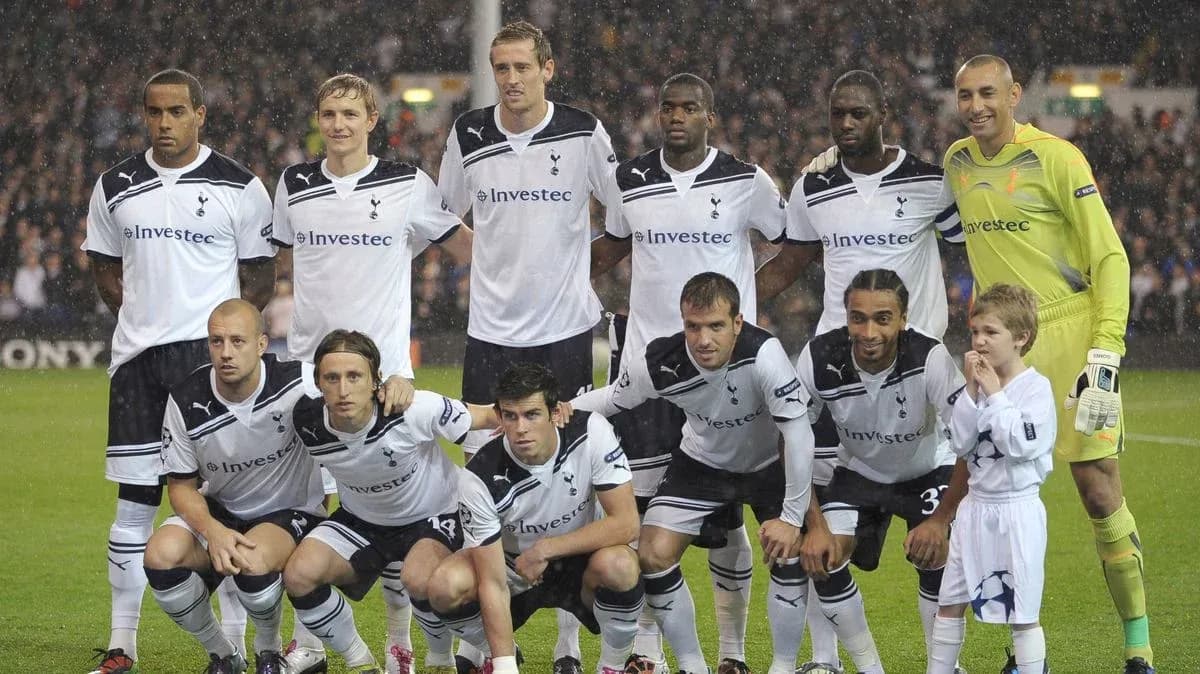
Luka Modric, slight in frame but enormous in influence, had become the symbol of Spurs’ modern rebirth. A £16.5m signing from Dinamo Zagreb in 2008, he grew into the player who dictated tempo, dragged the team up the pitch and made White Hart Lane purr. By 2012, he was 26, approaching his prime, and the biggest clubs in Europe knew it.
Real Madrid, guided by Jose Mourinho, had seen enough. Modric’s performances for Croatia at Euro 2012 only sharpened their focus. For Mourinho and Madrid’s hierarchy, he was no luxury flourish; he was the missing piece.
Tottenham, though, had been here before.
A year earlier, Modric had tried to engineer a move to Chelsea. Spurs held firm. Chairman Daniel Levy resisted the pressure, the bids and the noise. Modric stayed, played, and remained central to a side that mixed attractive football with genuine ambition. But the seed of departure had been planted.
This time, Modric pushed harder.
As Spurs prepared to fly out for their pre-season tour of the United States in 2012, the Croatian made his move. He did not board the plane. In a single act of defiance – refusing to join the tour – he forced Tottenham’s hand and shattered the illusion that the club could simply talk him into staying forever.
The club responded as any club must. He was fined two weeks’ wages. Internally, Spurs tried everything to keep him. Publicly, they projected resolve. Privately, the reality was clear: when Real Madrid come calling, and a player of Modric’s calibre decides he is going, resistance has a shelf life.
The saga dragged towards the end of the window. Only on 27 August 2012 did the move finally go through: a £33m transfer to the Bernabeu. For a player with four years left on a six-year deal, it was a sizeable fee – but not a record-breaker, and not one that would look generous in hindsight.
Then-manager Andre Villas-Boas did not hide his disappointment. He spoke of Modric’s apology, his regret over how the situation had unfolded. The contrition did not halt the transfer, but it did reveal the personal cost of the standoff. Modric knew he had crossed a line.
Years later, he admitted as much. Speaking to FourFourTwo in 2018, he laid bare the two scars that period left on him: the lack of silverware at Spurs, and the way he walked away.
“My one regret is that I didn’t win a trophy with Tottenham, despite us being a strong team who played good, attractive football,” he said. “I’m sorry for the way I left. I wish we had parted in a nicer way. I hope fans understand that I followed my dreams.”
Those dreams, it turned out, were worth chasing.
In Madrid, Modric did not just win trophies; he helped redefine an era. Six Champions League titles. Four La Liga crowns. Five FIFA Club World Cups. Two Copas del Rey. He became the metronome of one of the greatest club sides in history, a Ballon d’Or winner and a reference point for what a modern midfielder should be.
From Tottenham’s point of view, the conflict becomes more complicated. How do you condemn a player for leaving when the move produces one of the most decorated careers the game has seen?
Even now, with Modric at AC Milan and about to turn 41, he refuses to fade quietly. A one-year extension at San Siro underlines what Spurs fans always knew: this was not just a good player passing through north London. This was a generational talent whose longevity matches his class.
Yet the manner of his exit still divides the fanbase.
For some, skipping that pre-season flight is unforgivable. Icons, they argue, do not down tools. They do not force the club into a corner. They do not taint the bond with supporters who sang their name and built their hopes around them.
For others, the story is more nuanced. Tottenham, they point out, were a good side but not a great one, flirting with the elite but never fully joining it. For a player of Modric’s ambition, Real Madrid represented the ceiling of the sport. If Spurs could not match those aspirations, how long could they realistically expect to keep him?
There is another regret lurking in the background – this time on the club’s side of the table.
With four years left on his contract, and with the market about to explode, £33m now looks light for a player of Modric’s profile and potential. Within a year, Gareth Bale, his old team-mate, would depart for Madrid as well, for a fee of around £89m. The contrast is stark. Two generational talents, one world-record sale and one deal that, in retrospect, feels underpriced.
The lesson for Tottenham’s hierarchy is not just about money. It is about timing, leverage and realism. When a player of that level decides to leave, the club’s job is to control the terms, not deny the direction of travel.
Fast forward to the present and the dynamic has flipped. Spurs are the ones driving hard bargains, having spent close to £250m on new signings in a single summer and pushing other clubs to meet their valuations. The club that once dug its heels in over Modric now sits on the other side of the negotiating table.
That is precisely why his story still matters in north London.
Modric’s departure is more than a painful memory; it is a case study. How do you protect a legacy while respecting a player’s ambition? How do you maximise value without poisoning the relationship? How do you avoid being left with only regrets – his for the way he left, and theirs for what they failed to extract?
Tottenham cannot rewrite 2012. But they can decide whether the next superstar who wants out leaves with a clean break or another scar.