.svg&w=384&q=75 "Naijagoal logo")
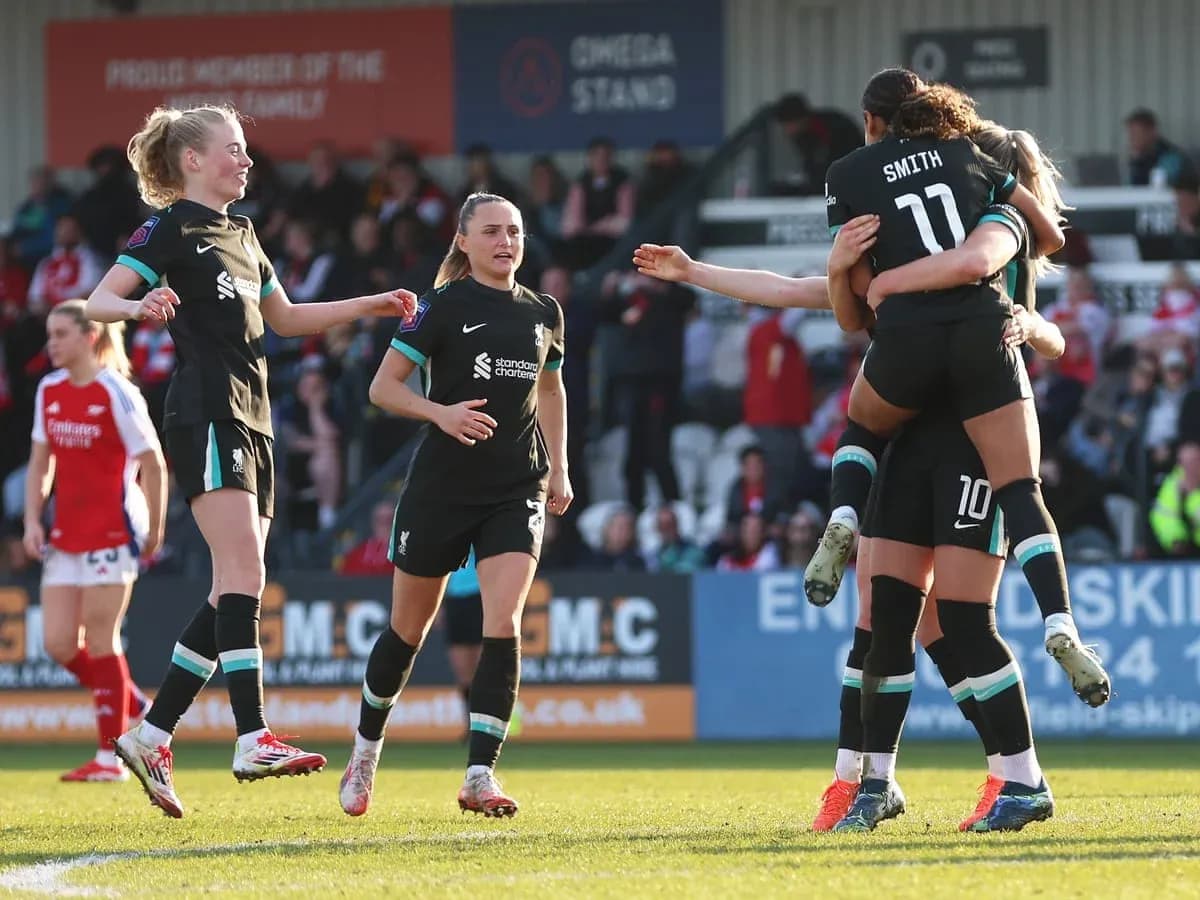
Liverpool W vs Arsenal W: FA WSL Clash of Survival and Title Pursuit
Anfield hosts a meeting of very different priorities on 16 May 2026, as 11th‑placed Liverpool W welcome title‑chasing Arsenal W in the final stretch of the FA WSL regular season. The visitors arrive in Liverpool sitting 2nd with 48 points and a formidable goal difference of +37, while the hosts are looking over their shoulders with 17 points and a negative goal difference of -11.
For Liverpool, this is about survival, pride and proving they can bloody the nose of the elite on home turf. For Arsenal, every point is vital in the race for the Champions League places and potentially the title, and this is the kind of fixture they simply have to control.
Form and trajectory
In the league, the table tells a stark story.
Liverpool W have taken 17 points from 21 matches, winning just 4. Their recent league form line of LLWDW hints at volatility: two defeats, then a draw and two wins. Across all phases, the broader form string is harsher – long losing runs punctuated by the occasional positive result. At Anfield and their other home venues this season they have been more competitive: 3 wins, 3 draws and 4 defeats from 10, with an even 12-12 goal record. At home they average 1.2 goals for and 1.2 against, underlining that they are far from pushovers on Merseyside.
Arsenal W, by contrast, have been relentless. In the league they sit 2nd with 14 wins, 6 draws and only 1 defeat from 21 matches, scoring 50 and conceding just 13. Their form line WWDWW is that of a side finishing strongly. Across all phases they have lost just once in 20 fixtures (13 wins, 6 draws, 1 defeat). Away from home they have been almost as strong as at the Emirates: 6 wins, 3 draws and 1 defeat from 10, with 22 scored and only 7 conceded. An away goals‑for average of 2.2 and goals‑against of 0.7 paints the picture of a team that travels well, scores freely and defends with control.
Tactical outlook: structure vs firepower
Liverpool’s statistical profile suggests a side that often has to bend without breaking. Across all phases they score 1.0 goals per match and concede 1.5. Their biggest win is a 4-1 at home, but they have also suffered a 1-4 home defeat and a 3-0 away loss, showing how quickly things can unravel when they are stretched.
The formations data is revealing. Liverpool have most frequently lined up in a 4-1-4-1 (8 times), followed by 4-2-3-1 (4 times), with occasional use of 5-4-1 and 4-3-3. That points to a pragmatic, often conservative approach: a lone striker, a screening midfielder and a compact midfield line. Against a high‑scoring Arsenal, a 4-1-4-1 or 5-4-1 would make sense, trying to congest central areas and limit space between the lines.
Defensively, Liverpool have kept 4 clean sheets in 21 matches but have failed to score in 9, underlining that their main issue is at the attacking end. Their card distribution shows a spike in yellow cards between 61-75 minutes and a surprisingly high number in added time (91-105), hinting at late‑game fatigue and reactive defending. Two red cards this season also highlight the risk of indiscipline when under sustained pressure.
Arsenal’s tactical base is a flexible 4-2-3-1, used 9 times, with occasional switches to 4-4-2, 4-3-3 and 4-1-4-1. This structure suits their blend of technical midfielders and a strong centre‑forward. With 49 goals across all phases in 20 matches, they average 2.5 goals per game, and their biggest wins include a 7-0 at home and a 1-5 away result. They are capable of both patient control and explosive scoring bursts.
Defensively, Arsenal have 10 clean sheets and have failed to score only 3 times. Conceding just 13 goals in 20 matches (0.7 per game) suggests a compact block, strong pressing and good game management once ahead. Their card profile is relatively balanced, with yellows spread across the second half and no red cards, which supports the idea of a disciplined, well‑coached side.
Key players and attacking threats
Liverpool’s main attacking reference in this data set is Beata Olsson. The Swedish forward has 4 league goals and 2 assists in 15 appearances (12 starts), with 11 shots and 6 on target. Her output is modest compared to Arsenal’s stars, but in a team that has only scored 20 league goals, she represents a significant share of their threat. Her willingness to work in duels (60 contested, 22 won) and contribute defensively suggests she will be vital in transitions, both pressing from the front and offering an outlet.
Mia Enderby has emerged as another important figure for Liverpool. The 20‑year‑old midfielder has 3 goals and 2 assists in 21 appearances (16 starts), with 188 passes at 77% accuracy and 11 successful dribbles from 21 attempts. She brings ball‑carrying from midfield and can help Liverpool break Arsenal’s press if given space to turn.
Arsenal’s attacking arsenal is deeper and more varied. Alessia Russo leads their scoring chart here with 6 goals and 2 assists in 20 appearances, backed by strong underlying numbers: 32 shots (22 on target), 16 key passes and 77% passing accuracy. Operating as the central striker in a 4-2-3-1, she provides both penalty‑box presence and link play.
Stina Blackstenius adds a different dimension. With 5 goals and 2 assists from only 467 minutes across 19 appearances, she is a high‑impact option, often from the bench. Her 26 shots (14 on target) in limited minutes underline her instinctive finishing and ability to attack space late in games when defences tire.
Behind them, Olivia Smith has contributed 4 goals and 2 assists from midfield in 18 appearances. Her 19 key passes and 11 successful dribbles show how she can progress the ball and unlock compact blocks. Chloe Kelly, with 4 goals and 1 assist from just 299 minutes, is another explosive wide option, albeit one who plays on the edge with 4 yellow cards in 15 appearances.
Arsenal’s penalty record at team level is 1 scored from 1 this season, while Liverpool have converted 2 from 2. None of the highlighted key players has scored or missed a league penalty in this data, so set‑piece responsibility may lie elsewhere.
Head‑to‑head: recent history
The last five competitive meetings between these sides are tightly contested on paper but tilt clearly towards Arsenal in the league.
- On 6 December 2025 in the FA WSL at the Emirates Stadium, Arsenal W beat Liverpool W 2-1.
- On 22 March 2025 in the FA WSL at the Emirates Stadium, Arsenal W beat Liverpool W 4-0.
- On 9 March 2025 in the FA Women’s Cup quarter‑finals at Mangata Pay UK Stadium, Liverpool W beat Arsenal W 0-1.
- On 15 December 2024 in the FA WSL at St Helens Stadium, Arsenal W beat Liverpool W 0-1.
- On 28 January 2024 in the FA WSL at Prenton Park, Arsenal W beat Liverpool W 0-2.
Across these five competitive fixtures, Arsenal W have 4 wins, Liverpool W have 1, and there have been 0 draws.
The verdict
All available data points towards Arsenal W as strong favourites. They arrive with the league’s second‑best record, a prolific attack (2.5 goals per game across all phases) and a defence that concedes less than a goal a match. Their away record is outstanding, and they have consistently found ways to win this fixture in the league.
Liverpool’s hope rests on Anfield’s boost, their relatively solid home defensive numbers (12 scored, 12 conceded in 10 home games) and the knowledge that they did beat Arsenal 0-1 in a high‑stakes FA Women’s Cup quarter‑final in March 2025. A compact 4-1-4-1, disciplined defensive work and quick transitions through Enderby and Olsson will be essential if they are to repeat that kind of upset.
However, given the gulf in league position, goal difference and consistency, the most logical expectation is an Arsenal win, likely with multiple goals scored. Liverpool can make this awkward, particularly if they keep the game level into the second half, but Arsenal’s depth in attack and defensive solidity should give them the edge at Anfield.