.svg&w=384&q=75 "Naijagoal logo")

Liverpool Sells 30% Stake to Global Consortium Led by Amit Bhatia
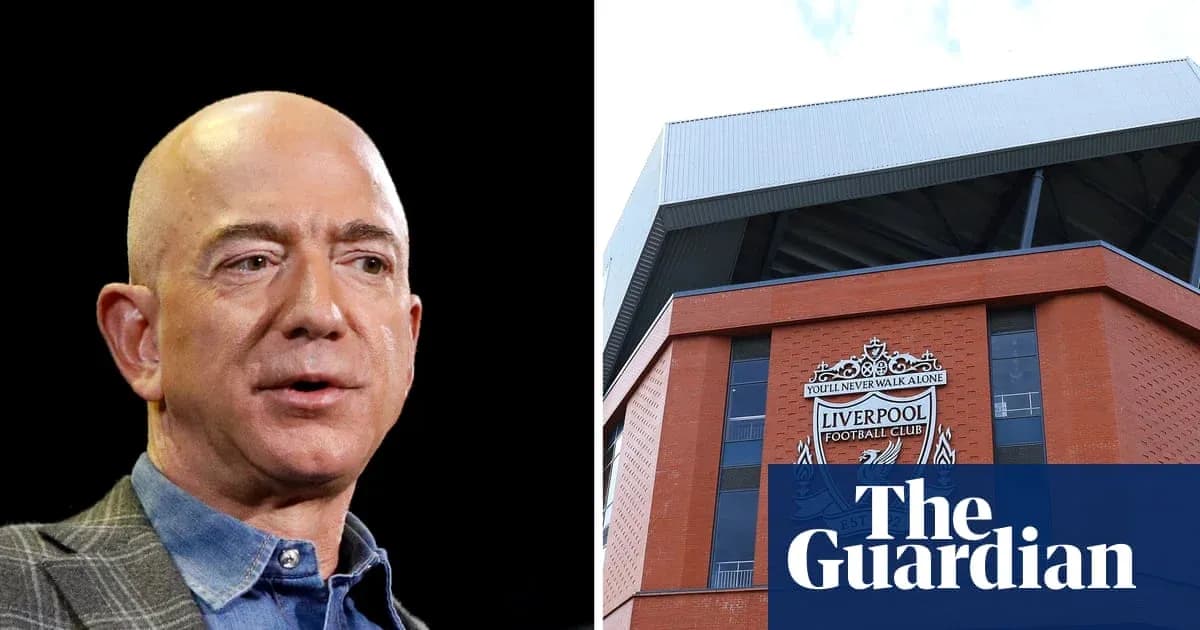
Liverpool have sold a 30% stake to a heavyweight global consortium fronted by Amit Bhatia and backed by Jeff Bezos and Eduardo Saverin, in a deal that values the club at £5.5bn and underlines its status as one of world football’s most powerful institutions.
Fenway Sports Group confirmed on Thursday that it has agreed the sale of the minority stake for £1.65bn to 1892 Holdings, with Bhatia installed as Liverpool’s new vice-chair on an expanded board.
A new power bloc at Anfield
Bhatia, the British-Indian businessman and former co-owner of Queens Park Rangers, drove the talks with FSG over the past year on behalf of the 1892 Holdings consortium – a nod to Liverpool’s founding year.
He arrives with serious financial muscle behind him. The Mittal Family Trust, the K5 Sports fund – where Bezos is the lead investor – and EE Capital, the family office of Elaine and Eduardo Saverin, have all thrown their weight behind the project.
Two of those backers will now have a direct say in the club’s direction. Elaine Saverin and Bryan Baum, co-founder and managing partner of K5 Global, will join Bhatia on the Liverpool board. Bezos, despite his profile and vast wealth, will remain a passive investor and will not take a seat.
FSG, though, are adamant about one thing: control stays in Boston. The group, led by principal owner John W Henry, chair Tom Werner and president Mike Gordon, retain majority ownership and operational command of Liverpool.
No quick exit, no summer transfer shock
The deal still needs regulatory approval, a process that could stretch up to 90 days. Until that is completed, nothing changes on the ground. No shift in leadership. No tweak to the day-to-day running of the club. No sudden spike in Andoni Iraola’s transfer budget.
FSG insist this is not the start of an exit strategy from a club they bought for £300m in 2010, rescuing it from the brink under Tom Hicks and George Gillett. The agreement does not force them to sell a greater share to 1892 Holdings at any point. Nor does it oblige Bhatia’s consortium to increase its stake.
What it does do is open the door. The structure gives 1892 options to purchase more of Liverpool if, at some stage, FSG decide to cash out. That possibility now hangs in the background, even if nobody at Anfield is talking about it as an imminent scenario.
Mike Gordon, who has taken on a more hands-on role again after Michael Edwards’ departure as FSG’s chief executive of football, framed the move as a continuation of the group’s long-term planning.
“Liverpool has always been built by thinking beyond one season and making decisions with the club’s long-term interests in mind,” he said. “As we considered this opportunity, it became clear that Amit and the consortium shared our long-term philosophy and appreciation for what makes Liverpool special.”
Chasing global scale, not a transfer splurge
Under Premier League and Uefa rules, spending is tied closely to revenue. That reality means this injection of capital will not translate into an immediate transfer spree, no matter how eye-catching the names behind it.
The real play is commercial. With Bezos, Bhatia and Saverin involved, Liverpool see a chance to supercharge their global reach, particularly in technology, investment and key growth markets such as India and Asia. FSG believe this is where the deal can transform the club’s financial ceiling.
Liverpool’s annual revenue already hit a record £703m in the year to May 2025. The expectation inside Anfield is that this partnership can push that figure significantly higher, strengthening the club’s hand in the long-term arms race with Europe’s elite.
Bhatia, speaking on behalf of 1892 Holdings, made clear the consortium’s intention to embed itself in that long-term vision.
“We are incredibly proud to be investing in Liverpool Football Club and to be doing so alongside FSG,” he said. “We are making this investment because we believe deeply in Liverpool and its leadership, and we look forward to supporting the club’s continued success for years to come.”
Bhatia steps into the spotlight
For Bhatia, this is a return to English football at the very top tier. He spent almost 19 years involved with QPR in a range of roles, from club chair to chair of the community trust, before transferring his shareholding in July.
At Liverpool, he is expected to be a visible, regular presence at Anfield – far more so than Bezos or Saverin, and arguably more than some of FSG’s own senior figures. The new vice-chair will sit at the junction of ownership, boardroom strategy and the club’s global ambitions.
FSG, for their part, say it was the make-up of Bhatia’s consortium, not any pressing financial need, that convinced them. After nearly a year of conversations, they believe they have found partners who can open doors in boardrooms and markets that Liverpool have only partially tapped.
Liverpool’s last great transformation under FSG was built on smart recruitment, data-driven decision-making and a manager in Jürgen Klopp who turned potential into trophies. This one will be decided in meeting rooms, on balance sheets and in emerging markets.
The question now is simple: with this new wave of capital and connections, how far can Liverpool push the limits of what a modern superclub can be?