.svg&w=384&q=75 "Naijagoal logo")

Liverpool's Ownership Story Takes New Turn with Bezos Consortium
Liverpool’s ownership story, already one of modern football’s most intriguing, is edging towards a new chapter – and this time the money on the table is on a different scale entirely.
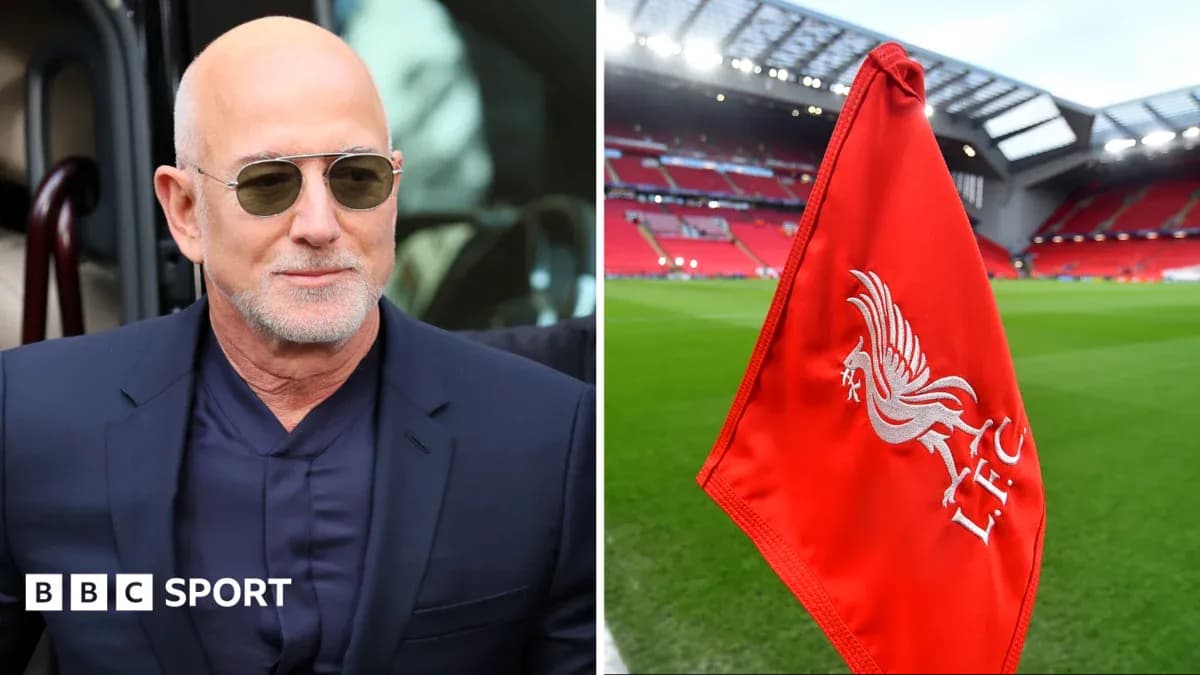
BBC Sport understands that a heavyweight consortium featuring Amazon founder Jeff Bezos has moved its talks forward over acquiring around a 30% stake in Liverpool. Not a full takeover. Not a vanity punt. A serious, strategic slice of one of world football’s most powerful clubs.
A new kind of power in the boardroom
The group is fronted by British-Indian businessman Amit Bhatia, a familiar name in English football circles, and includes Facebook co-founder Eduardo Saverin. It is a blend of deep tech wealth and existing football experience, aimed squarely at a minority investment that could reshape Liverpool’s financial muscle without dislodging the current regime.
Fenway Sports Group, Liverpool’s owners since 2010, confirmed last month that Bhatia’s consortium had “expressed interest in making a strategic minority investment in Liverpool Football Club”. Those talks have now advanced.
This is not the open auction some fans once imagined. FSG are not walking away. They are, instead, inviting in one of the richest men on the planet.
From Loftus Road to Anfield?
Bhatia brings something different to the table: he knows English football from the inside. The 44-year-old spent 18 years as a director and co-owner at Queens Park Rangers, riding the turbulence of promotion pushes, relegation battles and ownership reshuffles. Only last month he gave up his stake in QPR, clearing the decks for his next move.
He is also the son-in-law of Lakshmi Mittal, one of India’s most prominent industrial tycoons. That family connection underlines the scale of capital and corporate influence involved, even before you reach the name that will dominate the headlines: Bezos.
Bezos enters the frame
Jeff Bezos is not a casual investor. The American built Amazon into a global behemoth and sits as the fourth-richest person in the world. According to Forbes, the 62-year-old’s net worth is estimated at $256bn (£192bn). Numbers that, in football terms, dwarf even the most aggressive state-backed projects.
For Liverpool, the potential implications are obvious. A 30% stake at this level of wealth is not about day-to-day transfers alone; it is about long-term infrastructure, commercial reach and global positioning. Stadium development, data, media, streaming, fan engagement – areas where Bezos and Saverin’s backgrounds intersect neatly with the direction elite clubs are racing towards.
The structure matters, though. This is a minority investment. FSG retain control. The model is one of partnership rather than takeover, capital injection rather than revolution.
FSG’s next move
FSG have long pitched themselves as stewards of sustainable success. Under their watch, Liverpool have rebuilt on and off the pitch, winning the Premier League and Champions League while modernising Anfield and expanding the club’s commercial reach.
Yet the landscape has shifted again. State-backed rivals and private equity funds have escalated the financial arms race. To stay at the sharp end, even a club of Liverpool’s stature needs new levers to pull.
That is where this consortium steps in. It offers fresh money without forcing FSG out, and opens the door to a different calibre of corporate alliance.
Talks are moving. The numbers are huge. The names are bigger.
If this deal lands, Liverpool will not just be competing with the modern elite. They will be backed, in part, by one of the defining figures of the modern economy.