.svg&w=384&q=75 "Naijagoal logo")

Liverpool Faces Turbulence After Michael Edwards' Departure
Liverpool have grown used to managing turbulence on the pitch. This summer, the real storm is upstairs.
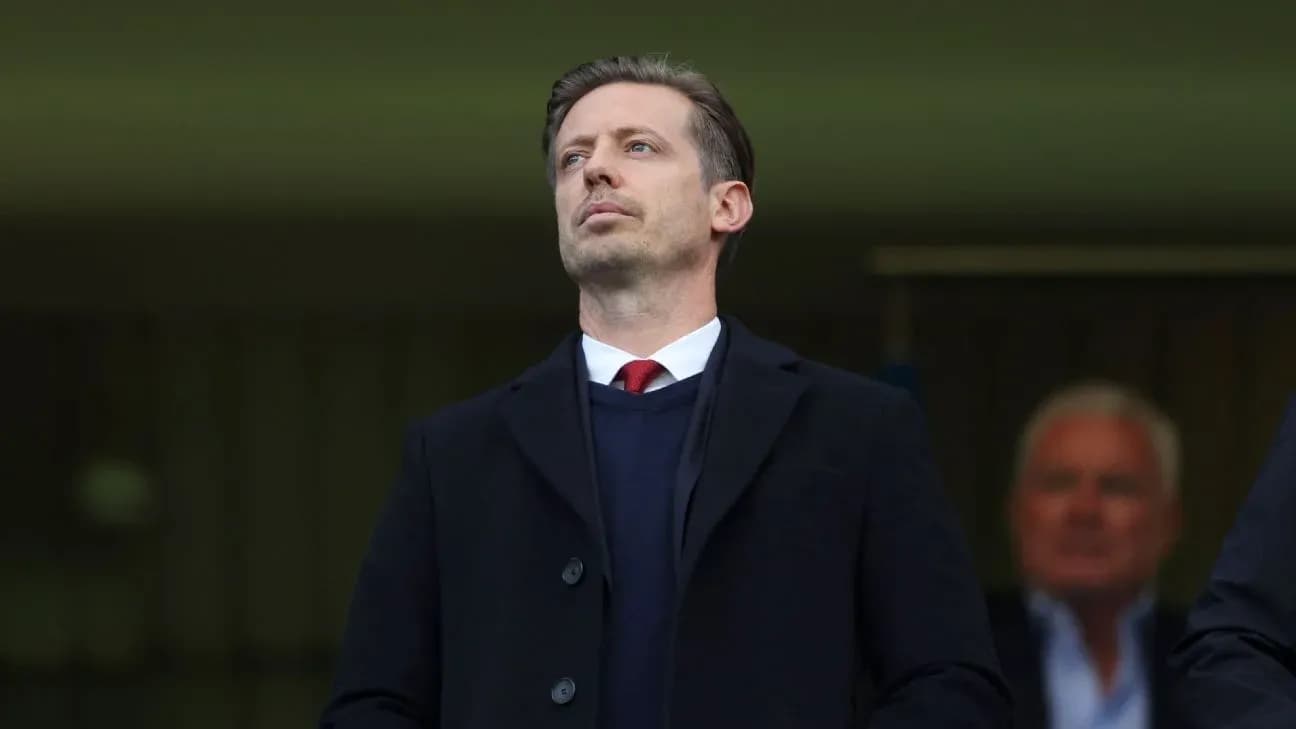
Michael Edwards, the architect of much of the club’s modern success and most recently FSG’s chief executive officer of football, has resigned and left his role with immediate effect, a year before his contract was due to expire. His exit lands at a moment when Liverpool’s football operation already feels delicately balanced.
Edwards walks away from stalled FSG project
Edwards, the former sporting director under Jürgen Klopp until 2022, returned to Fenway Sports Group in 2024 with a brief that went beyond Anfield. He was hired to spearhead an ambitious multi-club strategy, tasked with identifying and securing a second team to sit alongside Liverpool in FSG’s portfolio.
That project never got off the runway.
FSG scoured the market, holding talks over more than 20 potential acquisitions, including Bordeaux in France and Málaga in Spain. The search dragged on, options were examined, plans were drawn up. No deal came. Earlier this year, the ownership effectively mothballed the expansion plan.
For Edwards, that was the breaking point. Frustrated by the lack of progress and with no clear path to delivering the wider vision he had been brought back to execute, he informed FSG he would step away. Sources say the American owners tried to persuade him to stay. They failed.
In a statement, FSG framed his departure as “the culmination of a planned transition following the completion of key strategic priorities.” The wording was calm. The reality is more jarring: the man entrusted with reshaping FSG’s football empire has walked out before the empire ever took shape.
Edwards leaves with his reputation intact, even enhanced. He was central to the evolution of Liverpool’s football structure, a period that culminated in the club lifting the Premier League title in 2025. His fingerprints are on the recruitment, the processes, the culture of marginal gains that underpinned that era.
“It has been a privilege to return to Fenway Sports Group and Liverpool Football Club at such an important moment,” he said in his farewell remarks, stressing that he believes the club is “in a strong position, with outstanding people, a clear direction and the foundations in place for continued success.”
He also pointed to the breadth of the work done on the abandoned multi-club project, saying he was proud of the “thoughtful and well-developed options” presented to ownership, even if the outcome “ultimately evolved differently” to the original plan.
Power reshuffle at Anfield
With Edwards gone, the spotlight turns back to Boston. FSG president Mike Gordon is expected to step into a more hands-on role in the day-to-day running of Liverpool. Gordon has long been the key link between the ownership and the football operation, but this is a shift in intensity as much as responsibility.
The timing is sensitive. Liverpool are already living through a summer of change.
Arne Slot, appointed only last year, has been replaced as head coach by former AFC Bournemouth manager Andoni Iraola. The dugout has barely settled and the project is already on its second lead voice. Every new coach brings fresh demands, new priorities, a different rhythm to recruitment and development.
Higher up, the uncertainty continues. Sporting director Richard Hughes, who played a central role in bringing Iraola to Anfield, is also the subject of speculation. His contract runs until the summer of 2027, but he has been linked with Saudi Pro League side Al Hilal, raising questions over how stable Liverpool’s sporting structure really is.
If Hughes were to follow Edwards out of the door in the medium term, Liverpool would be facing another major rebuild, not on the pitch but in the corridors where the long-term strategy is set.
A club in transition, again
Liverpool insist the foundations are sound. Edwards himself leaves with a message of reassurance, thanking Mike Gordon, John Henry, Tom Werner and everyone at FSG and Liverpool, and reserving his final words for the supporters “whose passion makes this club so special.”
But strip away the polite language and the picture is stark. The ownership’s grand plan to build a wider football network has stalled. The executive charged with delivering it has walked away. The president now steps back into the thick of the football operation just as a new head coach tries to impose his ideas and a sporting director weighs his own future.
Liverpool have navigated eras of change before and found a way to turn uncertainty into momentum. The question now is whether this latest reshuffle at the top becomes another platform for success — or the first sign that the carefully constructed machine of the past decade is beginning to come apart.