.svg&w=384&q=75 "Naijagoal logo")

Liverpool Investment Deal: Bezos Joins Bhatia's Consortium
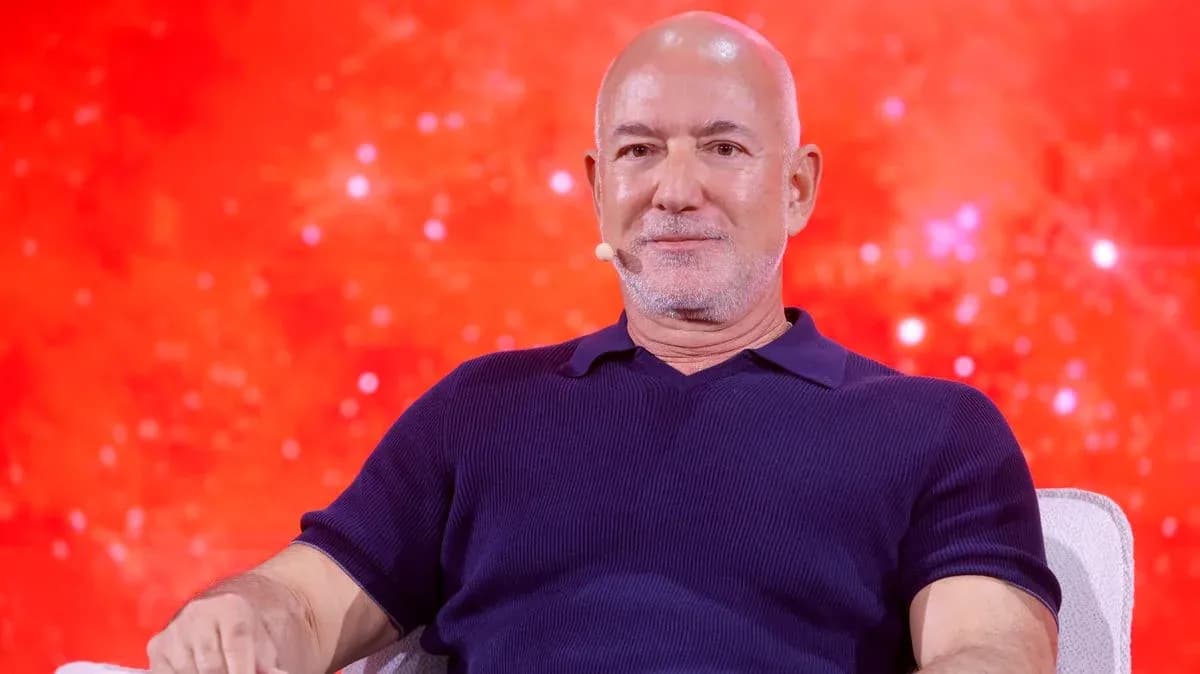
Liverpool are bracing for one of the most eye‑catching investment deals in modern football, with Jeff Bezos set to join a heavyweight consortium closing in on a minority stake at Anfield.
Bezos, Bhatia and Saverin move on Anfield
A group led by Amit Bhatia is in advanced talks to buy roughly one third of Liverpool from Fenway Sports Group (FSG), in a move that would bring the Amazon founder into the club’s ownership structure.
FSG have confirmed that Bhatia’s syndicate has formally approached them about a strategic minority investment. Their statement was blunt and to the point: an “investment consortium led, managed, and represented by Amit Bhatia has expressed interest in making a strategic minority investment in Liverpool Football Club.”
Behind Bhatia stands serious financial muscle. According to Sky News, Bezos is poised to join an investor group that also includes Eduardo Saverin, the Facebook co‑founder. Bhatia, son‑in‑law of steel magnate Lakshmi Mittal and until recently a shareholder in Queens Park Rangers, fronts the bid.
FSG, Liverpool’s controlling shareholder since 2010, is preparing to announce a transaction as early as this week. Those close to the process accept the timetable might slip into next week, but the direction of travel is clear: a landmark deal is close.
One of the game’s richest deals
If the agreement lands, Liverpool will be part‑owned by a trio whose combined wealth dwarfs that of most leagues, never mind clubs.
Forbes estimates Bezos’ fortune at more than $280bn (£207bn). Saverin is said to be worth over $32bn (£23bn). The proposed investment would value Liverpool at around $6bn (£4bn), placing the club among the most highly valued assets in world sport and making the transaction one of football’s richest.
It would also deepen the Premier League’s American footprint. Half of the division’s 20 clubs are now predominantly owned by US‑based investors, a shift that has reshaped the financial and political landscape of English football.
FSG themselves were at the forefront of that wave. They stepped in during 2010 to rescue Liverpool from the brink of administration under Tom Hicks and George Gillett, then rebuilt the club into Premier League and Champions League winners. Now they are turning to outside capital to fuel the next phase.
Familiar names, unfinished business
For Bezos, Liverpool would mark the most significant sporting move of his career. He has circled elite franchises before, exploring bids for the NFL’s Seattle Seahawks and Washington Commanders, but ultimately walked away from both.
Saverin, too, has already tested the waters of English football. He was part of a consortium that attempted to buy Chelsea during the 2022 auction that followed sanctions on Roman Abramovich after Russia’s invasion of Ukraine. That effort fell short. This one is far closer to the line.
Bhatia brings direct experience of the English game from his time at QPR, along with deep ties to global industry through the Mittal family. It is his name on the consortium, his group managing the approach to FSG, but it is the presence of Bezos and Saverin that pushes this story onto a different financial plane.
A club in transition, a boardroom in motion
All of this arrives at a delicate footballing moment for Liverpool.
On the pitch, the club last lifted the Premier League title in 2024/25. Since then, the landscape has shifted. Arne Slot has been sacked, Mohamed Salah has departed, and a season of transition now looms over Anfield.
Recruitment has started, but not yet transformed the mood. Jeremy Jacquet, Victor Munoz and Ronald Araujo have all arrived on loan, moves that add depth but stop short of a full‑scale reboot. Bradley Barcola has been identified as a priority attacking target, with Paris Saint‑Germain open to a sale, yet negotiations have so far stalled without a breakthrough.
The timing is striking. As the squad adjusts to life after Salah and another managerial change, the ownership group is preparing to welcome some of the wealthiest men on the planet into the boardroom.
The question now is not whether Liverpool can attract money. It is what this new wave of capital will be used to build – and how quickly the club can turn financial firepower into trophies again.