.svg&w=384&q=75 "Naijagoal logo")


Liverpool vs Fulham: Tactical Analysis of a Goalless Draw
Anfield exhaled at full time, a goalless draw etched into a grey Merseyside afternoon, but beneath the 0-0 between Liverpool and Fulham lay a rich tactical story of control, resistance and evolving identities on both benches.
I. The Big Picture – two 4-2-3-1s, two very different missions
This was Round 4 of the Premier League season, Liverpool’s second home outing of the campaign and Fulham’s second trip on their travels. Heading into this game, the table framed the narrative starkly. Liverpool, in 7th with 6 points, were unbeaten: 1 win and 3 draws overall, with 6 goals for and 4 against, a goal difference of +2 (6 − 4). Fulham, by contrast, arrived in 18th on just 1 point, their description already tied to “Relegation – Championship”, with 0 wins, 1 draw and 3 defeats, 4 goals scored and 7 conceded for a goal difference of −3 (4 − 7).
The statistical DNA of both sides set the stage. Overall this campaign, Liverpool have scored 6 goals in 4 matches, an average of 1.5 per game, while conceding 4 at 1.0 per match. At Anfield, though, the attack has been more muted: 2 goals in 2 home games, an average of 1.0, with 2 conceded at the same rate. Fulham’s profile is inverted. In total they average 1.0 goal for and 1.8 against per match, but on their travels they have yet to score: 0 away goals in 2 matches, an away attacking average of 0.0, with 1 conceded at 0.5 per game.
A 0-0, then, sits somewhere between Liverpool’s home bluntness and Fulham’s away caution, a result that preserves Liverpool’s unbeaten record and gives Fulham a rare point on their travels.
II. Tactical Voids – absences and the shapes they forced
Both managers were constrained by key absences that subtly reshaped their squads.
For Liverpool, Andoni Iraola had to plan without C. Bradley (knee injury), F. Chiesa (back injury), H. Ekitike (Achilles tendon injury), J. Gomez (muscle injury) and G. Leoni (knee injury). The absences of Bradley and Gomez trimmed the defensive rotation, explaining the reliance on a back four of Alisson Becker behind R. Araújo, J. Jacquet, V. van Dijk and K. Tsimikas. Without Chiesa and Ekitike, Iraola’s options for explosive wide and central attacking changes were limited; the bench leaned more toward structural tweaks than like-for-like firepower, with A. Mac Allister, W. Endo and M. Kerkez offering control and aggression rather than pure goals.
Fulham’s list was shorter but significant: T. Cairney missed out with a knee injury, depriving Á lvaro Arbeloa of a tempo-setting midfielder who could have helped them keep the ball higher up the pitch. In his absence, S. Berge and S. Charles formed a more functional double pivot, tasked with screening rather than orchestrating.
Disciplinary tendencies also mattered. Liverpool’s yellow card distribution this season is heavily weighted to the 46-60 minute window, where 40.00% of their bookings arrive, with a late spike of 20.00% between 76-90. Fulham, meanwhile, have a pronounced late-game disciplinary surge: 60.00% of their yellows come in the 76-90 minute period. That pattern hinted at a match that might fray around the edges as legs tired and pressure mounted; instead, the stalemate kept emotions just about in check, but the risk of a late card-fuelled twist was always present.
III. Key Matchups – Hunter vs Shield, and the engine rooms collide
Hunter vs Shield: A. Isak vs Fulham’s away defence
Alexander Isak entered this fixture as one of the league’s sharpest forwards. In total this campaign, he had 3 goals in 4 appearances, from 10 shots (6 on target), averaging a strong 7.33 rating. Liverpool as a whole average 1.5 goals per game overall, but Fulham’s away defence had conceded only 1 goal in 2 away matches, an average of 0.5. This was the central duel: a top-level striker backed by a creative band of three against a unit that, for all Fulham’s broader struggles, had been surprisingly stingy on their travels.
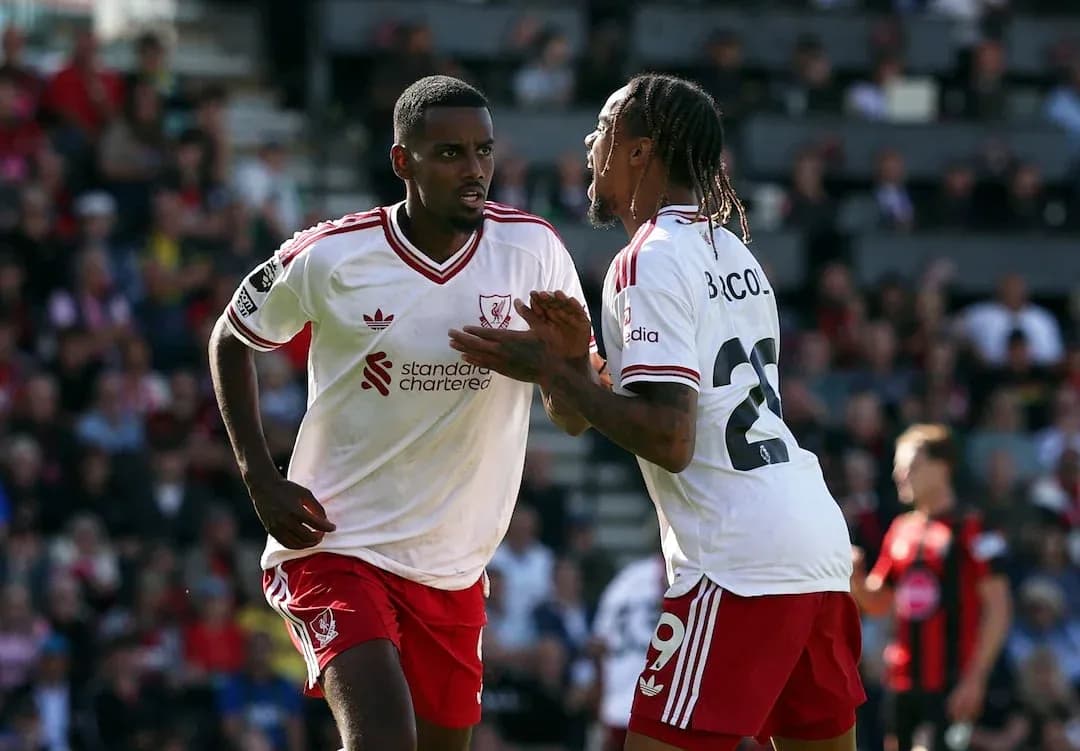
Iraola’s 4-2-3-1 was tailored to feed Isak. D. Szoboszlai and R. Gravenberch formed the double pivot, giving Liverpool progression from deep, while the trio of B. Barcola, F. Wirtz and Víctor Muñoz rotated behind Isak, seeking to overload pockets between Fulham’s lines. Yet Fulham’s central defenders, D. Affengruber and C. Bassey, held firm, supported by the disciplined screening of Berge and Charles. Every time Isak tried to spin off the shoulder, there was a body in the lane; every cross from Tsimikas or Araújo met a crowded penalty area.
Engine Room: Wirtz and Szoboszlai vs Berge and Charles
The midfield battle was where Liverpool’s territorial dominance was forged but never fully weaponised. Wirtz, starting as the central creator, drifted between Fulham’s lines, linking with Szoboszlai’s vertical passing. Their task was to unpick a side that, in total, concedes 1.8 goals per match but had clearly come to Anfield with a more conservative brief.
On the other side, Berge and Charles were less about building and more about blocking. With Fulham having failed to score on their travels this season, Arbeloa’s priority was to avoid the kind of open, end-to-end game that would suit Liverpool’s front four. Oscar Bobb and A. Iwobi worked tirelessly to drop back and form almost a second line of midfielders, allowing Joshua King to shuttle between pressing the pivot and supporting Gonzalo García in rare counters.
Joshua King himself was Fulham’s most rounded threat in open play this season, with 2 goals from midfield, 9 shots (5 on target), 131 passes at 83% accuracy and 7 tackles plus 2 blocked shots. Here, though, his role was more sacrificial: helping to disrupt Liverpool’s build-up rather than consistently arriving in the box.
IV. Statistical Prognosis – control without incision
Following this result, Liverpool’s unbeaten run stretches to 4 matches, but the pattern of their season tightens: strong overall numbers, but a home attack still stuck at an average of 1.0 goal per game and, on this day, failing to find even that. Their defensive platform remains sound, with 2 clean sheets in total and only 4 goals conceded overall, 2 at Anfield and 2 on their travels.
Fulham, meanwhile, will quietly cherish the point. They still have not scored away from home this season, but they have now conceded only 1 goal in 3 away halves plus this full match, reinforcing the sense that Arbeloa can organise a compact, resilient block when he commits to it. Their clean sheet tally rises to 1 overall, a small but psychologically important step.
In xG terms – even without explicit numbers – the balance is clear. Liverpool’s volume of possession and territory, combined with Isak’s pedigree and the creative profiles of Wirtz and Barcola, would almost certainly have produced the higher expected goals figure. Yet Fulham’s structural discipline, anchored by Affengruber, Bassey and the double pivot, suppressed the quality of those chances enough to keep the scoreboard blank.
The verdict is nuanced. For Liverpool, this was a performance of control without incision, a reminder that their 4-2-3-1, for all its fluency, still needs sharper edges at Anfield. For Fulham, it was a point carved from collective suffering, a tactical blueprint for survival: compact away from home, disciplined in the final quarter-hour where 60.00% of their yellow cards usually arrive, and willing to sacrifice attacking ambition for defensive solidity.
On a day when neither side found a way to bend the numbers decisively in their favour, the story became less about what was created and more about what was denied. At Anfield, that is a rare kind of silence.