.svg&w=384&q=75 "Naijagoal logo")

Fulham vs Manchester United: Tactical Analysis of a 1–1 Draw
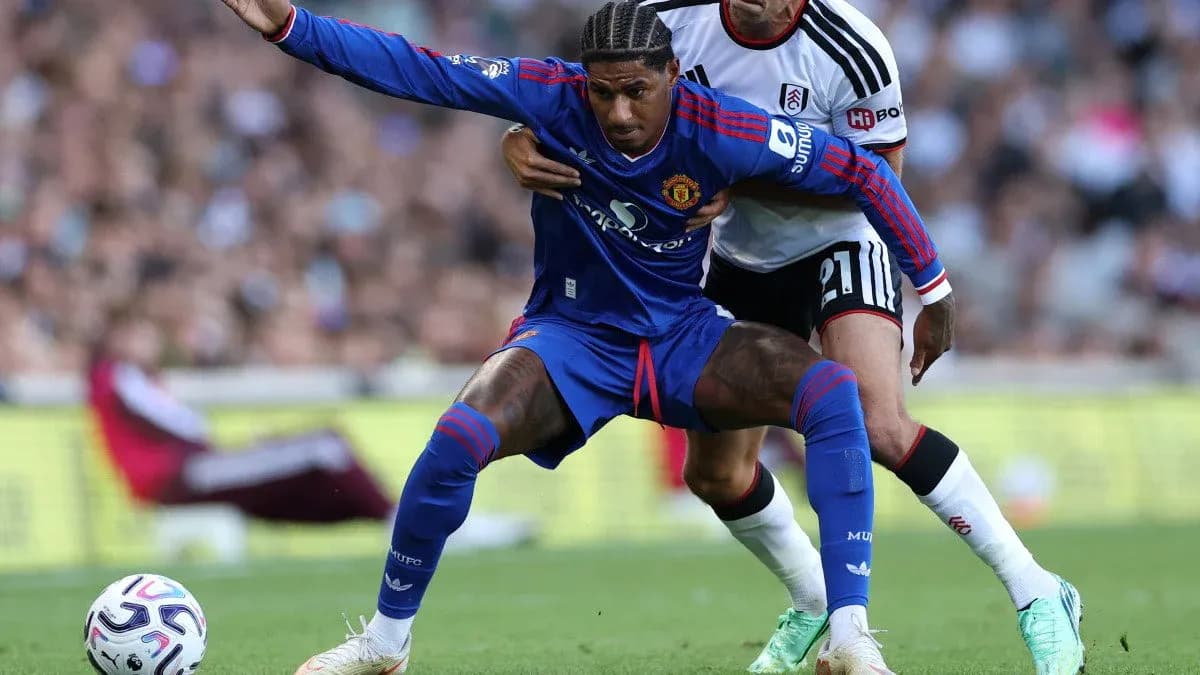
Craven Cottage under late-summer light, the Thames just beyond the old brickwork, and a Fulham side staring up from 19th place in the Premier League table. Across from them, Manchester United arrive as a work in progress rather than a finished powerhouse, 12th in the standings and still trying to stitch together an identity under M. Carrick. The 1–1 draw that followed felt less like a classic and more like a tactical arm wrestle between two teams whose seasons have already taken very different shapes.
Fulham's Season Overview
Heading into this game, Fulham’s season had a clear statistical fingerprint: fragile at the back, blunt on their travels, but not entirely lifeless at home. Overall they had scored 5 and conceded 8 in 5 league matches, a goal difference of -3. At Craven Cottage they had found the net 5 times in 3 games, an average of 1.7 goals at home, but had leaked 7 at the other end, conceding 2.3 per home match. No wins in total, just 2 draws and 3 defeats, and a form line of LLLDD that hinted at a team trying to halt a slide rather than ride momentum.
Manchester United's Season Overview
Manchester United arrived with a different kind of imbalance. Overall they had scored 8 and conceded 8 in 5 matches, goal difference exactly 0, but the split between Old Trafford and their travels told its own story. At home they were far more explosive, with 5 goals in 2 games (an average of 2.5), while away they had managed only 3 in 3 (1.0 on their travels), conceding 5 in the process. Clean sheets were non-existent in total; this was a side that always seemed to give you a chance.
Tactical Setup
Both coaches doubled down on a shared shape: 4-2-3-1 mirrored against itself. For Fulham, Álvaro Arbeloa set his side up with B. Leno behind a back four of T. Castagne, D. Affengruber, C. Bassey and A. Robinson. The double pivot of S. Berge and S. Charles was designed to give structure in front of a defence that had yet to keep a clean sheet at home. Ahead of them, Oscar Bobb, Joshua King and A. Iwobi floated behind Gonzalo García, tasked with converting Fulham’s home attacking promise into something more tangible than “encouraging signs.”
Carrick’s Manchester United mirrored the structure but not the personality. S. Lammens started in goal, with Diogo Dalot, H. Maguire, Lisandro Martínez and L. Shaw forming a back line that, on paper, should have been more secure than the away numbers suggested. K. Mainoo and Y. Tielemans anchored midfield, freeing a high-usage band of three: B. Mbeumo wide, Bruno Fernandes central, M. Rashford cutting in from the left, all servicing Matheus Cunha as the nominal striker.
Absentees and Their Impact
The absentees mattered. Fulham were without T. Cairney, a knee injury removing a calm, tempo-setting option, and K. Tete, whose concussion left Castagne as the undisputed senior full-back. That was significant: heading into this match, Castagne had already been a disciplinary focal point, with 2 yellow cards in the league and 9 fouls committed. He also appeared among the league’s top red card profiles, not because of a dismissal, but because his aggressive style keeps him on that disciplinary edge. Arbeloa needed his intensity, but he also needed him to survive the 90 minutes.
United’s missing list was longer and more structural. A. Diallo, T. Heaton, B. Sesko, M. Ugarte and M. de Ligt were all unavailable. De Ligt’s back injury and Ugarte’s knee problem stripped Carrick of both an elite organiser at centre-back and a destroyer in midfield. Without Ugarte, Mainoo and Tielemans had to balance progression with protection; without de Ligt, Maguire and Martínez were the last line against transitions.
Key Matchup: Bruno Fernandes vs Fulham Defence
In the “Hunter vs Shield” matchup, the spotlight naturally fell on Bruno Fernandes against a Fulham defence that had conceded 8 in total and 7 at home. Bruno arrived as one of the league’s standout attacking midfielders: 3 goals and 1 assist in 5 appearances, with 11 shots (5 on target) and 13 key passes. His 325 passes at an 84% accuracy rate, plus 3 successful dribbles from 6 attempts, told the story of a player who not only finishes moves but also knits them together. Against a Fulham side yet to keep a home clean sheet and conceding 1.6 goals per game overall, he was always likely to find pockets between Berge and Charles.
Yet Fulham’s “Shield” was not entirely blunt. Bassey and Affengruber, flanked by the combative Castagne, formed a physically imposing unit, and the home side’s only clean sheet of the season had come away, suggesting that when forced to sit deeper they could be compact. The risk, as the season data showed, came late: 50.00% of Fulham’s yellow cards had arrived in the 76–90 minute window, a late-game surge of desperation that often tilted matches into chaos.
Discipline and Late-Game Dynamics
United’s own discipline curve was similar. They took 50.00% of their yellow cards in the 76–90 minute period and another 16.67% between 91–105, indicating that their control frayed as legs tired and game states grew frantic. This overlap in late-game volatility meant the final quarter-hour at Craven Cottage was always likely to be stretched, emotional, and card-heavy.
Midfield Duel: Berge vs Mainoo
In the engine room, the duel between Berge and Mainoo offered a quieter but decisive subplot. Berge’s role as Fulham’s metronome, recycling possession and shielding the back four, contrasted with Mainoo’s remit to both break lines and cover for Tielemans’ forward instincts. If Berge could pin United’s double pivot deeper, it would isolate Bruno from his forwards; if Mainoo and Tielemans could punch passes through Fulham’s first line, Gonzalo García and the three behind him would be forced into long defensive shifts rather than attacking runs.
Statistical Prognosis
From a statistical prognosis, the draw felt almost pre-written by the numbers. Fulham’s overall scoring rate of 1.0 per match against United’s concession of 1.6, and United’s own 1.6 goals per game overall against Fulham’s 1.6 conceded, pointed to both sides finding the net. United’s flawless penalty record in total (1 taken, 1 scored) meant any rash Fulham challenge in the box could have been decisive, but Arbeloa’s side at least avoided that trap.
Conclusion
Following this result, Fulham’s inability to turn home promise into victory remains the central narrative. They can create and they can fight, but they cannot yet close. For United, the draw extends a pattern: competitive in every game, but still searching for the defensive solidity that would allow Bruno Fernandes’ brilliance to translate into consistent wins.
At Craven Cottage, the story was one of two 4-2-3-1s, both flawed, both dangerous, cancelling each other out just enough to share the points—and leaving the season’s bigger questions unresolved.