.svg&w=384&q=75 "Naijagoal logo")

Lionel Messi’s Last World Cup: A Fading Final Act
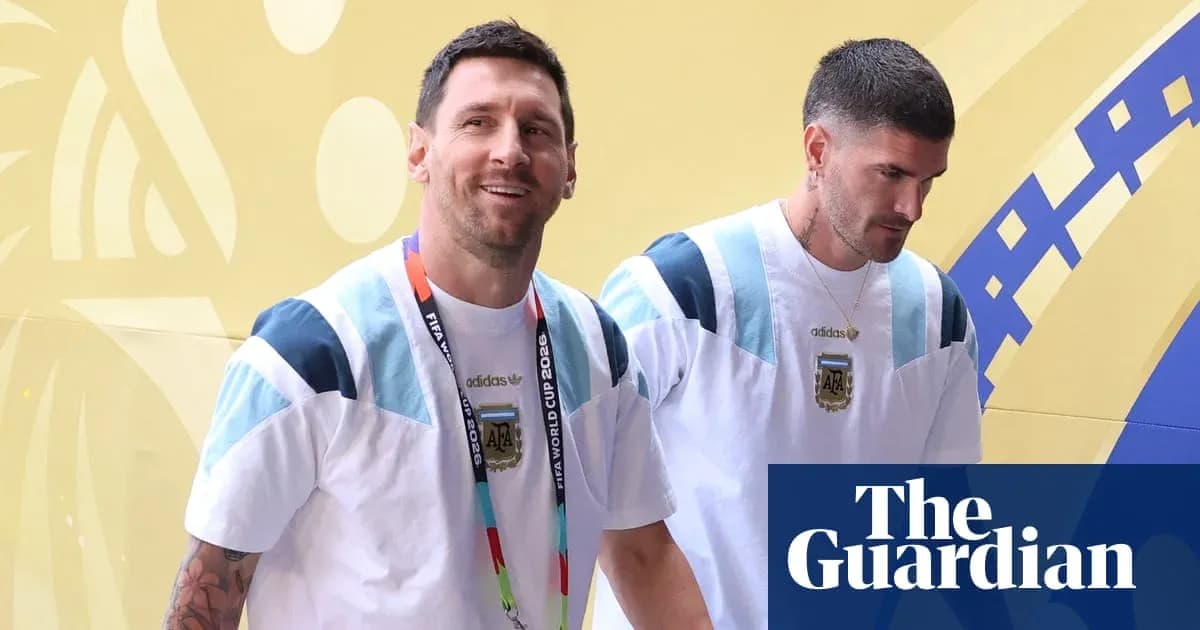
Lionel Messi, Argentina
Messi was always going to sit at the top of this list. He arrived at what was likely his final World Cup with the weight of a nation and the freedom of a man unburdened by defensive duties. Eight goals, four assists, the most progressive passes of any player, according to Futi – the numbers alone read like a farewell tour scripted in his honour.
He drifted across the pitch, 39 years old in body but years younger in thought, constantly finding pockets of space, constantly dragging Argentina back from the edge. He scored in the 3-2 win over Cape Verde. He assisted and then equalised against Egypt. When England thought they had Argentina contained, it was Messi who prised them open, creating both of his country’s late goals.
Then came the final, and the curtain fell strangely quiet. Across 139 gruelling minutes, Messi completed 28 of 39 passes, had just one shot and never truly bent the game to his will. No Golden Ball, no Golden Boot, no trophy. For him, that is rare air – and not in a good way. Yet he walked away having stretched a World Cup legacy that already sat in a realm almost nobody else can touch.
Rodrigo De Paul, Argentina
De Paul did the running so Messi didn’t have to. He started all but two of Argentina’s games and put in 70 hard minutes against Spain in the final. Aggressive, tidy in possession, and relentlessly busy, the Inter Miami midfielder never threatened to steal the spotlight. He didn’t need to. His job was to knit Argentina together and escort them to a second straight World Cup final, and he did exactly that.
Stephen Eustáquio, Canada
For Canada, Stephen Eustáquio was a metronome with teeth. Cross after cross, chance after chance: 2.76 chances created and 0.36 expected assists per 90 minutes, plus 46 progressive passes – sixth-most in the tournament. His numbers backed up the eye test.
Then came the moment that will live in Canadian football history. Last-32, South Africa, the clock running out. A poor clearance dropped from the sky, Eustáquio cushioned it on his chest and lashed a half-volley into the bottom corner. Canada’s first-ever World Cup knockout win, sealed by the 29-year-old who had just returned to Porto after a loan at Los Angeles FC.
Mbekezeli Mbokazi, South Africa
Mbekezeli Mbokazi arrived as South Africa’s youngest call-up at 20. He played like one of their oldest heads. The Chicago Fire defender, once of Orlando Pirates, handled the stage with a calm that belied his age, reading danger, stepping in, never flustered. Scouts noticed. His estimated value on Transfermarkt more than doubled, from $4m before the tournament to over $9m after it. A World Cup as a launchpad.
Matías Galarza, Paraguay
Paraguay barely had the ball – 29% average possession, the lowest of any team. Matías Galarza still found a way to matter. He started every match after the opener, scored the only goal against Turkey and laid on Julio Enciso’s strike against Germany in the knockouts.
In a side forced to suffer without the ball, the Atlanta United loanee (now back at River Plate) showed he could still influence games in flashes. It wasn’t a platform for expansive creativity, but he proved he can live inside a low-possession, counter-punching system.
Andrés Cubas, Paraguay
If Galarza supplied the sparks, Andrés Cubas provided the steel. The Vancouver Whitecaps midfielder did not miss a minute of Paraguay’s five games, anchoring a side that dragged Germany to penalties and restricted France to a single goal.
His quarter-final performance captured his tournament in microcosm: seven tackles, three interceptions, seven duels won out of 12, and a feisty confrontation with Kylian Mbappé. Cubas didn’t just screen the back line; he set the tone.
Finn Surman, New Zealand
For two games, Finn Surman looked like a defender from a different tier. The 22-year-old Portland Timbers centre-back hurled himself into last-ditch tackles, flung his body at shots and cleared danger when New Zealand needed him most.
He even chipped in at the other end, scoring the All Whites’ only goal in a 3-1 defeat to Egypt. A breakout tournament in everything but result.
Sebastian Berhalter, USA
Mauricio Pochettino trusted Sebastian Berhalter. The US midfielder came off the bench in every match and earned a single start, deployed as a No 6. That experiment exposed the squad’s glaring weakness more than any failing of the Vancouver Whitecaps man himself.
The US lacked specialist defensive midfielders, and the structure creaked. Even so, Berhalter left with a goal and an assist, a reminder that he can still influence games higher up the pitch – and with a move to Middlesbrough reportedly on the horizon, his World Cup felt more like a staging post than a ceiling.
Steven Moreira, Cape Verde
Cape Verde’s full-backs caught the eye, and while Sidny Lopes Cabral drew much of the attention, Steven Moreira quietly became a pillar of their back line. The Columbus defender helped steer his country through tense, bruising contests with Spain, Uruguay and Argentina, pushing them close to a storybook run. His name might not dominate headlines, but coaches will remember.
Aiden O’Neill, Australia
Aiden O’Neill played the same role for Australia that he plays for New York City FC: understated, reliable, always available for the simple pass. He won the Superior Player of the Match award against Paraguay, then followed it with another assured display against Egypt.
No fireworks, no viral clips. Just control, tempo, and the sort of quiet excellence managers lean on.
Matt Freese, USA
Matt Freese’s World Cup will be remembered for one moment he’d rather forget. Like Tim Ream, the New York City FC goalkeeper saw his tournament framed by a single poor outing. Strip that away and the numbers tell a different story: nine saves in four games, sharp distribution, a presence that generally calmed those in front of him.
But tournaments are unforgiving. One mistake can define a month’s work.
James Rodríguez, Colombia
Twelve years after lighting up Brazil, James Rodríguez arrived in the United States with the look of a player nearing the end. Now at Minnesota United on loan, he had recently produced a stunning Copa América run – one goal, six assists, a drive to the final in 2021. That version of James never quite reappeared.
There were still flashes – a disguised pass here, a deft touch there – but nothing that truly altered Colombia’s trajectory. They bowed out in the last 16 to Switzerland, and his World Cup story, like his club career, drifted to a slow, hollow close.
Juan Manuel Sanabria, Uruguay
Juan Manuel Sanabria’s task was simple on paper, brutal in practice: keep Lamine Yamal quiet. The Real Salt Lake midfielder started two group games, including Uruguay’s final match against Spain, and largely did just that.
Yamal finished with 0.03 xG, 0.10 xA, and only five successful dribbles from 12 attempts. In a tournament built on one-v-one duels, Sanabria won one of the toughest.
Richie Laryea, Canada
Richie Laryea offered thrust going forward – 0.26 xA per 90 minutes and plenty of progressive carries down Canada’s left. The defensive side of his game, though, frayed under pressure.
Against Bosnia and Herzegovina, it was his man who escaped to score from an in-swinging corner. Against Switzerland, he was repeatedly out of position or slow to recover. A long-time cornerstone for Canada, Laryea left this World Cup without the usual spark, his influence dulled at both ends.
Tim Ream, USA
For a while, it looked as if time had barely touched Tim Ream. The 38-year-old Charlotte centre-back read the game as if it were still Qatar. Then Belgium arrived and tore that illusion apart.
On the opener, Charles De Ketelaere ghosted in while Ream lost track of him, finishing like a classic poacher. Minutes after the US equalised, De Ketelaere climbed above Ream at the back post to make it 2-1. The US collapsed to a 4-1 defeat, and Ream, more than anyone, wore the scars.
Lucas Herrington, Australia
Lucas Herrington turned 18 and walked into a World Cup back line. The Colorado Rapids centre-back started Australia’s final two matches, a rapid rise for the youngest member of the squad. He didn’t dominate, but he didn’t shrink either. For a defender at his age, that matters.
Maxime Crépeau, Canada
Maxime Crépeau’s numbers tell a stark story: six goals conceded, six saves, five games. The Orlando City goalkeeper never truly settled into a rhythm, and Canada’s defensive structure left him exposed far too often. On this stage, that combination is brutal.
Son Heung-min, South Korea
This World Cup offered Son Heung-min no redemption arc. The 34-year-old LAFC forward started twice and failed to score. When South Korea faced their must-win final group game, he watched from the bench. For a player who has carried his country for so long, it was a subdued, frustrating tournament.
Petar Musa, Croatia
Petar Musa’s World Cup can be summed up in one statistic: one shot in 110 minutes across two starts for Croatia – and he scored it. The FC Dallas striker barely saw the ball, but when the chance finally arrived, he took it. Efficiency, if not involvement.
Danley Jean Jacques, Haiti
Danley Jean Jacques patrolled midfield for Haiti alongside Jean-Ricner Bellegarde, locked in a double pivot that spent most of its time firefighting. As the tournament’s lowest-ranked team, Haiti climbed a mountain every match. The Philadelphia midfielder battled, but the gulf in quality was relentless.
Carlos Harvey, Panama
Carlos Harvey started all three of Panama’s group games and flickered into life on set pieces, threatening with a couple of headers from corners and long throws. Otherwise, the 6ft 1in Minnesota midfielder had a quiet tournament, more worker than headline act.
Marco Pasalic, Croatia
Marco Pasalic finally earned a start in Croatia’s third group game and made himself useful in open play, stretching the pitch and offering width. When his golden chance arrived, though, he snatched at it and the moment slipped away. For the 25-year-old Orlando City winger, it was an opportunity half-taken.
Miguel Almirón, Paraguay
Miguel Almirón’s World Cup will be remembered less for his attacking output – four shots, 0.11 xG over four starts – and more for a red card that made global news.
Against Turkey, the Atlanta attacker covered his mouth during an altercation between the teams and was dismissed, the first high-profile use of IFAB’s new ban on mouth-covering. In an instant, his tournament became a case study in a rule change rather than a showcase of his talent.
Michael Boxall, New Zealand
One of the oldest players at the tournament, Michael Boxall entered as New Zealand’s defensive anchor. The Minnesota centre-back looked half a step slow, often arriving just after the danger had already unfolded. On almost every goal the All Whites conceded, he was in the frame – chasing, stretching, but rarely in control.
Jacob Shaffelburg, Canada
Jacob Shaffelburg came off the bench in all five of Canada’s matches. The LAFC winger buzzed around the flanks, looking for space, trying to inject energy. The final ball, the decisive involvement, never quite came.
Ahmed Qasem, Iraq
Ahmed Qasem played in every game for Iraq and went the full 90 against France, a thankless task against superior firepower. He started again in their final group match, only to be sacrificed early after Rebin Sulaka’s 13th-minute red card forced a tactical reset. The Nashville forward’s tournament became a story of disruption rather than rhythm.
Louicius Deedson, Haiti
Louicius Deedson featured in all three of Haiti’s group defeats, totalling 112 minutes and 13 completed passes. The FC Dallas winger spent most of his time chasing games that were already slipping away, starved of the ball, unable to show the attacking flair he displays in club colours.
Mathieu Choinière, Canada
Mathieu Choinière’s World Cup boiled down to a single start – Canada’s 2-1 loss to Switzerland. The LAFC midfielder had little time to build a narrative, dropped into a tight, tactical game and gone again before he could truly influence Canada’s story.
Matt Turner, USA
Once the undisputed US No 1, Matt Turner was handed the gloves against Turkey. It was a brutal outing. Three shots on target faced, three goals conceded, no saves. The New England Revolution goalkeeper saw his chance to reclaim the shirt vanish in 90 painful minutes.
Miles Robinson, USA
If you wanted a snapshot of Pochettino’s distrust in his defensive depth, look at Miles Robinson. The FC Cincinnati centre-back played only in a dead rubber at the end of the group stage. That was it. A World Cup experienced mostly from the bench.
Kai Trewin, Australia
Kai Trewin’s moment came at half-time of a knockout tie. Jordan Bos went off injured, and the NYC FC defender stepped in against Egypt. He helped drag the game to penalties, doing the simple things, clearing his lines, holding his nerve. Sometimes, that’s all a defender can do.
Braian Ojeda, Paraguay
Braian Ojeda’s entire tournament lasted 21 minutes. The Orlando City midfielder came on against Germany in the last 32 and touched the ball just nine times. For some players, a World Cup is a career-defining epic; for others, it’s a brief, flickering cameo.
Derrick Etienne Jr, Haiti
Derrick Etienne Jr played nine minutes against Brazil. The Toronto winger completed four passes, barely enough time to break a sweat, let alone change the game. Still, he shared a pitch with Brazil at a World Cup. That in itself is a line few can add to their story.
Jayden Nelson, Canada
Jayden Nelson entered in the 87th minute of Canada’s 3-0 knockout defeat to Morocco. The Austin FC winger chased lost causes, pressed tired defenders and watched the clock run down on Canada’s campaign. His impact, like his minutes, was minimal.
Aníbal Godoy, Panama
Aníbal Godoy touched the ball eight times, completed eight passes and could do nothing to stop Ghana scoring a last-minute winner. The San Diego midfielder’s entire World Cup existed in one minute plus stoppage time, a cruel snapshot of football’s imbalance between preparation and payoff.
Jonathan Osorio, Canada
Jonathan Osorio, Toronto’s captain, entered twice in the 87th minute or later. No space to build rhythm, no platform to stamp authority. For a player so central to Canada’s recent rise, this World Cup passed almost entirely without him.
Max Arfsten, USA
Max Arfsten’s tournament lasted the length of stoppage time. Sent on in the 90th minute of the US’s 4-1 round-of-16 defeat to Belgium, the Columbus winger did not register a single touch before the final whistle. A World Cup appearance in name only, but an appearance all the same.
From Messi’s near-mythic farewell run to the players who blinked onto the stage and vanished again, this World Cup reminded everyone of football’s brutal hierarchy. Some leave with legacies burnished, others with only a line on a CV. The question now is who turns this fleeting taste of the highest level into something bigger – and who never gets this close again.